Blog Archives

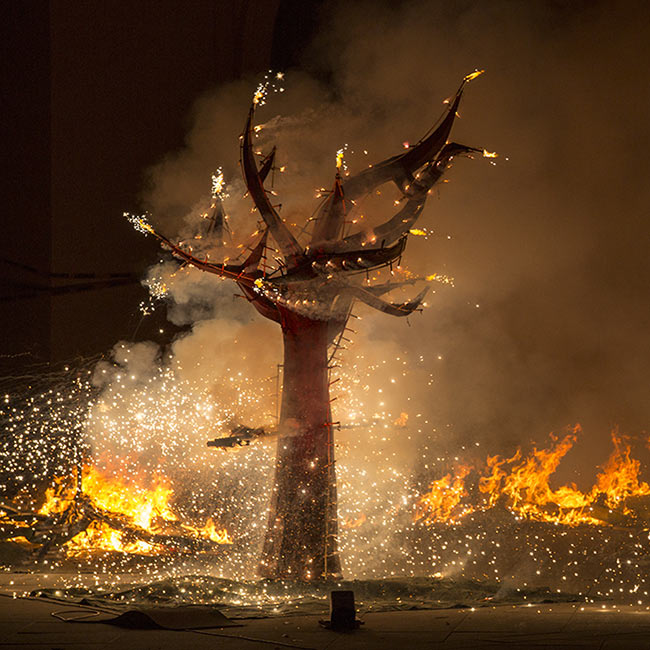
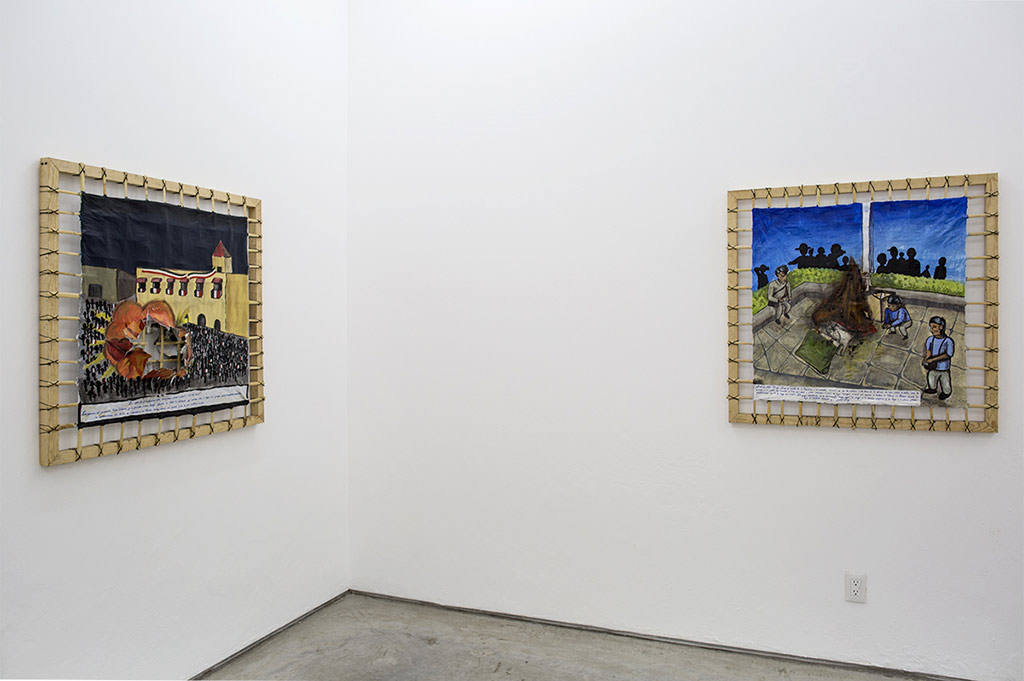
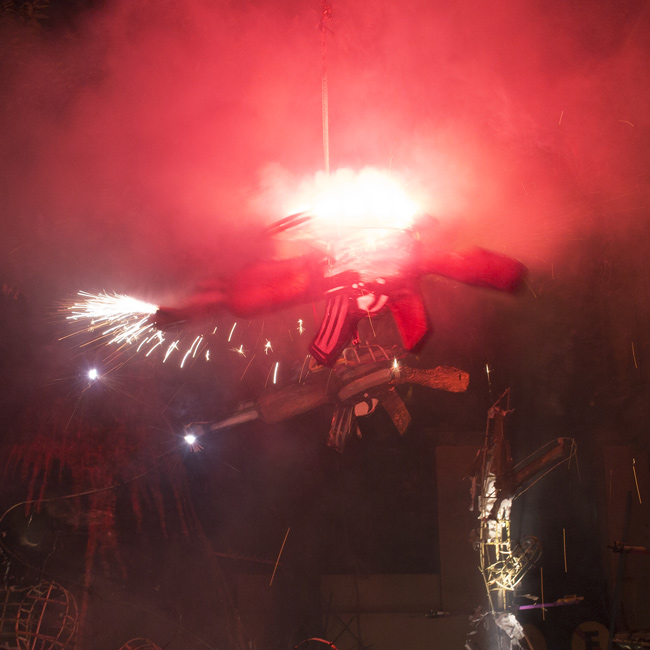
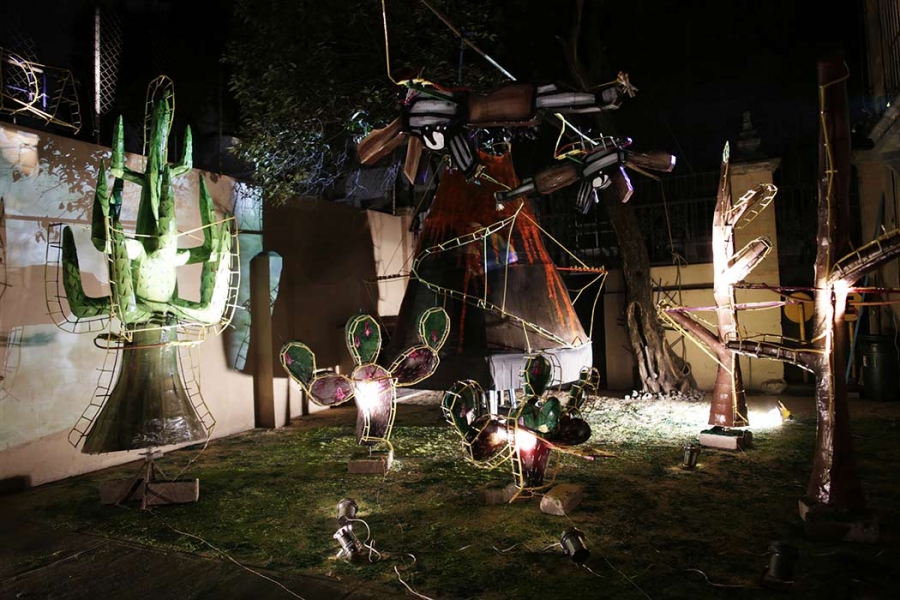
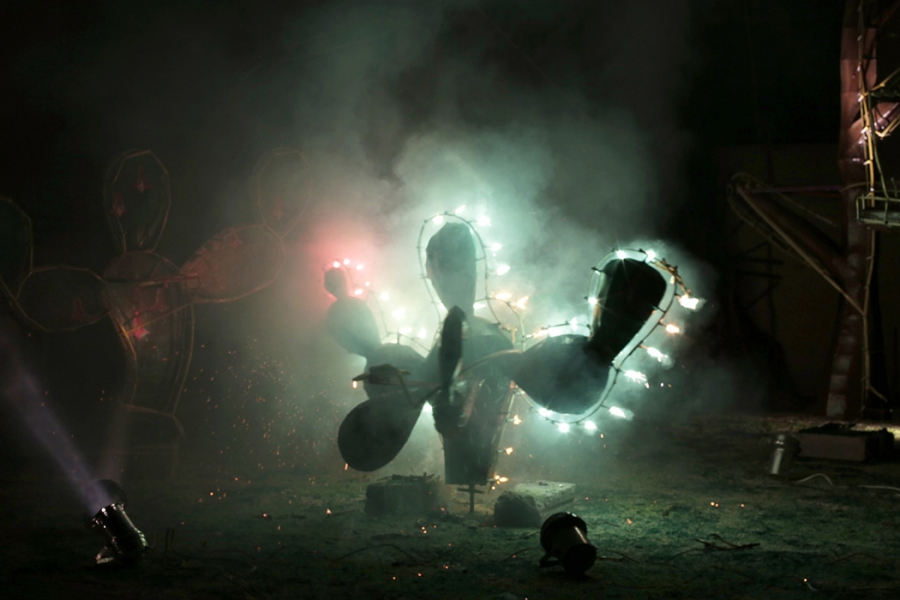
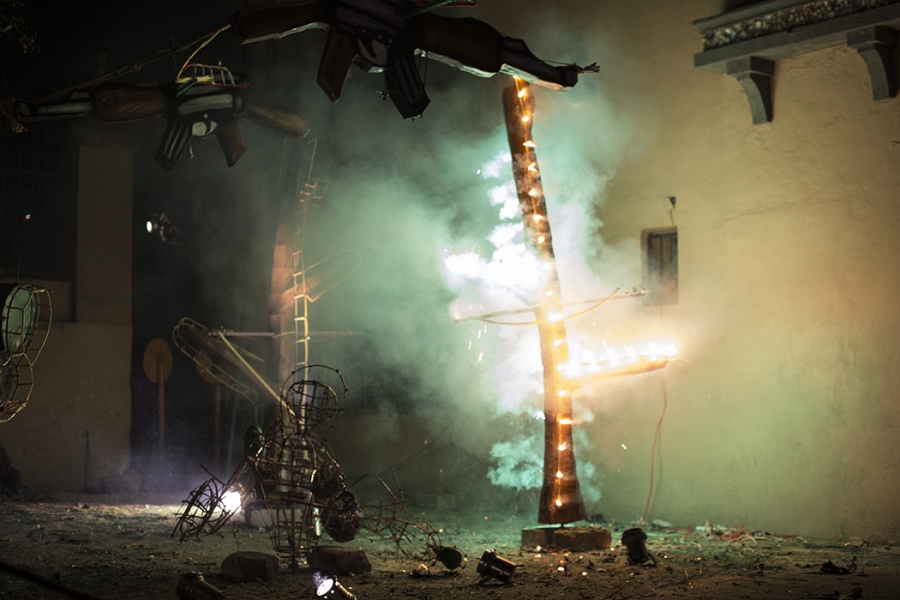
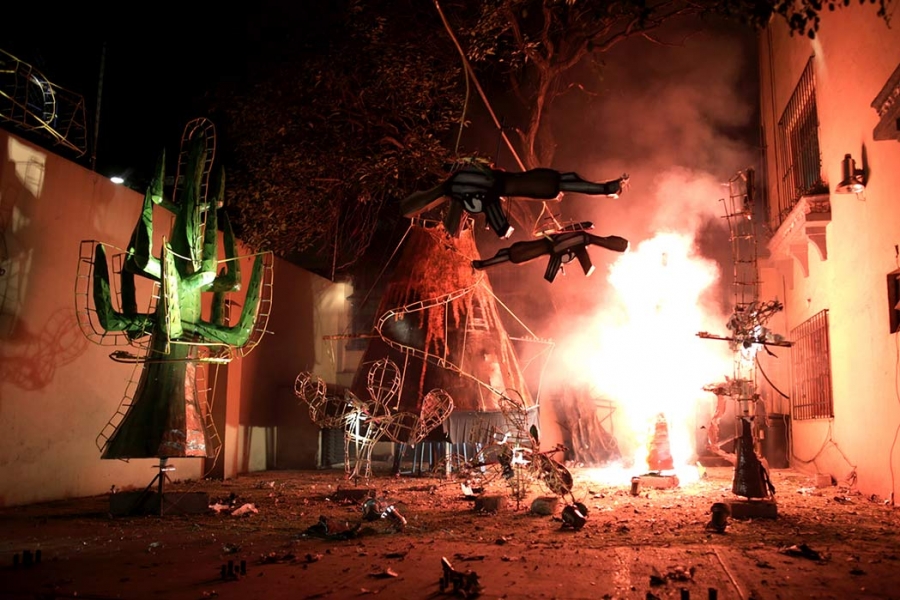
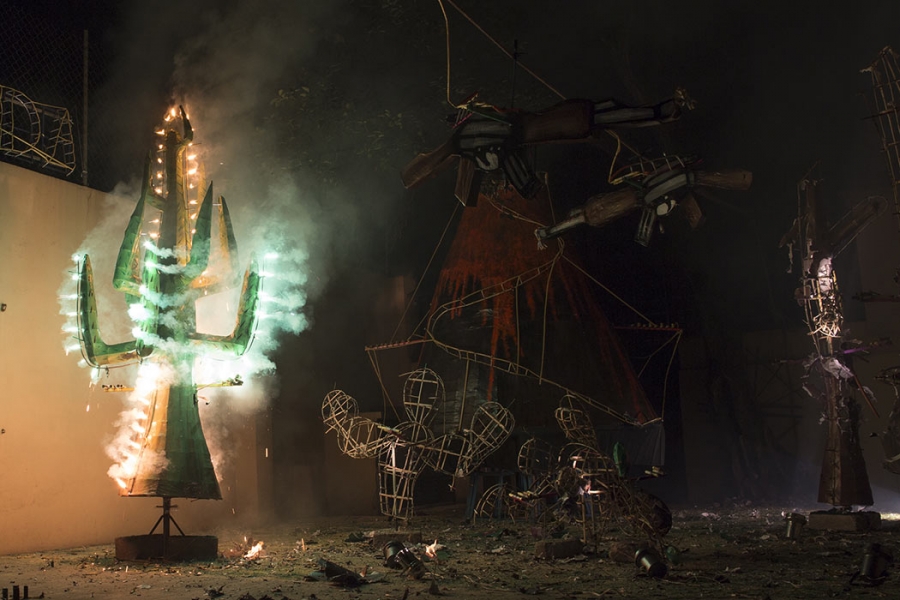
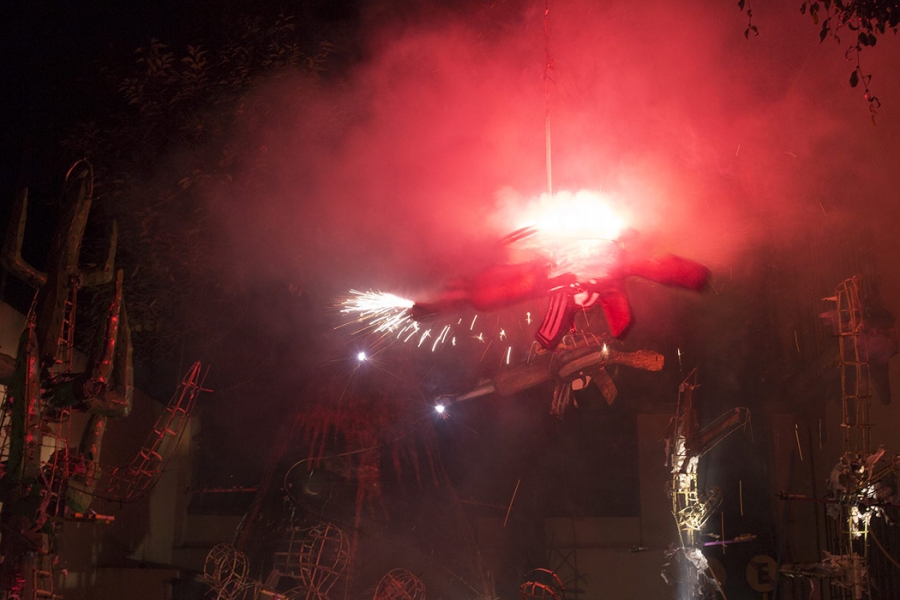
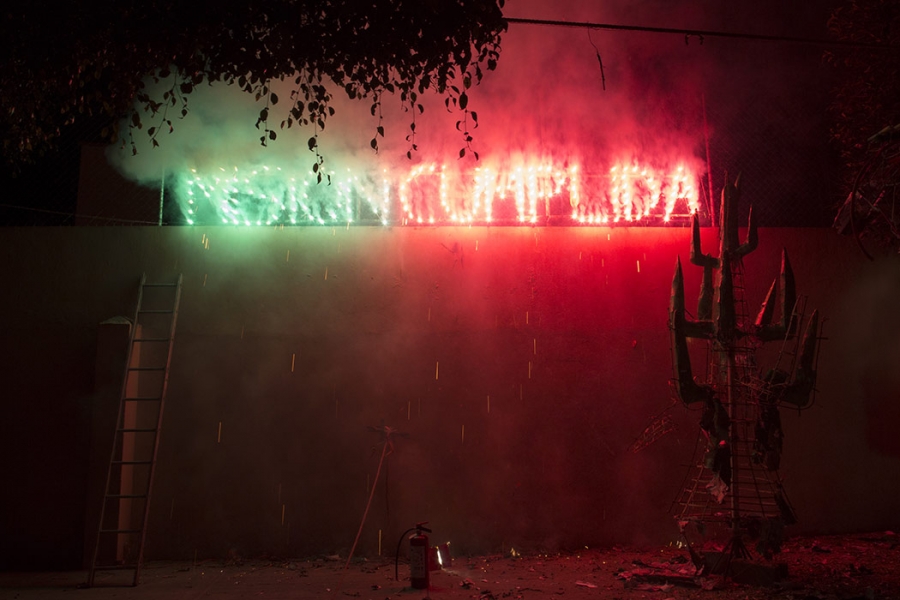
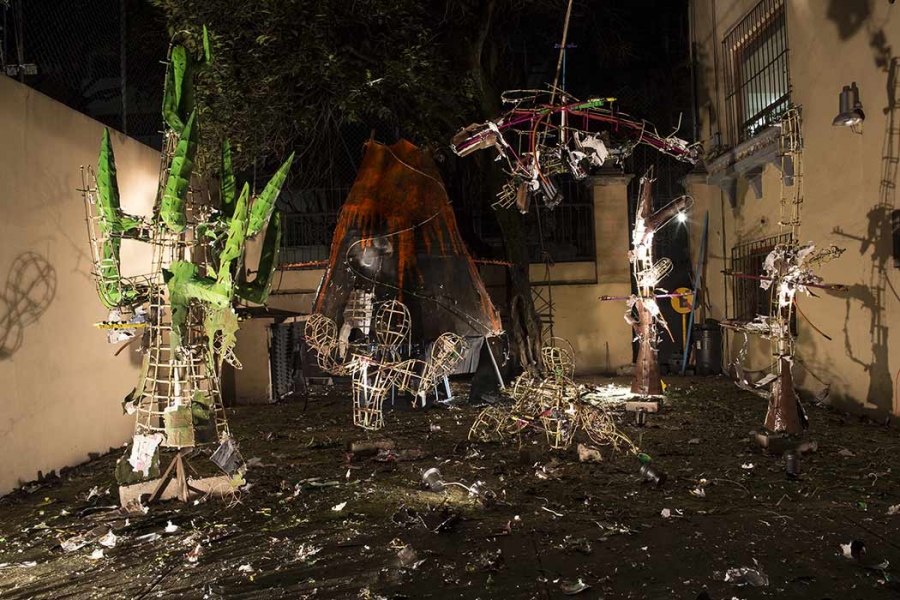
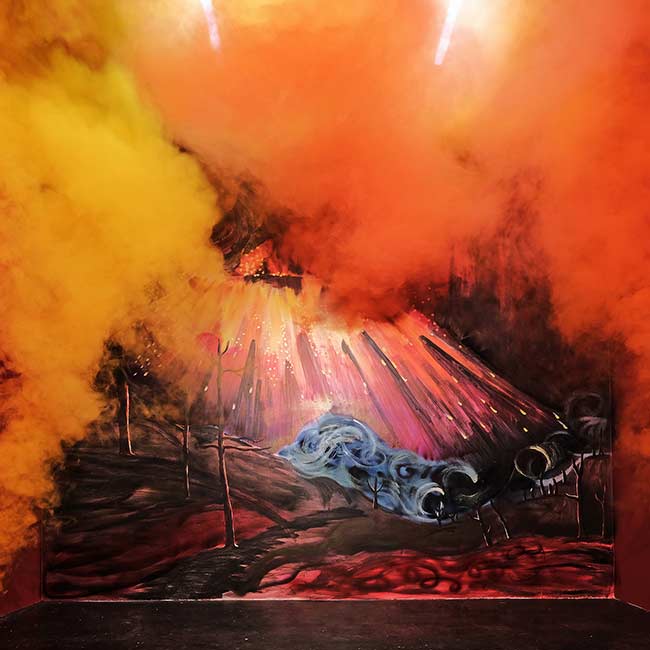
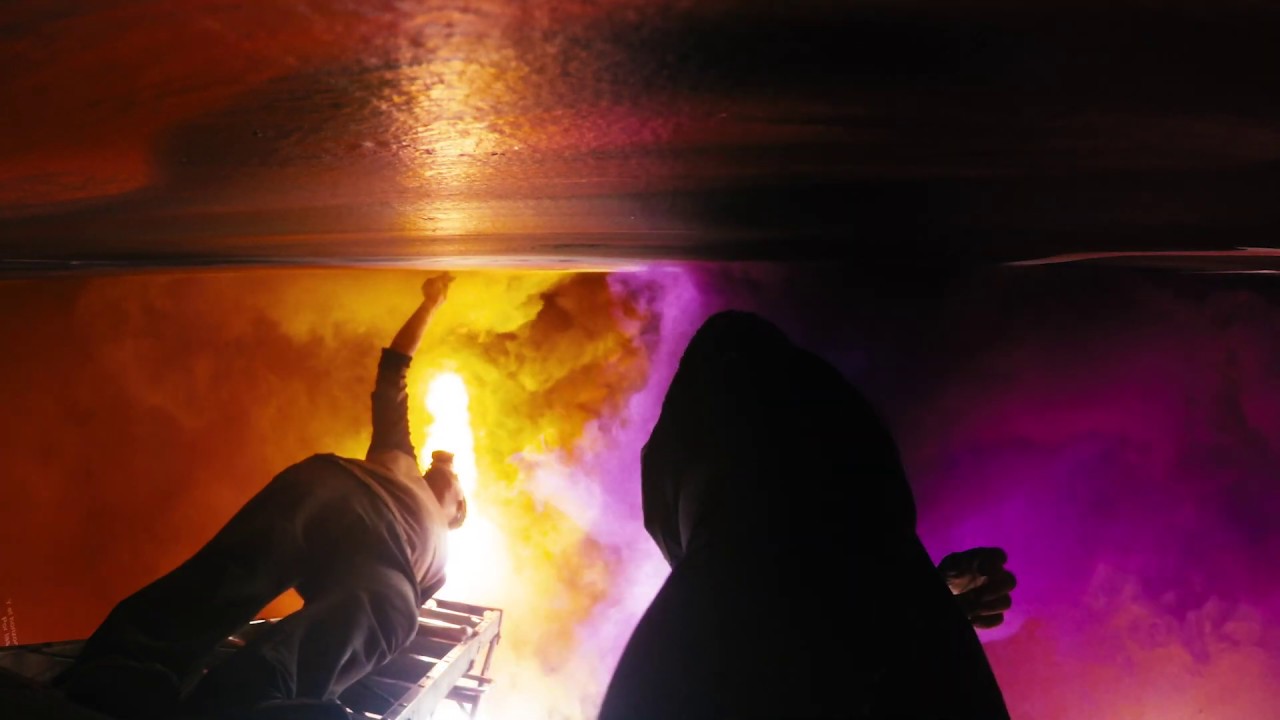
La desesperanza. La furia. El atardecer, (HOPELESSNESS. THE FURY. THE SUNSET), 2019
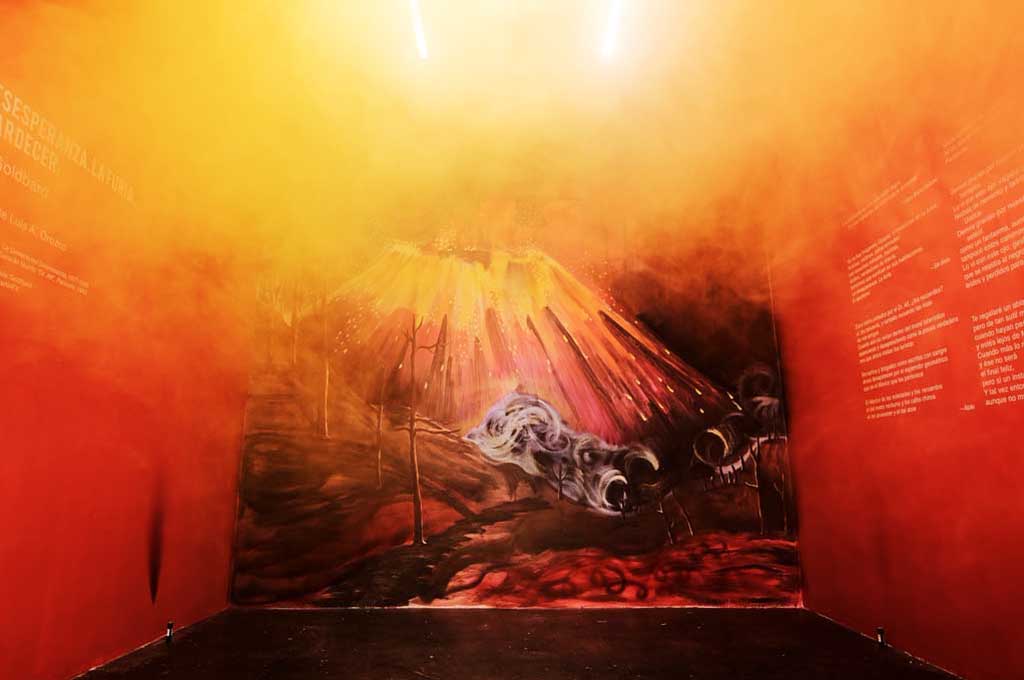
Pyrotechnic mural at El 123 Gallery, Mexico City, January 2019
La desesperanza. La furia. El atardecer, 2019 THUMB
Pyrotechnic mural at El 123 Gallery, Mexico City, January 2019
La desesperanza. La furia. El atardecer, 2019 THUMB
Pyrotechnic mural at El 123 Gallery, Mexico City, January 2019
La desesperanza. La furia. El atardecer, 2019 THUMB
Pyrotechnic mural at El 123 Gallery, Mexico City, January 2019
La desesperanza. La furia. El atardecer, 2019 THUMB
Pyrotechnic mural at El 123 Gallery, Mexico City, January 2019
La desesperanza. La furia. El atardecer, 2019 THUMB
Pyrotechnic mural at El 123 Gallery, Mexico City, January 2019
La desesperanza. La furia. El atardecer, 2019 THUMB
Pyrotechnic mural at El 123 Gallery, Mexico City, January 2019
La desesperanza. La furia. El atardecer, 2019 THUMB
Pyrotechnic mural at El 123 Gallery, Mexico City, January 2019

A visual ode to a country raided by violence, poverty and despair. Composed from a mashup of Roberto Bolaño and Dr. Atl’s work, poignant and critical witnesses of their times and visionaries of the country’s fierce future. Five years after leaving Mexico, I find myself in Bolaño’s poetry, where the abyss is the US-Mexico border with burning skies that resemble Dr. Atl’s volcanic paintings; where the void I left is filled by tourists who occupy the poetry and the happiness and the sunrises and the subway that I once inhabited; where the darkness of a black cloud of smoke that covers the mountains erases all metaphors and images; where despair becomes fury, like the Paricutin, the nascent volcano, the wake of fire in Dr. Atl’s paintings. But when the black cloud is dyed pink, I realize that I never left.

Curandería (curated by): Luis A. Orozco
Poetry: Roberto Bolaño, La Universidad Desconocida, 1977-1993
Reference painting: Gerardo Murillo “Dr. Atl”, Paricutín, 1943
Mural: Luis A. Orozco & Adela Goldbard
Smoke bombs: Pirotecnia Sánchez
Documentation: Fernando Etulain, Pavka Segura, Adela Goldbard
Y el horizonte es una sola nube negra:
Por las montanas del Este baja la tormenta

Para María-Salomé

Ya no hay imágenes, Gaspar, ni metáforas en la zona.
Policías, víctimas, putas armadas
con desechos militares, maricas,
árabes, vendedores de lotería,
feministas que escriben en sus habitaciones.
La desesperanza. La furia. El atardecer.

 Sin título

Esos cielos pintados por el Dr. Atl, ¿los recuerdas?
sí, los recuerdo, y también recuerdo las risas
de mis amigos
Cuando aún no vivían dentro del mural laberíntico
apareciendo y desapareciendo como la poesía verdadera
esa que ahora visitan los turistas
Borrachos y drogados como escritos con sangre
ahora desaparecen por el esplendor geométrico
que es el México que les pertenece
El México de las soledades y los recuerdos
el del metro nocturno y los cafés chinos
el del amanecer y el del atole

Atole

Nada quedará de nuestros corazones.
Ni de los techos de piedra que nos vieron.
Palidecer.

Escribe lo que quieras

Demos gracias por nuestra pobreza, dijo el tipo vestido con
            harapos
Lo vi con este ojo: vagaba por un pueblo de casas chatas,
hechas de cemento y ladrillos, entre México y Estados
            Unidos.
Demos gracias por nuestra violencia, dijo, aunque sea
             estéril
como un fantasma, aunque a nada nos conduzca,
tampoco estos caminos conducen a ninguna parte.
Lo vi con este ojo: gesticulaba sobre un fondo rosado
que se resistía al negro, ah, los atardeceres de la frontera,
leídos y perdidos para siempre. 

El Gusano

Te regalaré un abismo, dijo ella,
pero de tan sutil manera que sólo lo percibirás
cuando hayan pasado muchos años
y estés lejos de México y de mí.
Cuando más lo necesites lo descubrirás,
y ése no será
el final feliz,
pero sí un instante de vacío y de felicidad.
Y tal vez entonces te acuerdes de mí,
aunque no mucho.

Sin título


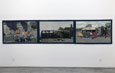
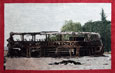
NOCHIXTLÁN, 2018-2019

Nochixtlán 2016 (del I al III) / Nedle felt / 90x120cms
Nochixtlán (I, II, III and V) / Nedle felted wool / 90x120cms each
Nochixtlán 2016 (del I al III) / Nedle felt / 90x120cms
Nochixtlán (I, II, III and V) / Nedle felted wool / 90x120cms each
Nochixtlán 2016 (del I al III) / Nedle felt / 90x120cms
Nochixtlán (I, II, III and V) / Nedle felted wool / 90x120cms each
Nochixtlán 2016 (del I al III) / Nedle felt / 90x120cms
Nochixtlán (I, II, III and V) / Nedle felted wool / 90x120cms each
Nochixtlán 2016 (del I al III) / Nedle felt / 90x120cms
Nochixtlán (I, II, III and V) / Nedle felted wool / 90x120cms each
Nochixtlán 2016 (del I al III) / Nedle felt / 90x120cms
Nochixtlán (I, II, III and V) / Nedle felted wool / 90x120cms each
Nochixtlán 2016 (del I al III) / Nedle felt / 90x120cms

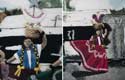
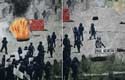
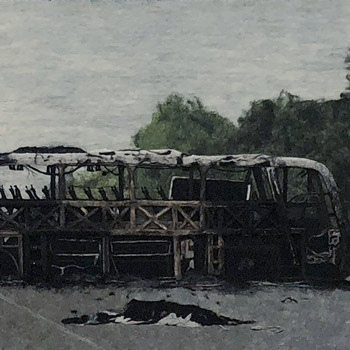
On June 19, 2016, in the community of Asuncion Nochixtlan (Oaxaca, Mexico), federal police attacked teachers and parents blockading highways to protest education reforms. The protesters defended themselves with stones and DIY bazookas as they blocked the roadway with burning buses. The police responded with tear gas cans, rubber bullets, and automatic rifle fire, which the authorities denied. According to official numbers, the confrontation left at least six dead and 108 people injured. The burnt buses remained untouched for almost a year becoming anti-monuments of the clash; they were used by the Teachers Union to stage a promotional video of their community-funded version of the Guelaguetza, a traditional dancing celebration of the region that, for many decades, has been coopted by the government.

In collaboration with master artisan Marcela Ortega from the community of Los Etlas, Oaxaca (located only 70 kms south of Nochixtlan) we created 6 needle-felted textiles based on press images from the conflict and its aftermath. Using wool to capture fire, these textiles memorialize the events in Nochixtlan and the teacher’s struggle for better working conditions, respect and a dignified life.

Group show at Enrique Guerrero Gallery, curated by: Gudrun Wallenböck

Show catalogue

Concert Baroque, 2016-18

2 channel HD video / stereo sound
8 min

Of silver the slender knives, the delicate forks; of silver the salvers with silver trees chased in the silver of the hollows for collecting the gravy of roasts; of silver the triple-tiered fruit trays of three round dishes crowned by silver pomegranates; of silver the wine flagons hammered by craftsmen in silver; of silver the fish platters, a porgy of silver lying plumply on a seaweed lattice; of silver the saltcellars, of silver the nutcrackers, of silver the goblets, of silver the teaspoons engraved with initials…

Concert Baroque, Alejo Carpentier

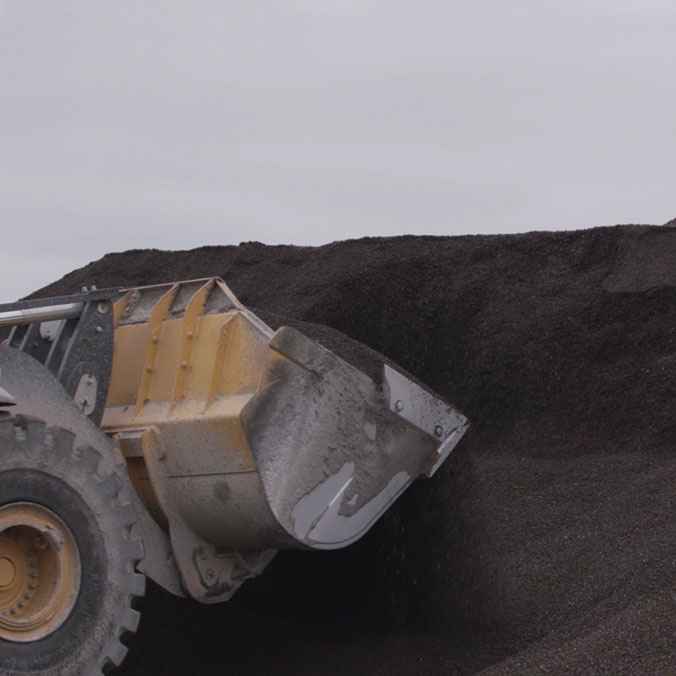
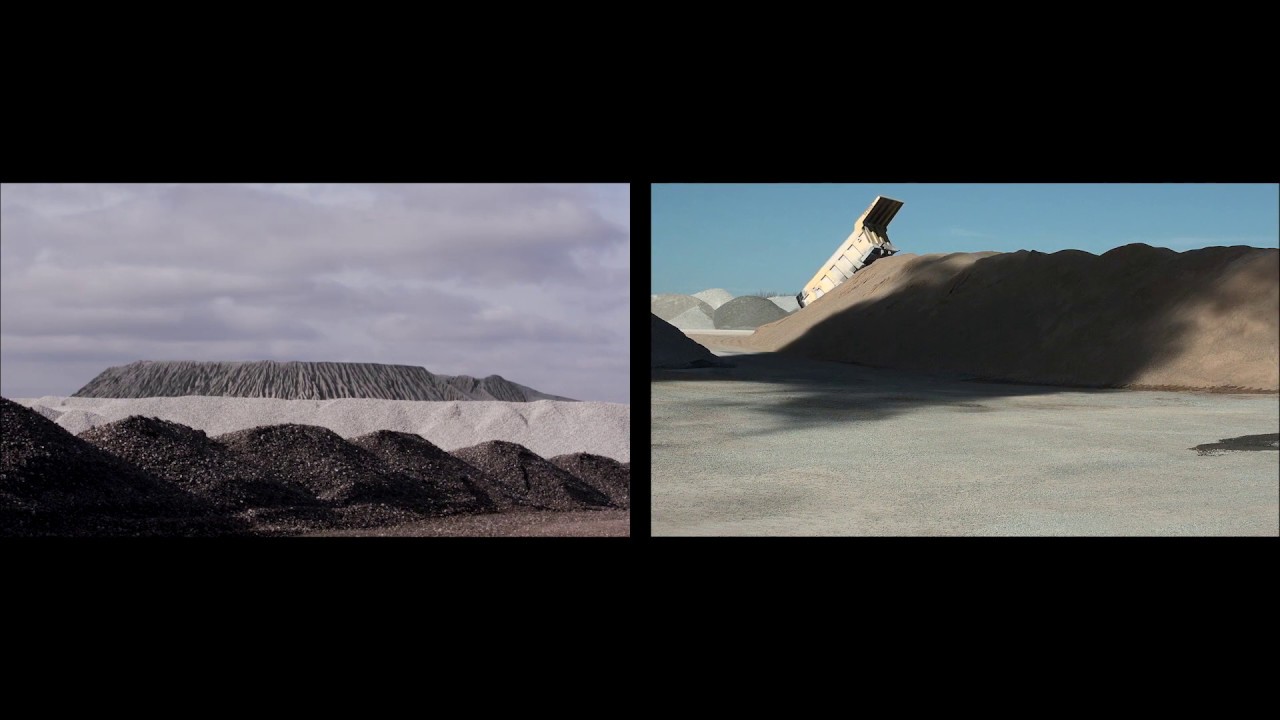
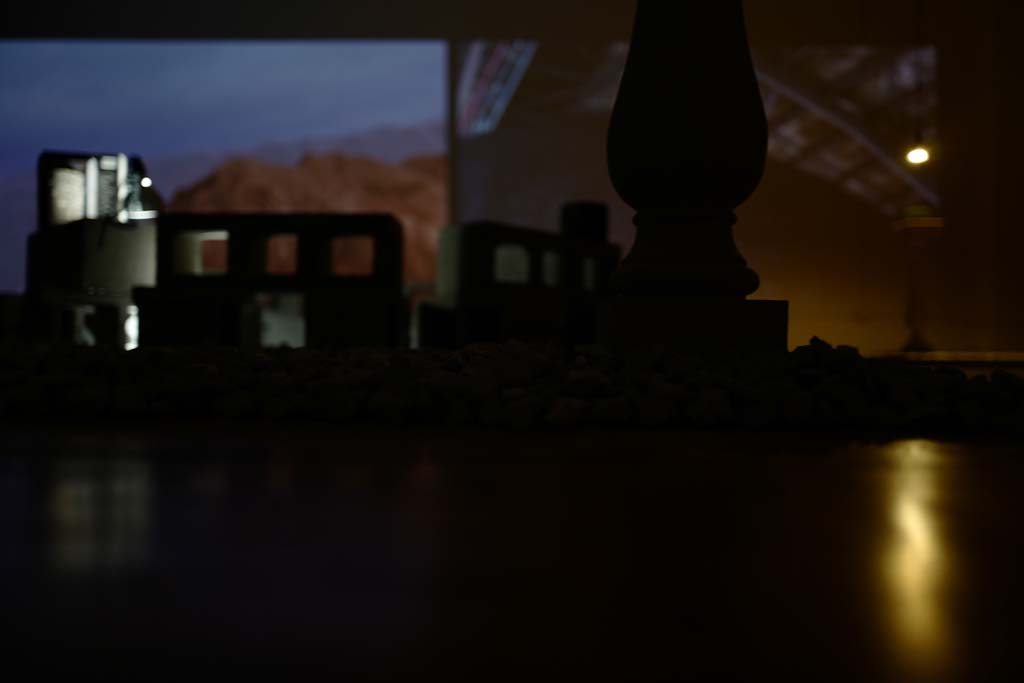
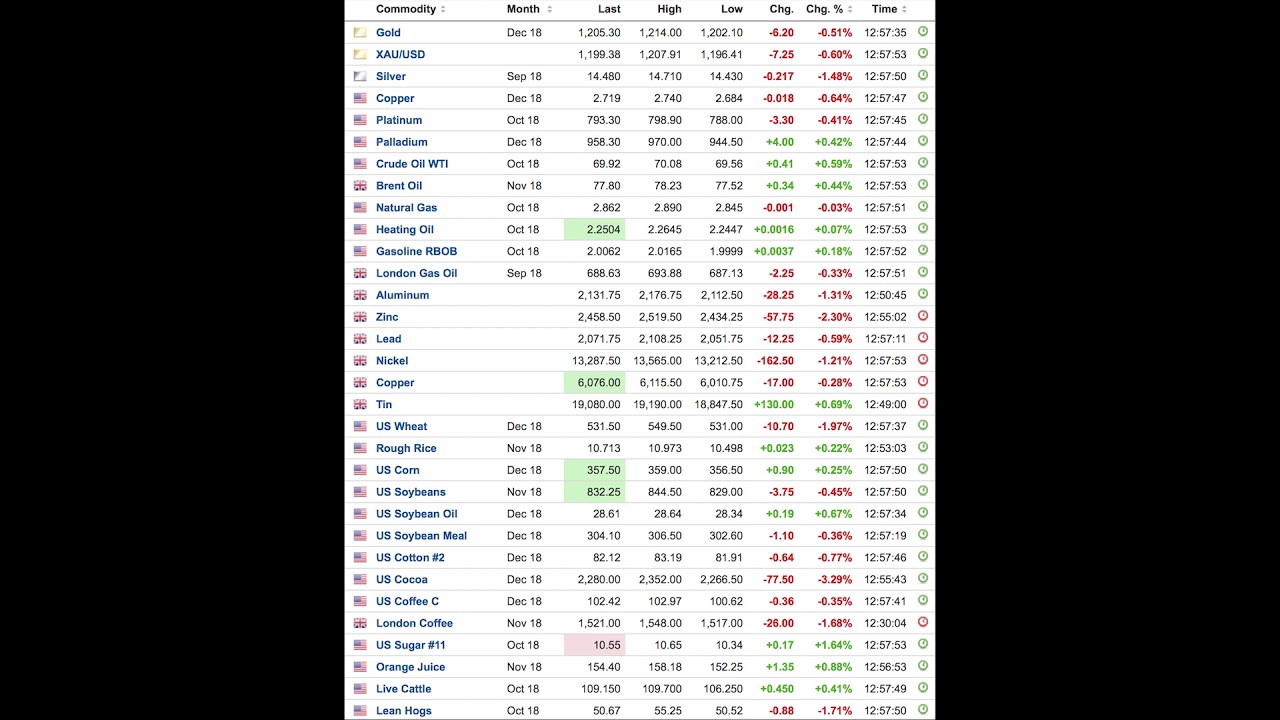
Alejo Carpentier, one of the most influential writers in Latin American literature, frames the opening passage of his well-known 1974 novel Concert Baroque in silver. This baroque description of excessive silverware not only conducted a cacophony of silver ringing, but also alluded to the wealth of the “New World” – in particular, Mexico – due to silver mining. Mexico remains to be one of the world’s largest silver producers. Borrowing the title of the novel, Concert Baroque (2016-18) is a two-channel video that documents mining activities at the Thornton Quarry, an aggregate quarry in South Illinois that used to supply limestone in the early 20th century for some of Chicago’s iconic architectures and roads. This work measures the ecological impact of mining and its kinship to capitalism through visual and auditory analogies. The incredible resemblance between the shape of the abandoned trading pit at the Chicago Board of Trade Building and that of open-pit silver and copper mines leads to a reflection on the connection between extraction and transaction. Much of what we build upon the earth comes from underneath the earth – the modern city is an upside-down city. As the earth sinks, profits rise. The ghostly cavities caused by mining become the future burial ground for capitalist residuals.

Curated by: Nicky Ni (LITHIUM)
Sound design: Diego Espinosa
Editing: Adela Goldbard

Concert Baroque SLIDE
Gallery shots, LITHIUM, Chicago, 2018
Concert Baroque SLIDE
Gallery shots, LITHIUM, Chicago, 2018
Concert Baroque SLIDE
Gallery shots, LITHIUM, Chicago, 2018
Concert Baroque SLIDE
Gallery shots, LITHIUM, Chicago, 2018
Concert Baroque SLIDE
Gallery shots, LITHIUM, Chicago, 2018

Screencapture, Realtime futures, 2018
conversation PDF
Brochure PDF

A WORLD OF LAUGHTER, A WORLD OF FEARS, 2017

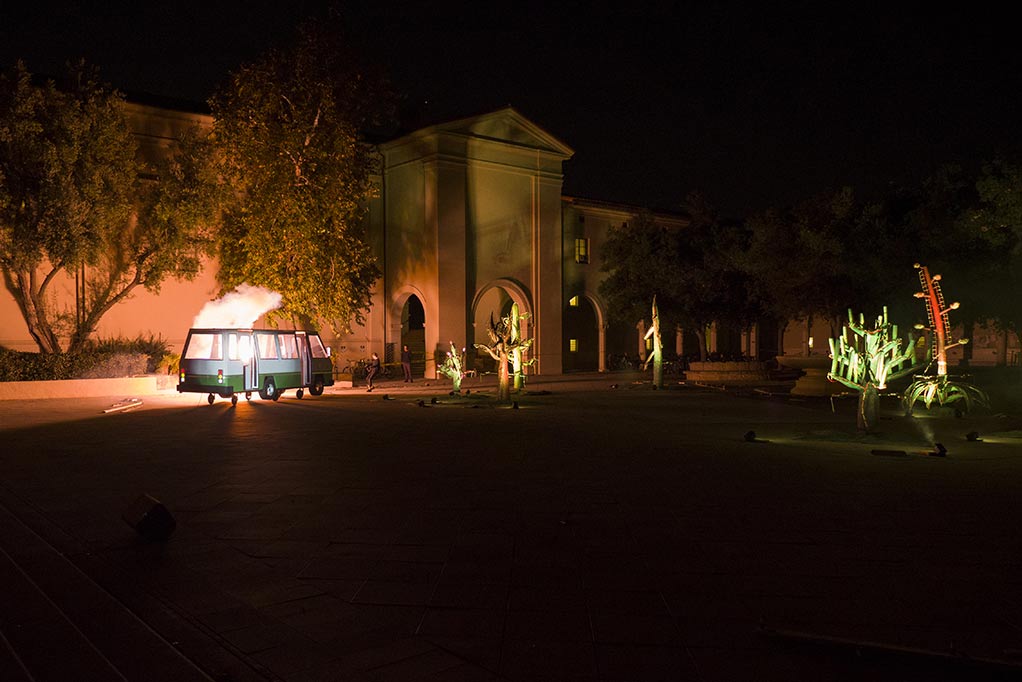
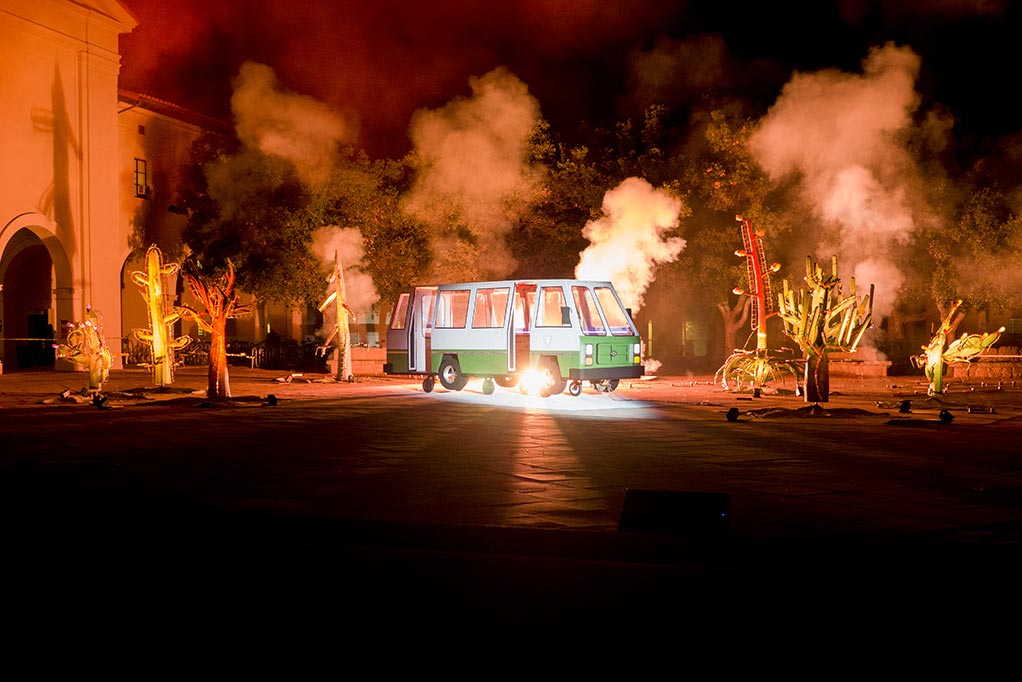
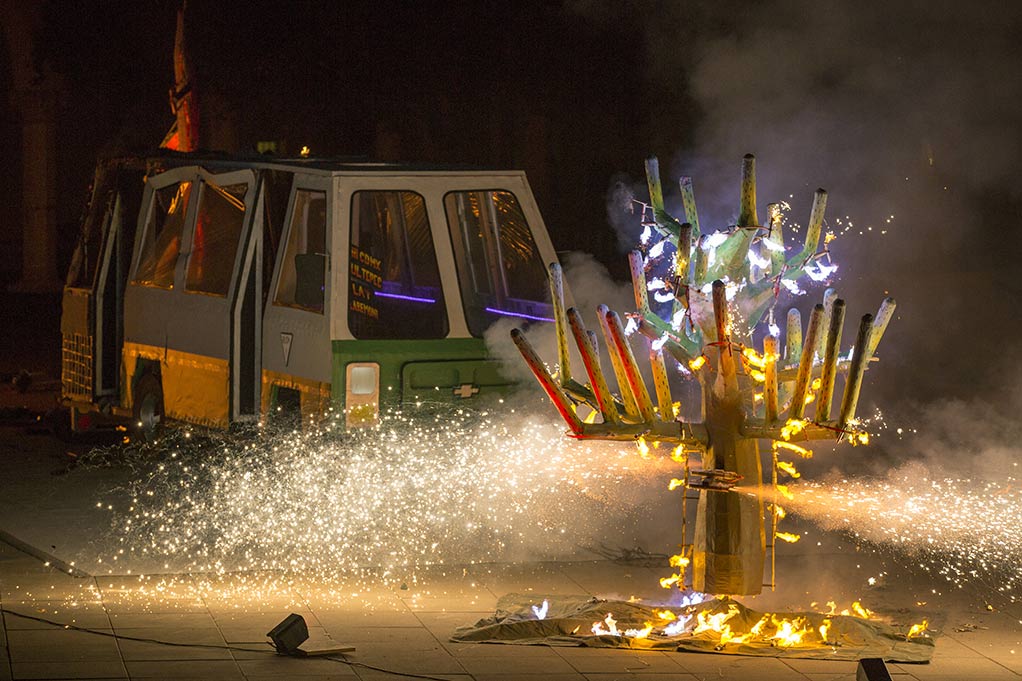
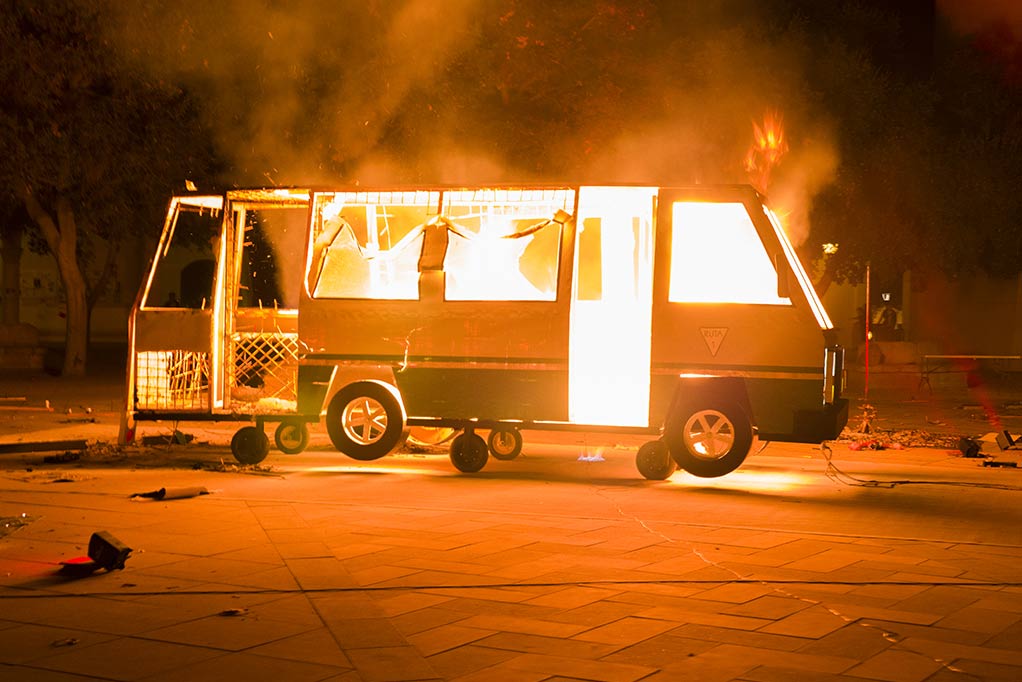
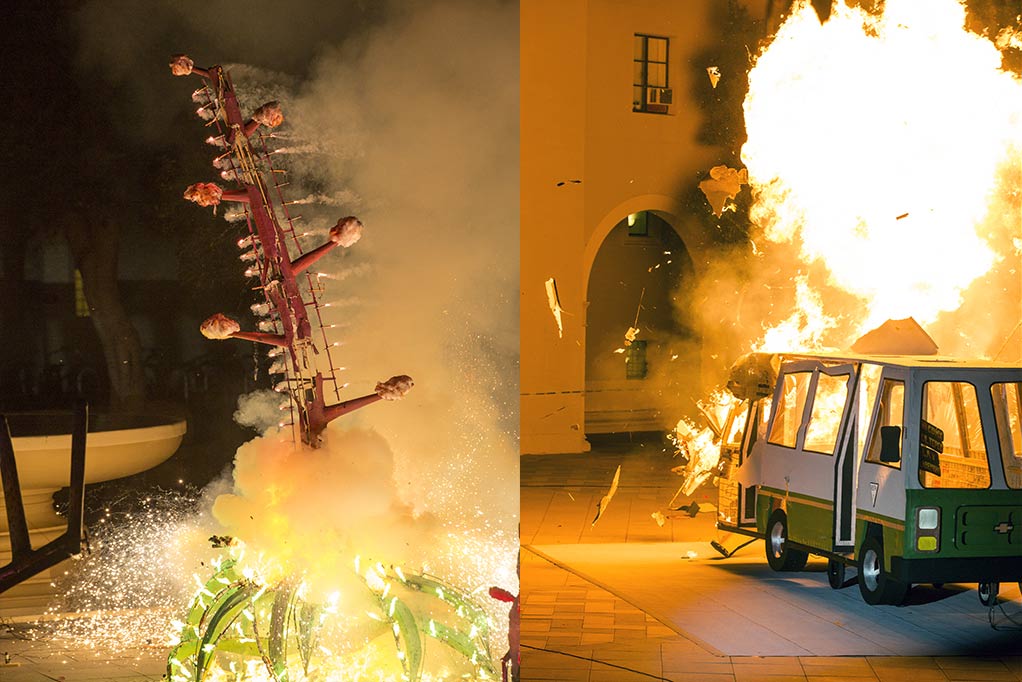
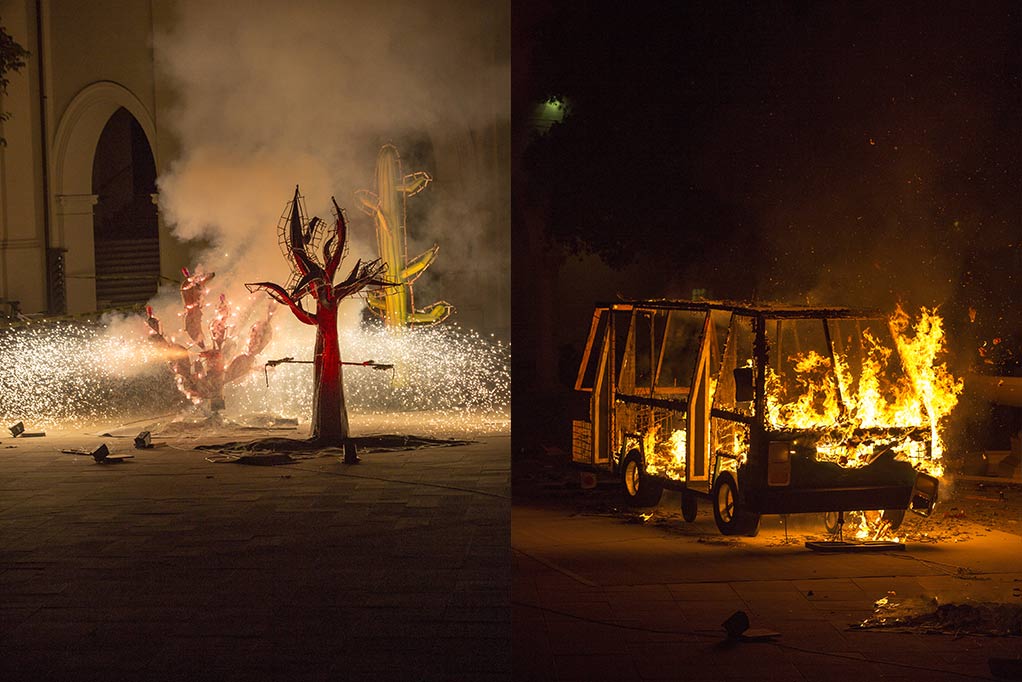
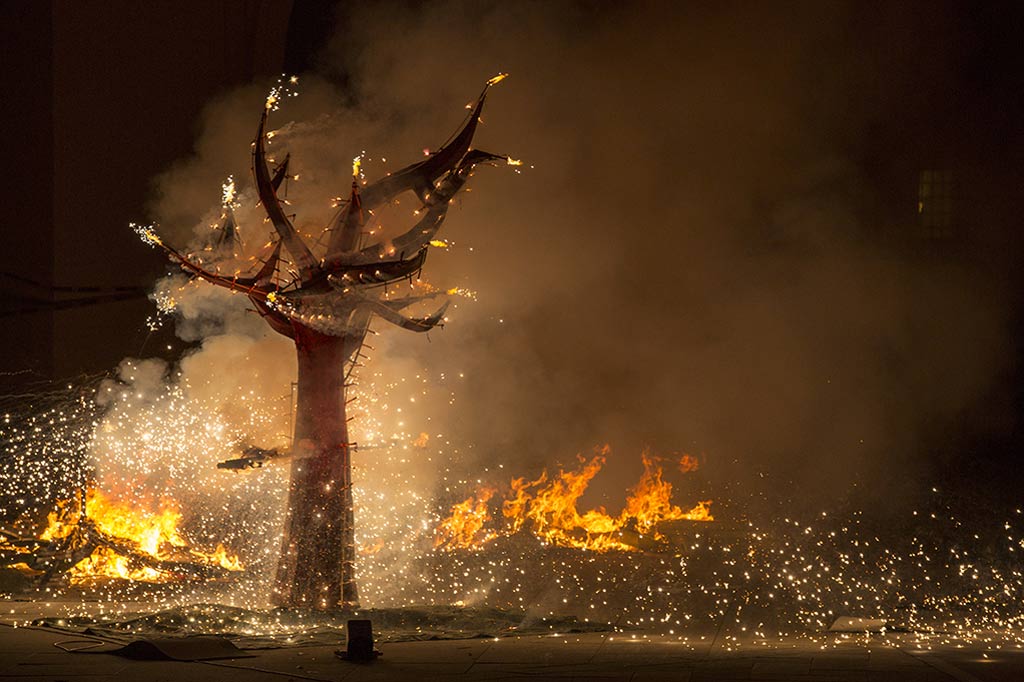
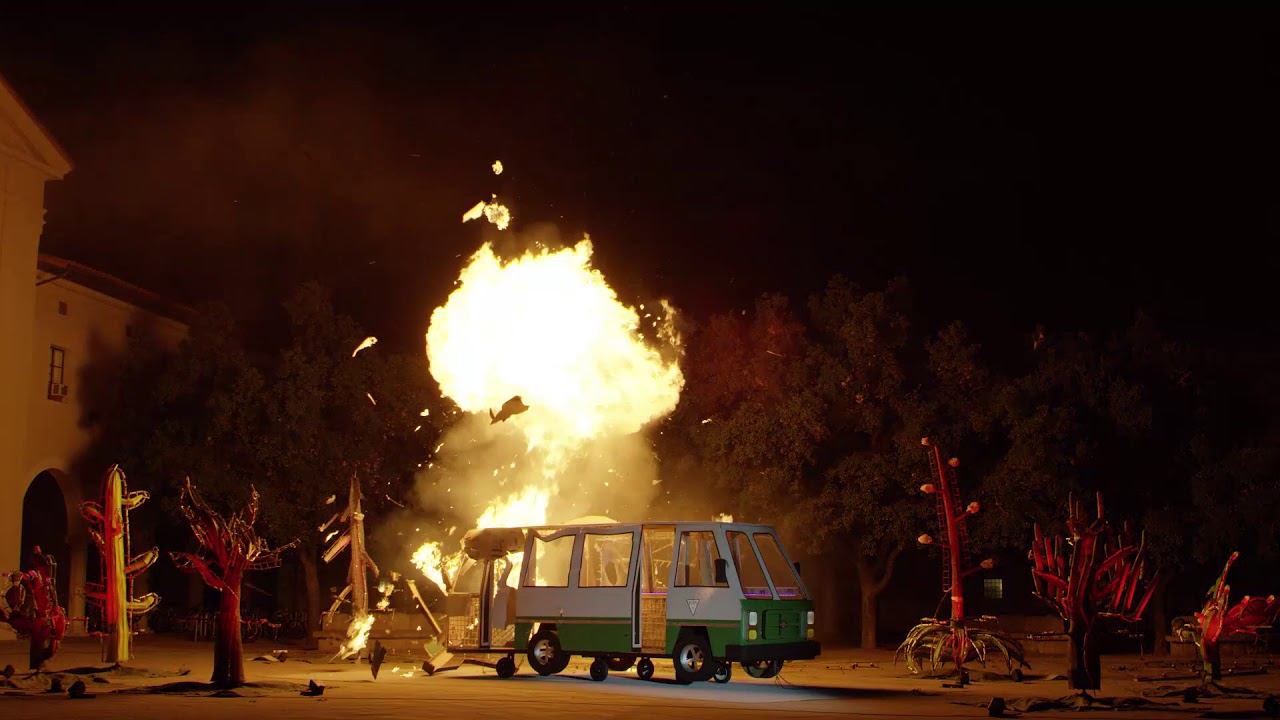
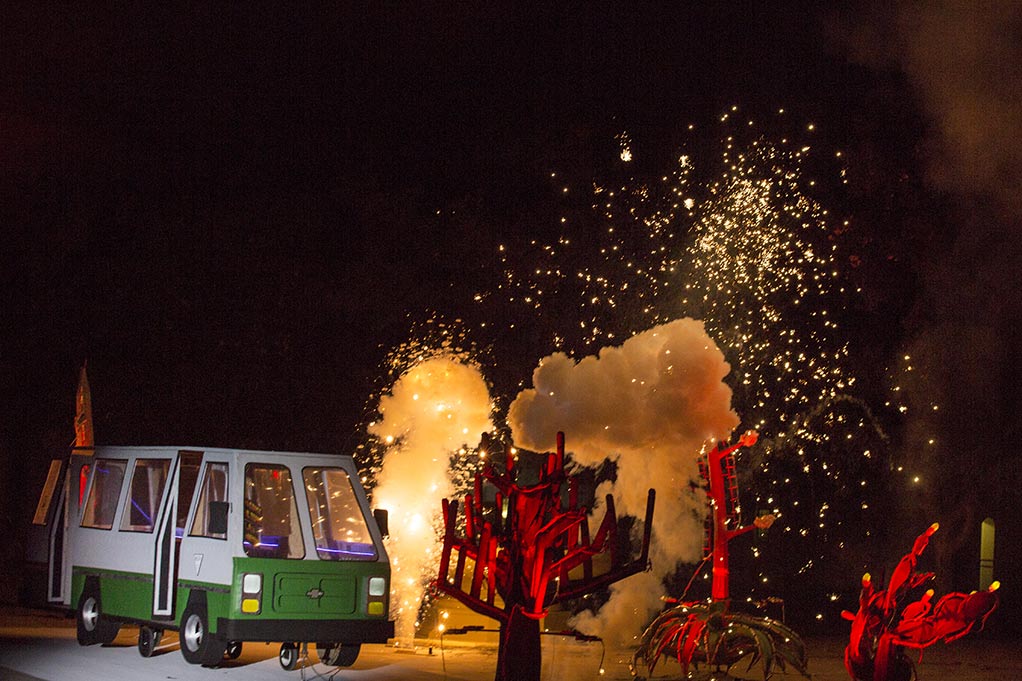
Documentation from November 18, 2017, pyrotechnic performance at Pomona College, Claremont, CA. Photographs by Media Art Services, Hannah Kirby and Peter Kirby

A World of Laughter, A World of Fears was a theatrical spectacle combining fireworks, sound, and lighting effects. It unfolded with the Microbus serving as the main element of the reenacted/fictionalized event. The event’s narrative is based on a conflict in the community of Asuncion Nochixtlan in Oaxaca, Mexico. On June 19, 2016, federal policemen tried to remove professors and parents blockading highways to protest education reforms. The protesters defended themselves with stones and DIY bazookas as they blocked the roadway with burning buses. The police responded with tear gas cans, rubber bullets, and automatic rifle fire, which the authorities denied.
Direction, Production and Design: Adela Goldbard
Construction: Amauri Sanabria, Jesús Sanabria, Víctor Rojas, Eduardo Pérez (Artsumex Collective)
Sound Design: Matias Barberis
Pyrotechnics: Pyro Spectaculars by Souza
Lighting: RK Diversified Entertainment
Project Management: Ian Byers-Gamber and Gary Murphy
A World of Laughter, A World of Fears was presented in conjunction with the exhibition, “Prometheus 2017: Four Artists from Mexico Revisit Orozco” and is part of the Getty Foundation’s PST: LA/LA initiative.

APPLAUSE, CONFETTI, PAPER STREAMERS AND FLOWERS, 2017

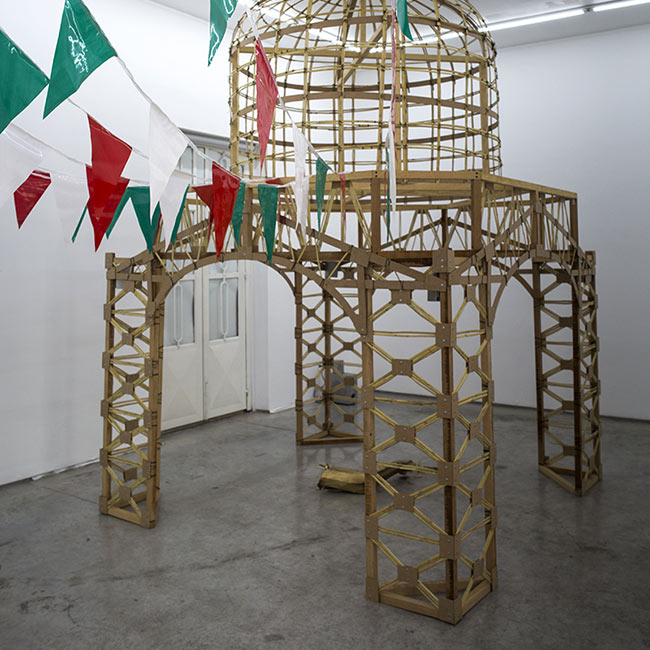
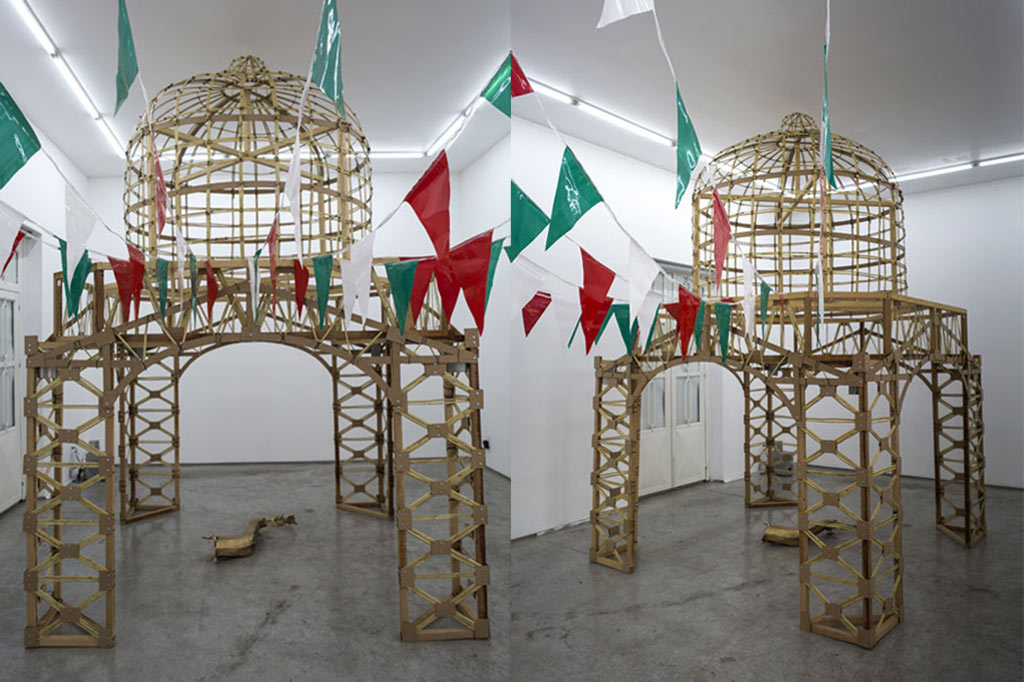
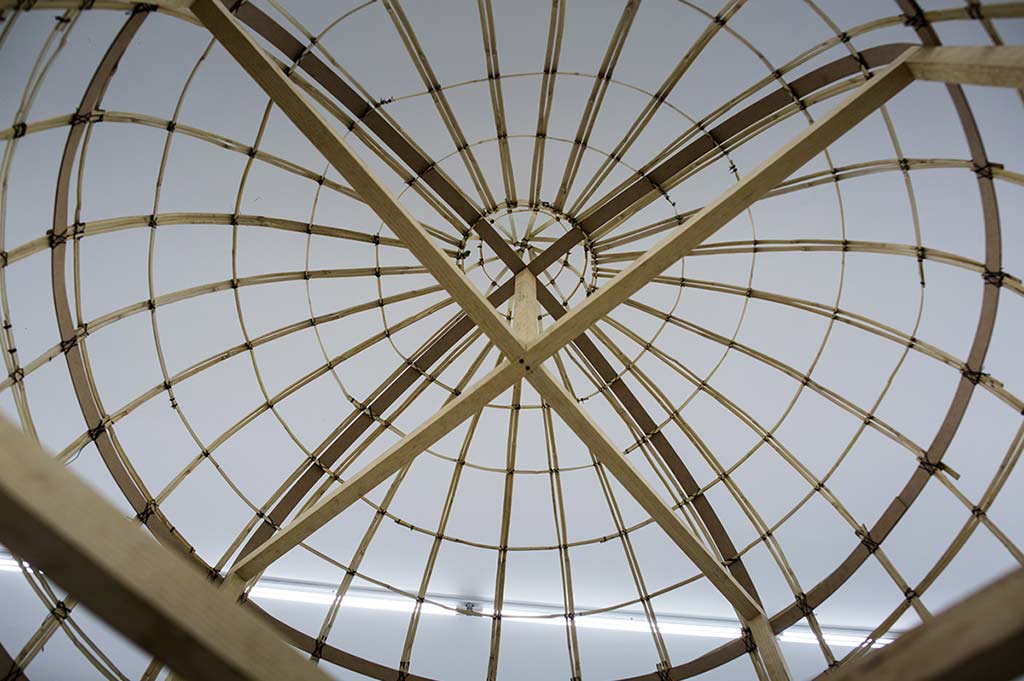
Hall of the Lost Steps (Salón de los pasos perdidos) | Wood, reeds, plastic flags, and 2-channel audio inside of structure (audio in collaboration with Matias Barberis) | 90 x 90 x 138 in. (2.30 x 2.30 x 3.50 m). Installation view, Enrique Guerrero Gallery, Mexico City.
Hall of the Lost Steps (Salón de los pasos perdidos) | Wood, reeds, plastic flags, and 2-channel audio inside of structure (audio in collaboration with Matias Barberis) | 90 x 90 x 138 in. (2.30 x 2.30 x 3.50 m). Installation view, Enrique Guerrero Gallery, Mexico City.

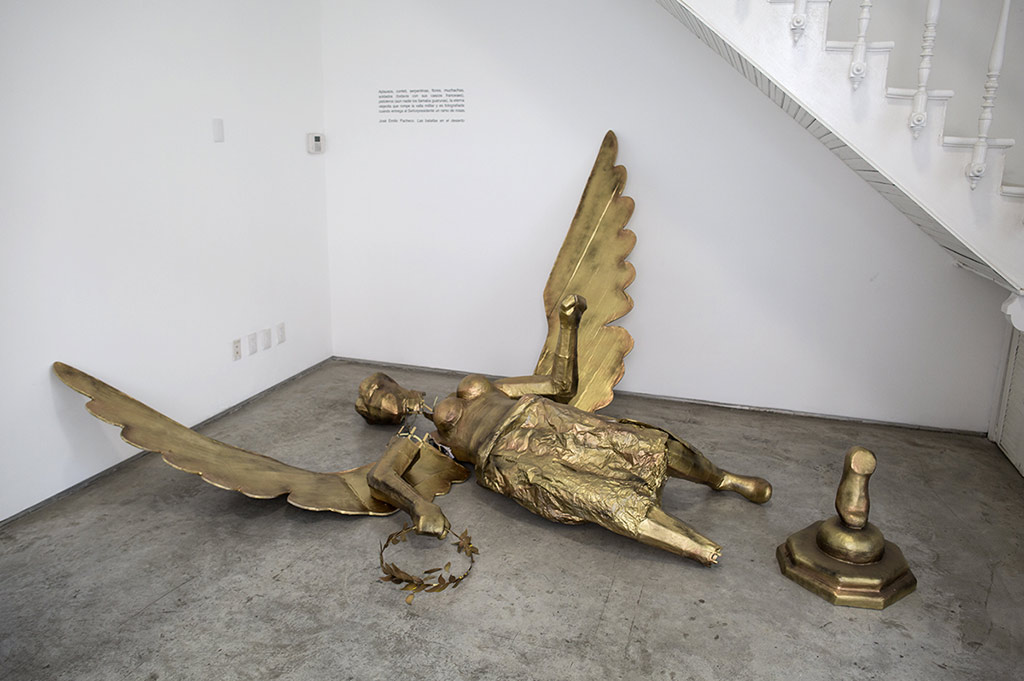
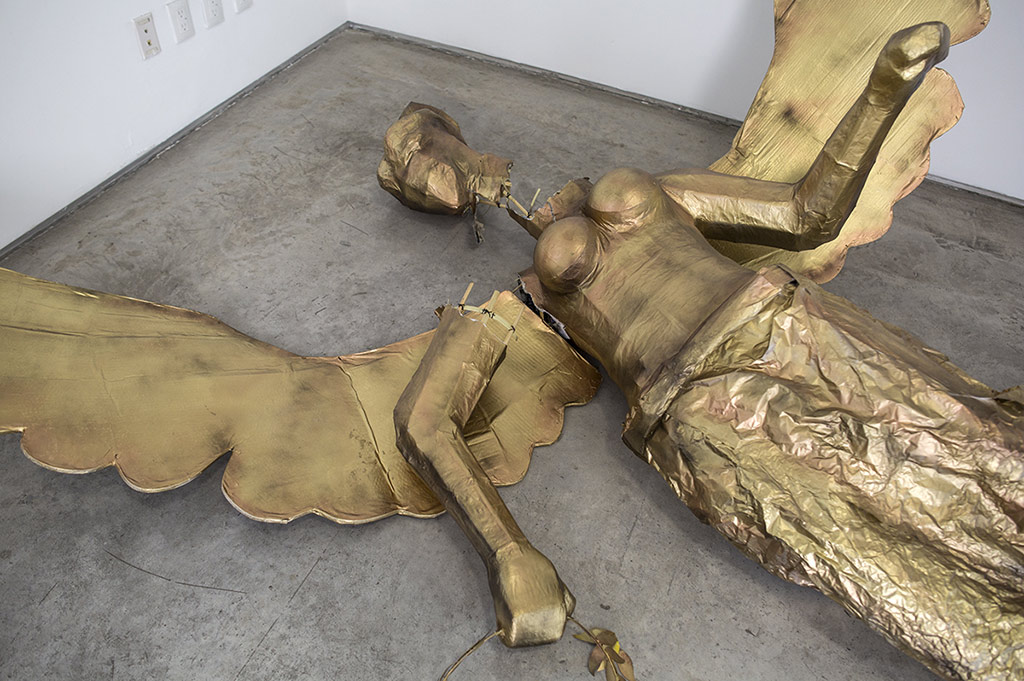
Fallen Angel (Ángel caído) | Wood, reeds, paper, paint | 70 x 50 in. aprox. Installation view, Enrique Guerrero Gallery, Mexico City.

Chain Reaction (Reacción en cadena) | Steel, reeds, newspaper, paint, Fireworks | 130 x 130 in. (3.30 x 3.30 m). Installation view, Enrique Guerrero Gallery, Mexico City.
Chain Reaction (Reacción en cadena) | Steel, reeds, newspaper, paint, Fireworks | 130 x 130 in. (3.30 x 3.30 m). Installation view, Enrique Guerrero Gallery, Mexico City.

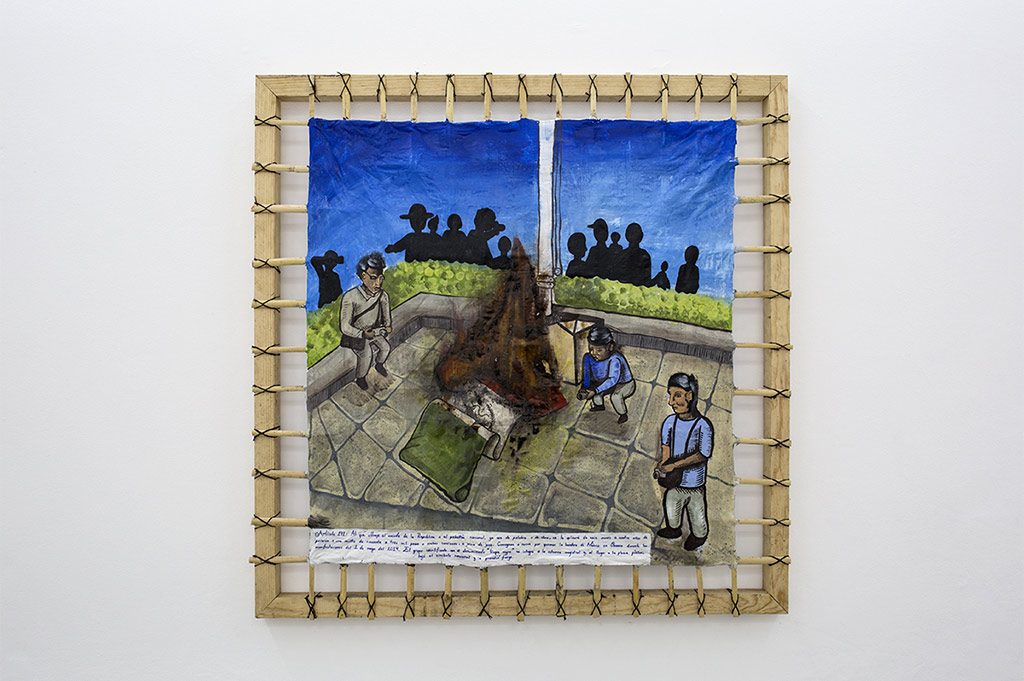
Article 191 (Artículo 191) | Wood, reeds, newspaper, paint, gunpowder | 39 x 39 in. (1 x 1 m). Installation view, Enrique Guerrero Gallery, Mexico City.
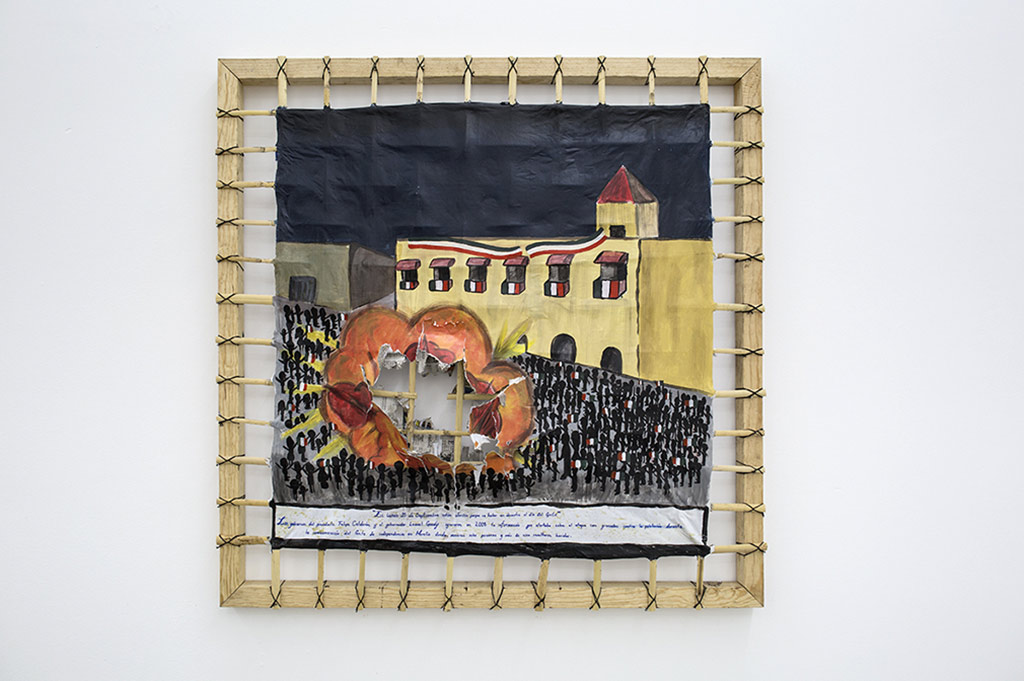
Pay Attention (Estén atentos) | Wood, reeds, newspaper, paint, fireworks | 39 x 39 in. (1 x 1 m). Installation view, Enrique Guerrero Gallery, Mexico City.
Installation view, Enrique Guerrero Gallery, México City.

“Applause, confetti, papef streamers, flowers, girls, soldiers (still wearing their French helmets), gunmen (no one called them guaruras), the eternal old lady who breaks the military fence and is photographed when she hands the president a bouquet of roses”.

José Emilio Pacheco. Battles in the Desert

Symbols, despite their most traditional descriptions, appear to need a solid state of existence. Some symbols have been forged (almost literally) on iron, concrete, fabric, paper and countless materials. But this is not a random process; there are previous politics involved that stamp on them their own narrative with its respective imaginary of the world. In this body of work, symbols are freed from their material hardness, the one that keeps them standing, and reveals their reifying and ideological construction, submitting them to a process of deconstruction. Political architectures of Mexico are rethought, reconstructed and destroyed to expose the internal layers that generate the myth of patriotic pride rooted in official history and its symbols. Beyond the ludic, in this precarious territory it is urgent to preserve social memory and revive a critical collectivity to demystify the paternalistic figure and its commemorative coercion, in crave of new and legitimate celebrations.


CHECKMATE OR THE POLITICS OF ILLUSION, 2017

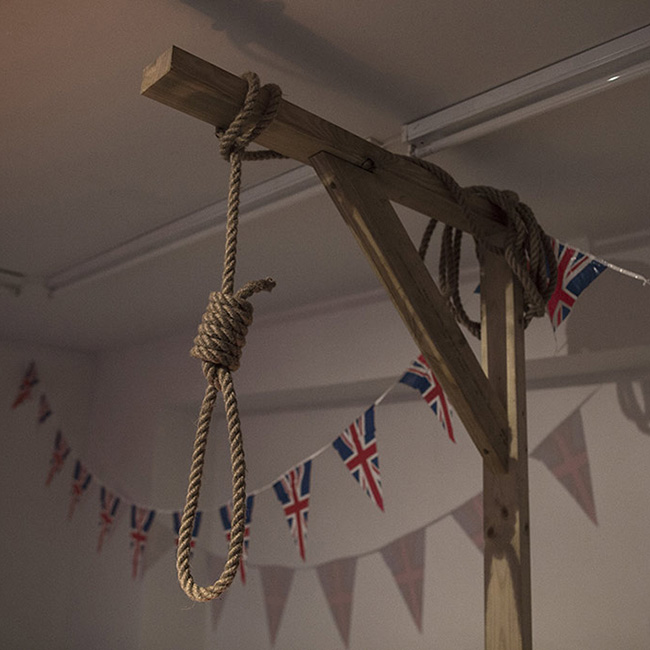
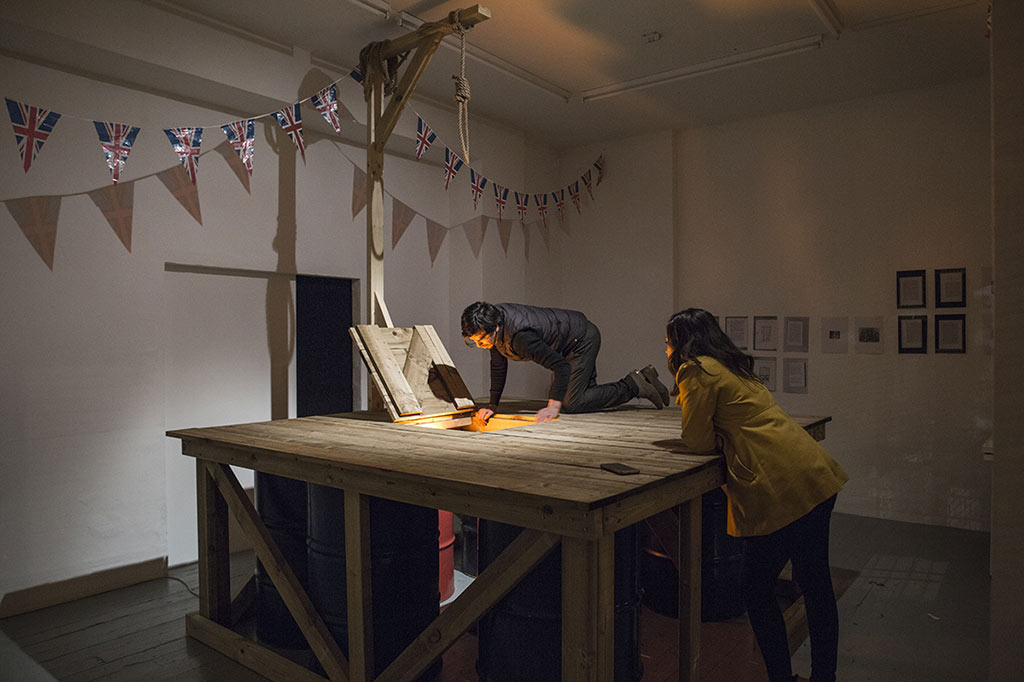
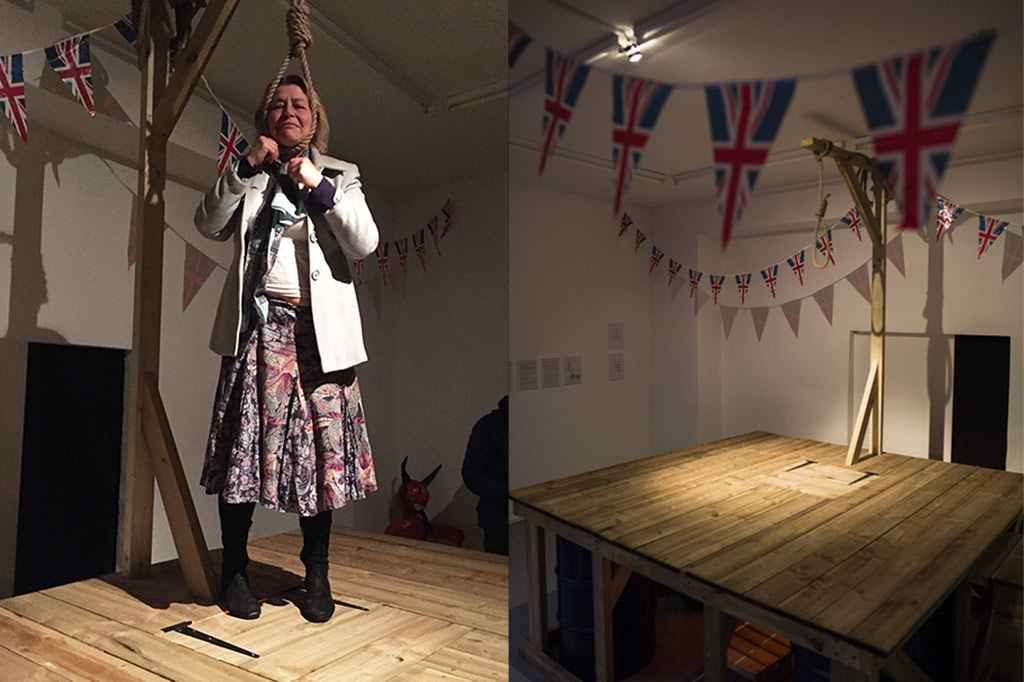
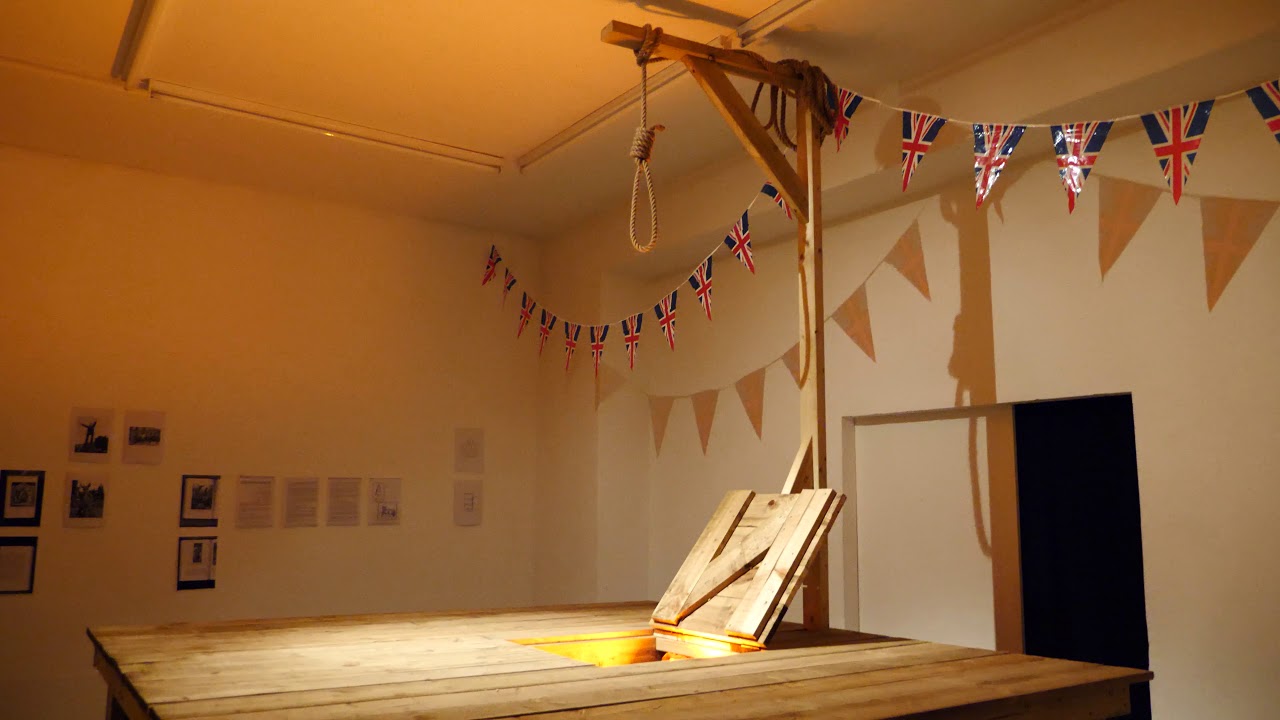
Wood, rope, and metal barrels with 6-channel audio installation inside / 94 x 94 x 110 in. (2.40 x 2.40 x 2.80 m). Installation view, Chalton Gallery, London.

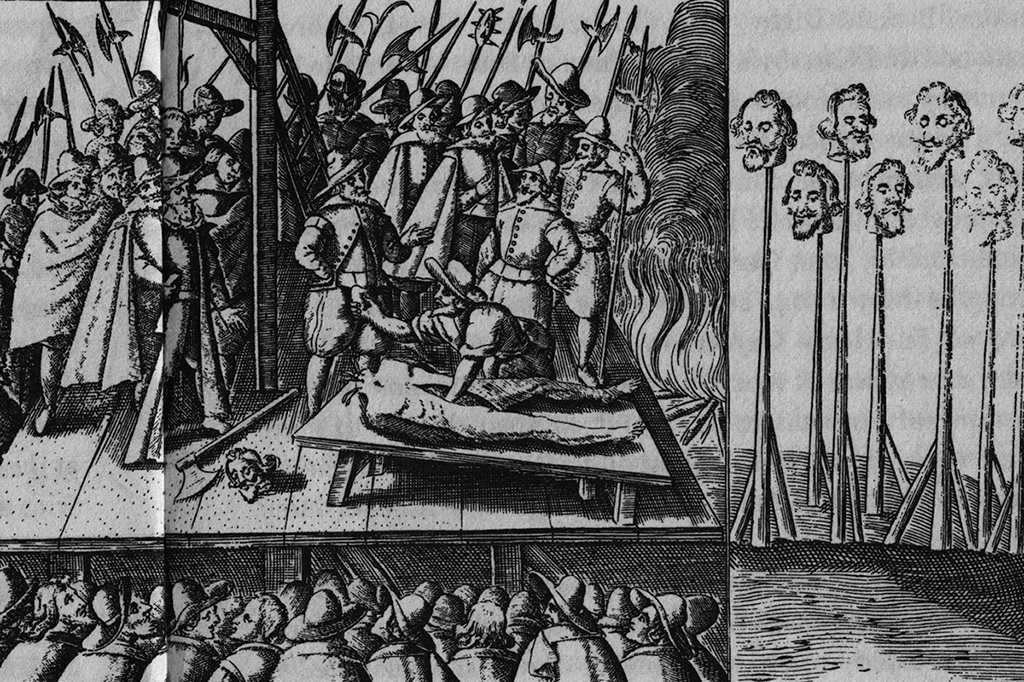
Checkmate or The Politics of Illusion is a precarious installation consisting on a simple stagelike structure made of wood and supported by metal barrels, which resembles both a medieval theatre stage and an execution platform that the audience could activate by entering from above and from below. Documents and a sound-piece by artist Masato Kakinoki helped trace connections amongst effigy-burning traditions in Great Britain and Latin America, pinpointing the defiant character of such rituals.

Curated by: Lassla Esquivel
Sound piece: Masato Kakinoki (abirdwhale)
Construction: Kenji Takahashi and Liam Cahill

Images from Medieval theatre stages, Guy Fawkes Night and Burning of Judas in Mexico


A SIMPLE MACHINE, 2017

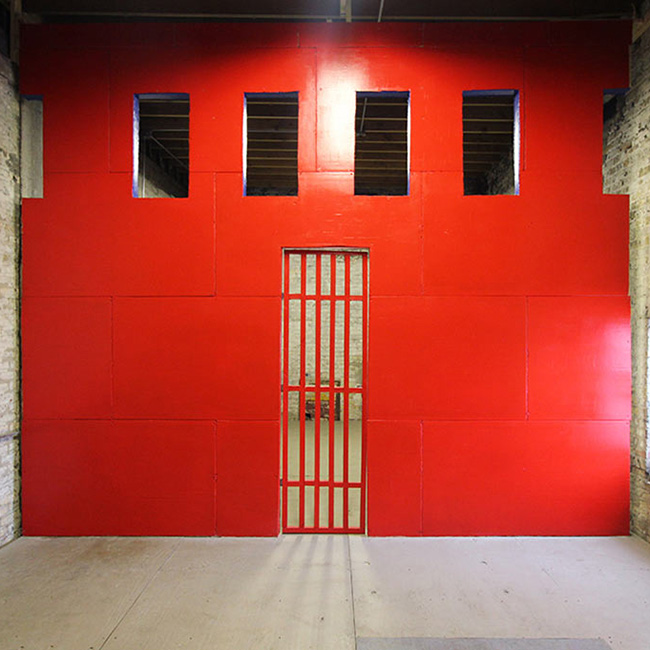
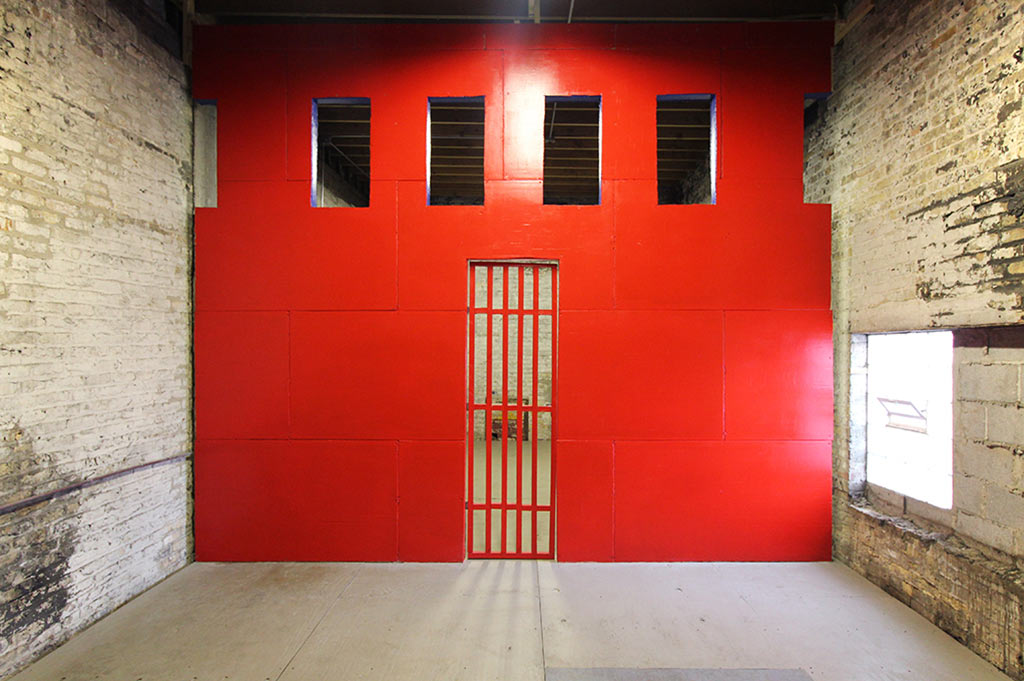
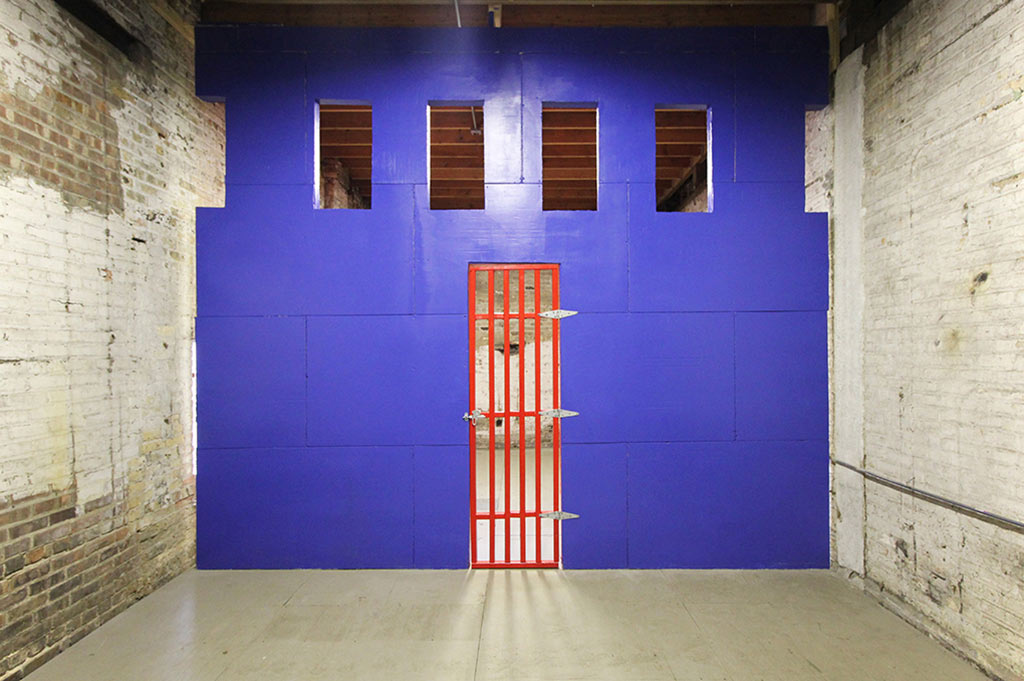
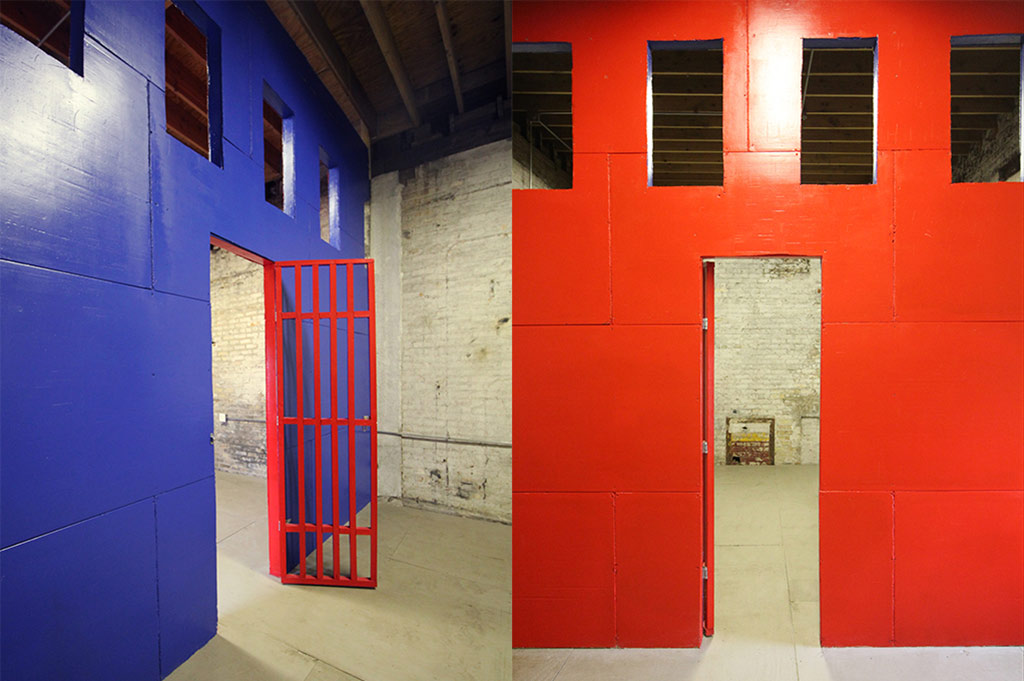
Wood, cement panels, paint. Installation view, New Capital Gallery, Chicago.

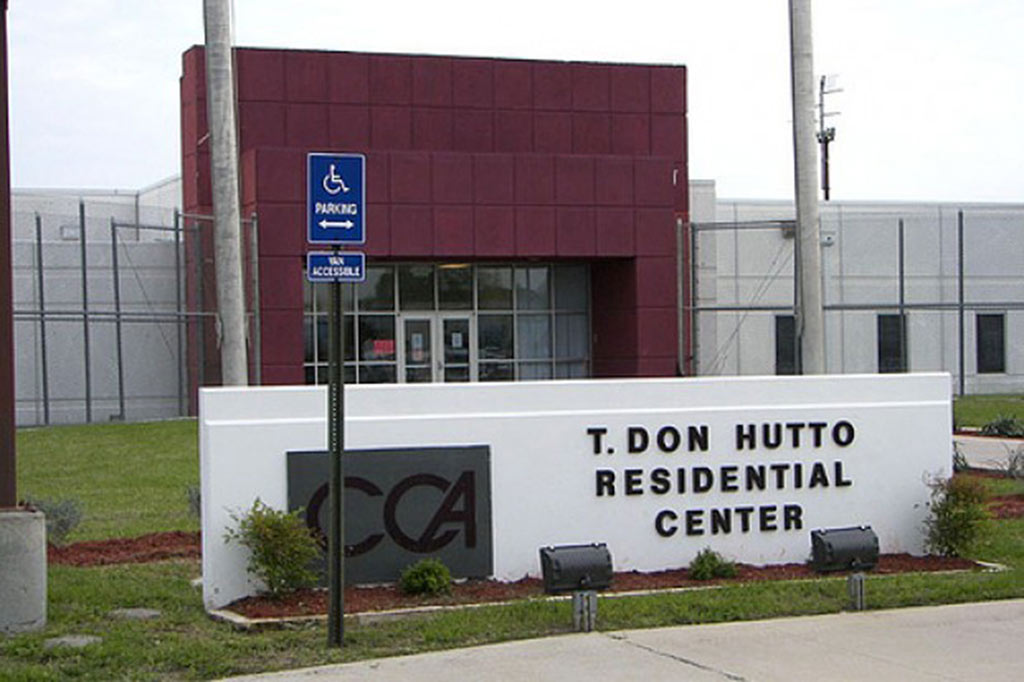
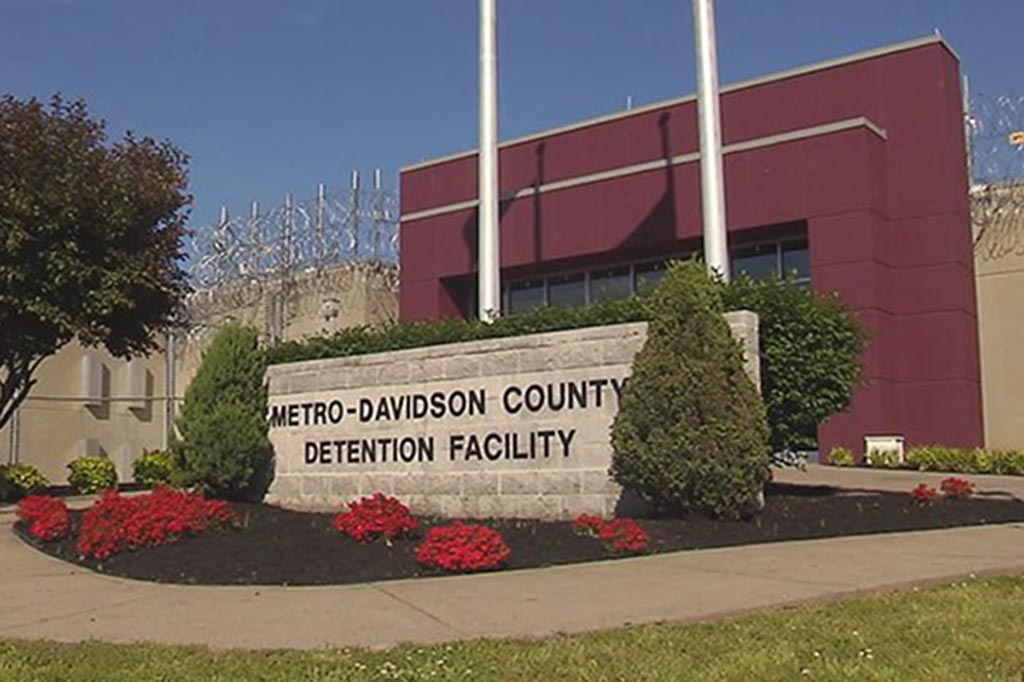
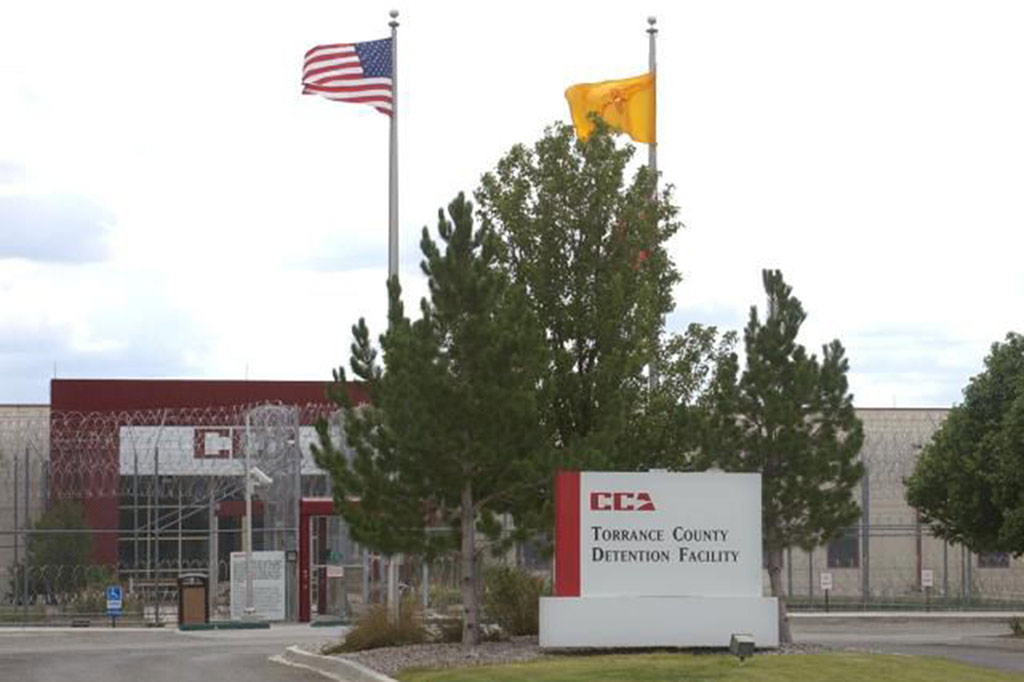
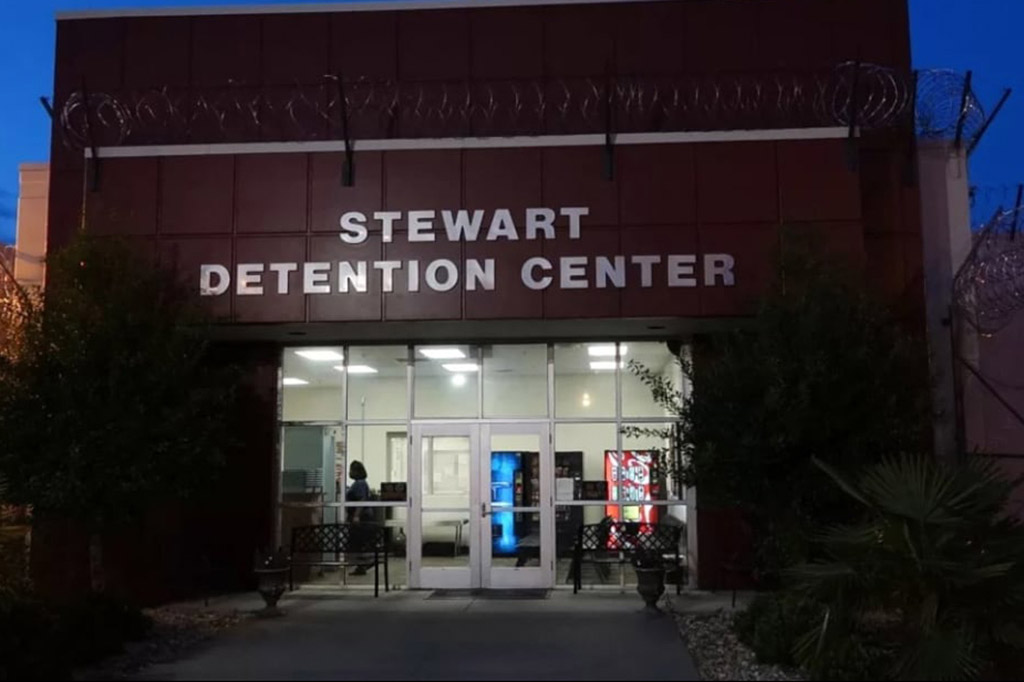
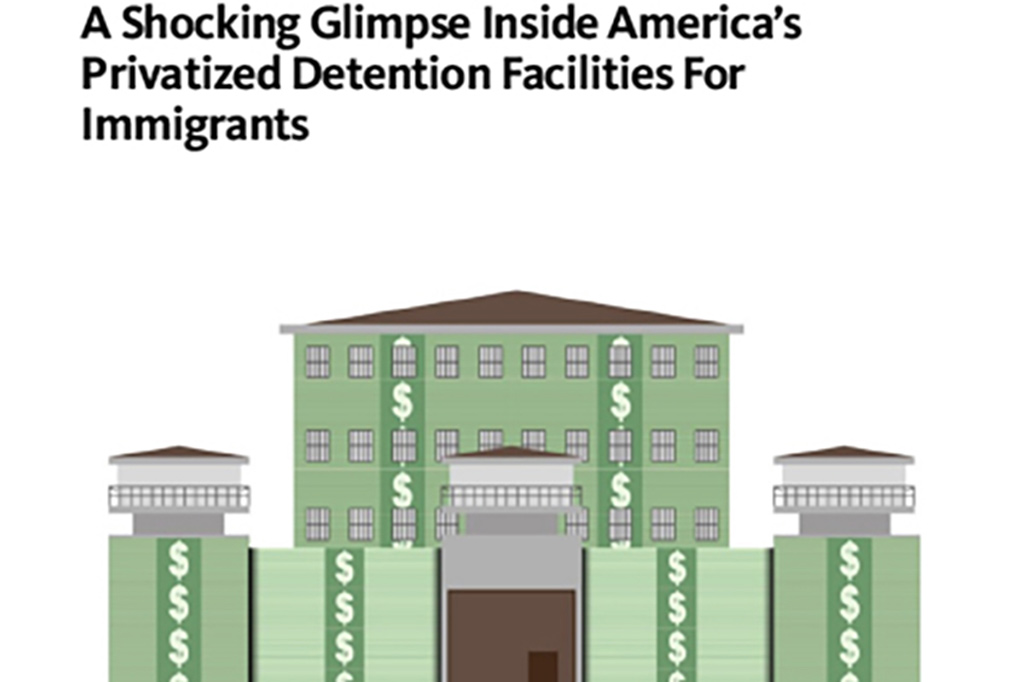
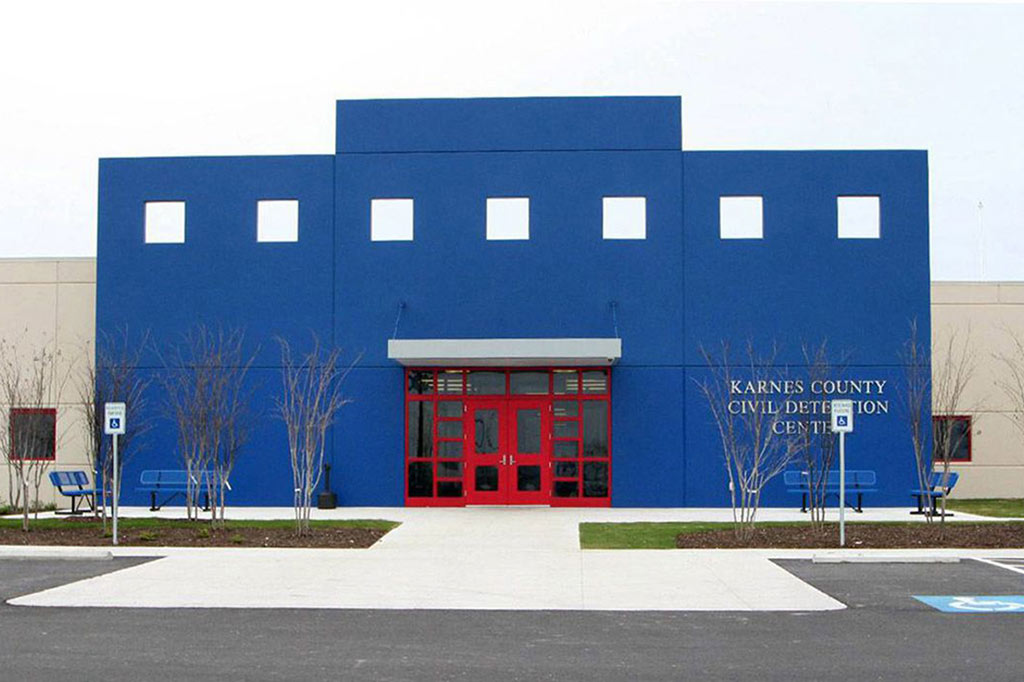
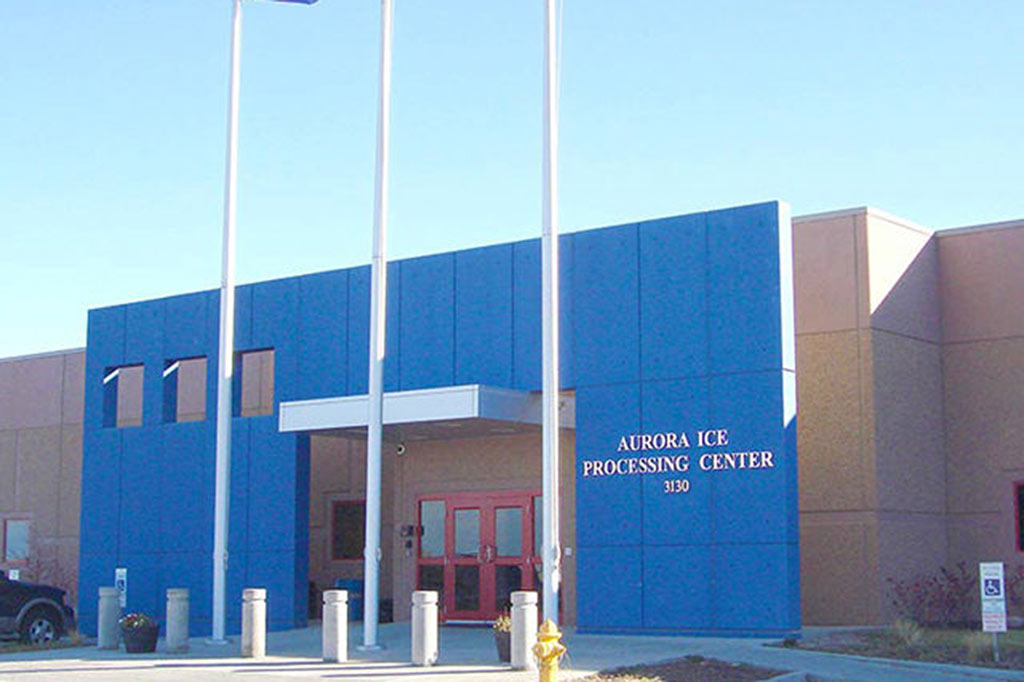
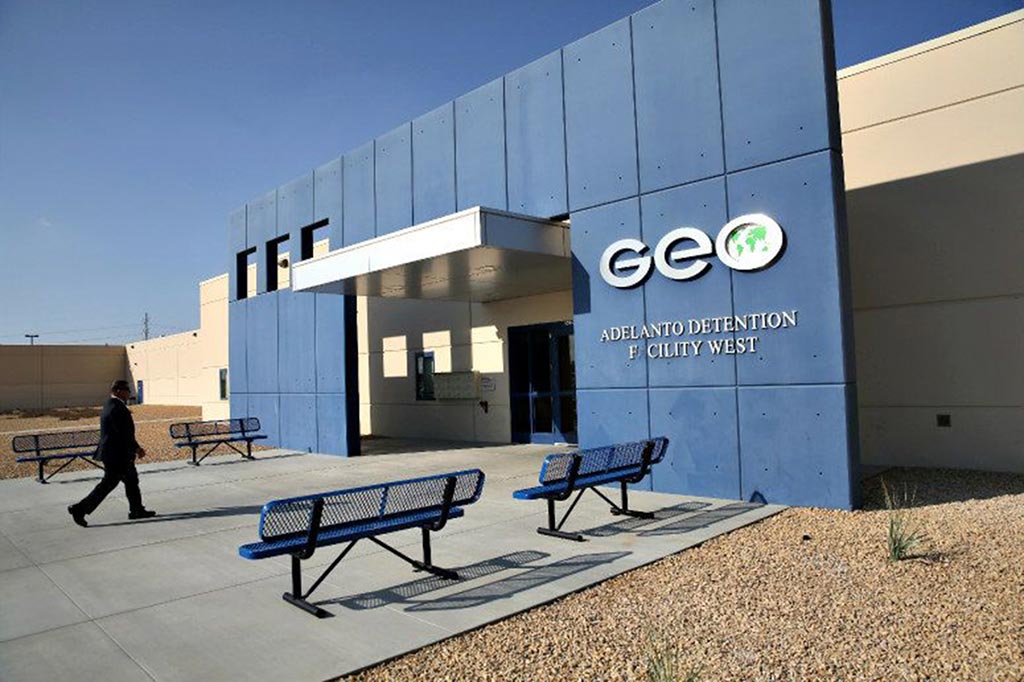
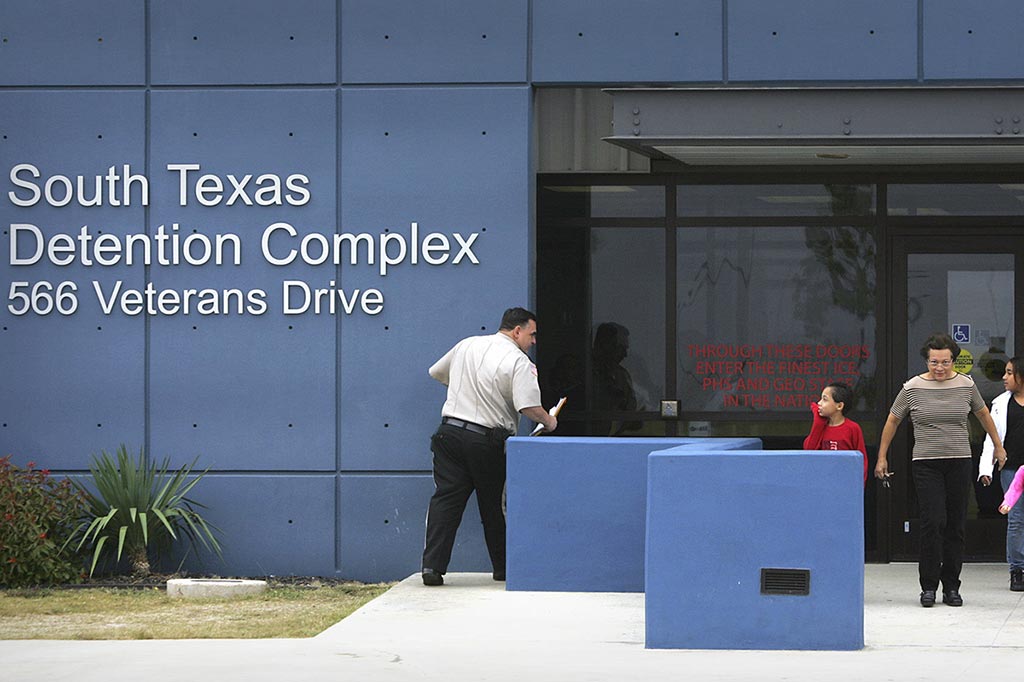
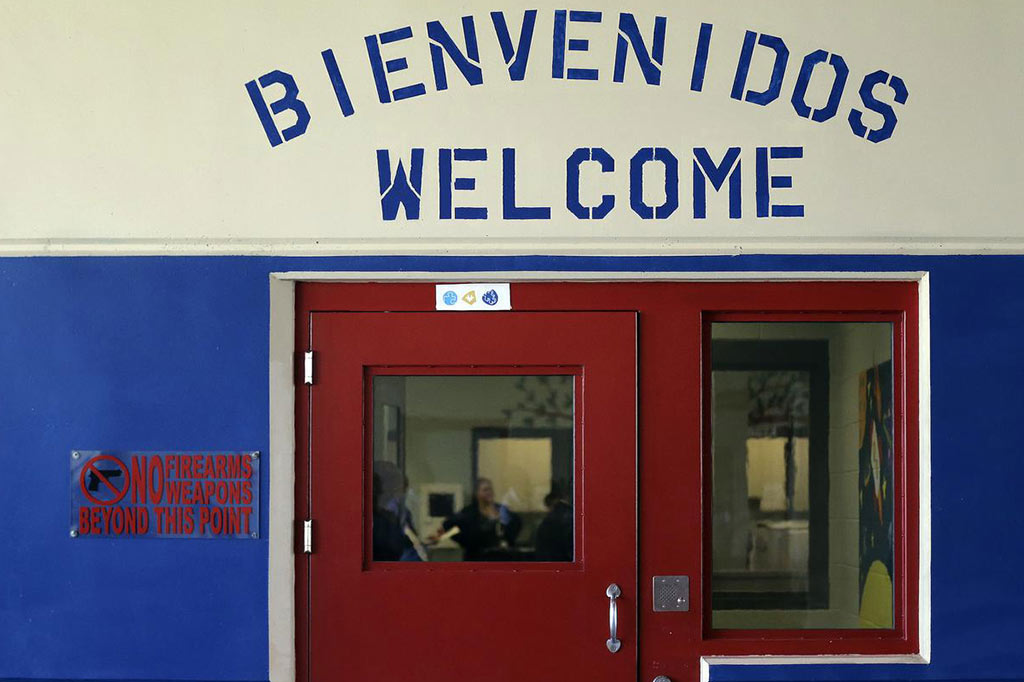
A wall that bisects the gallery was built in collaboration with workers from the Albany Park Workers Center a program from the Latino Union of Chicago, an organization that envisions power for low-wage immigrant and US-born workers with dignified and respectful work and lives. The structure focuses on a research into the prison architecture of the United States and its relationship with undocumented migrants. It is influenced by detention centers for migrants built primarily by two private corporations, The GEO Group Inc. and Core Civic. The first uses the color blue in its logo and branding, the second, red, emulating the political party divisions of the country with their use of “patriotic colors”. These corporations also resort to the aesthetics and materials of large transnational corporations’ architecture such as McDonalds, Ford, and Walmart, not to mention Coca-Cola and Pepsi. The installation complicates the narrative between politics and consumerism by drawing a clear formal line between the two. The show concluded with the collective and complete destruction of the installation with the help from members from The Chicago Coalition of Household Workers and The Albany Park Workers Center, who also shared their experiences concerning detention centers for migrants.

Construction: Arturo Nieto, Carlos López and Benjamín Hernández (Albany Park Workers Center).


MISSION ACCOMPLISHED, 2016

Variable measures
Wood, reeds, newspaper, paint, fireworks, HD video and stereo sound
Variable measures
Wood, reeds, newspaper, paint, fireworks, HD video and stereo sound
Variable measures
Wood, reeds, newspaper, paint, fireworks, HD video and stereo sound
Variable measures
Wood, reeds, newspaper, paint, fireworks, HD video and stereo sound
Variable measures
Wood, reeds, newspaper, paint, fireworks, HD video and stereo sound
Variable measures
Wood, reeds, newspaper, paint, fireworks, HD video and stereo sound
Variable measures
Wood, reeds, newspaper, paint, fireworks, HD video and stereo sound
Variable measures
Wood, reeds, newspaper, paint, fireworks, HD video and stereo sound
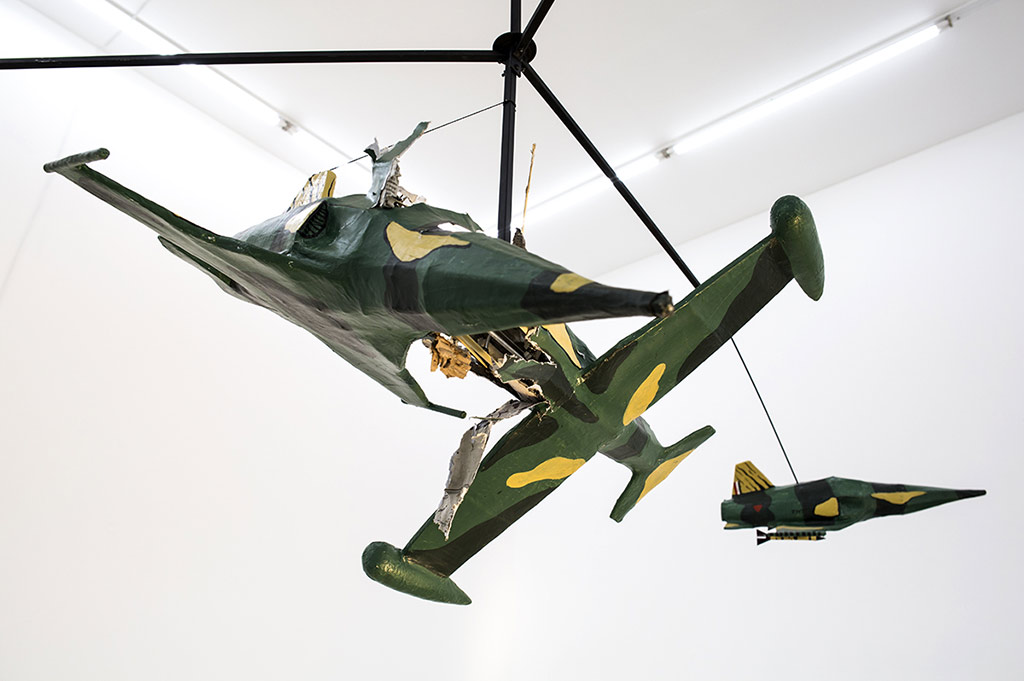
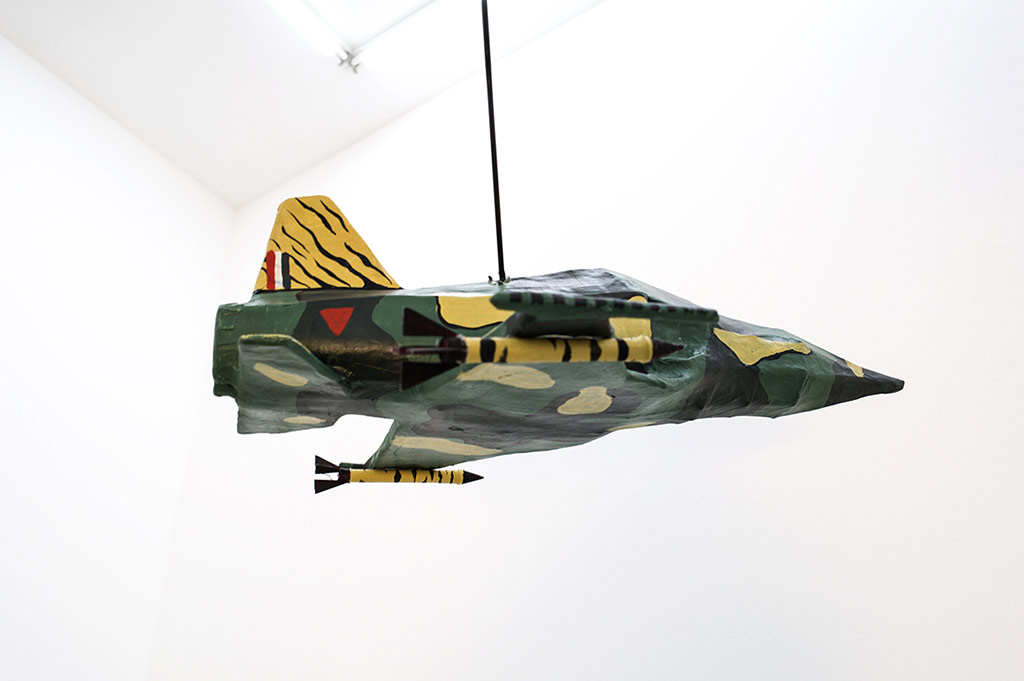
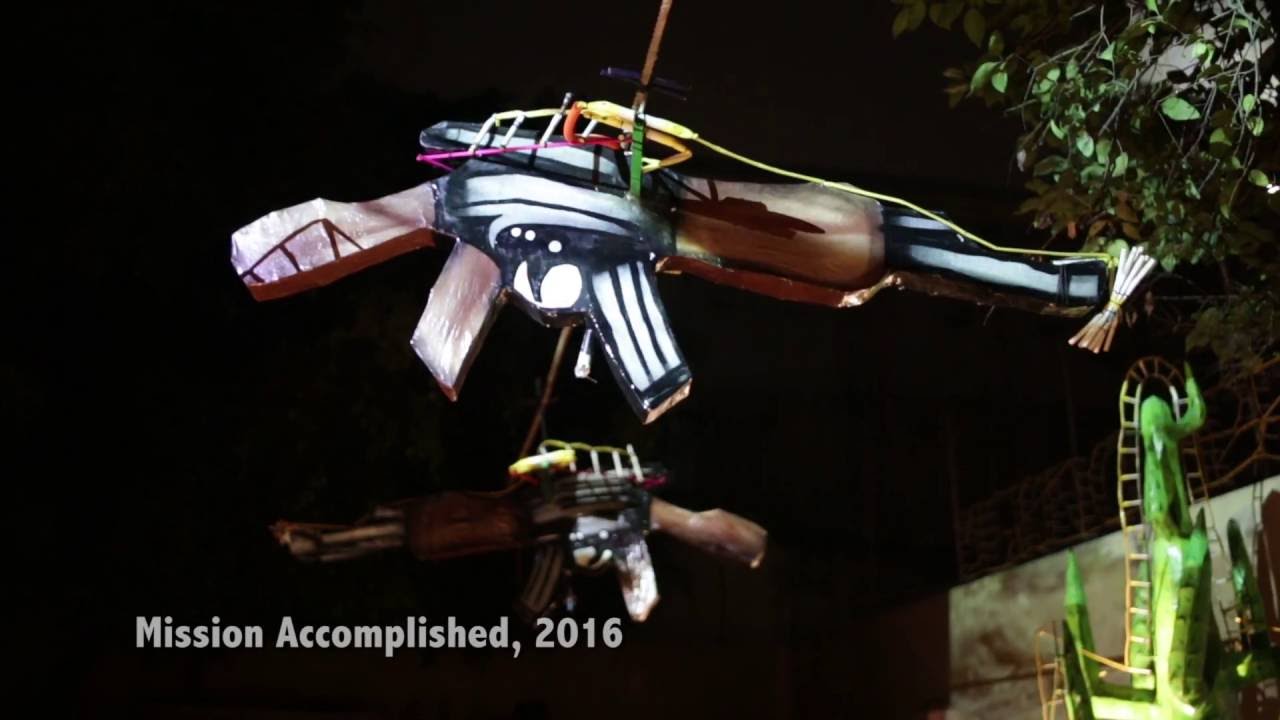
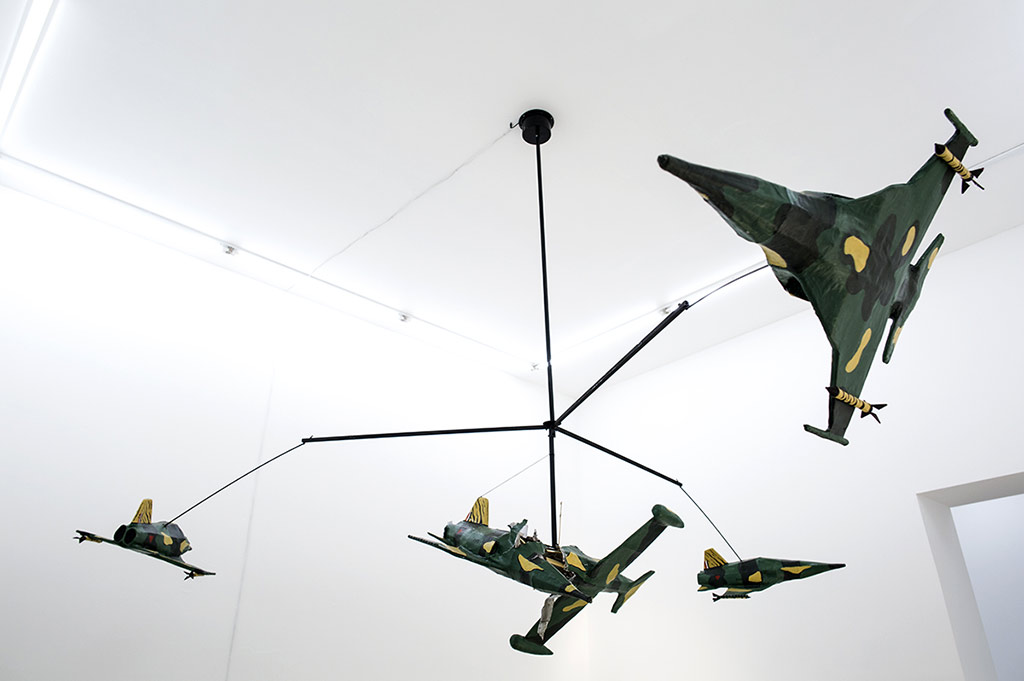
This installation resorts on the estrangement of artisanal pyrotechnic techniques and the utilization of appropriated video to conduct an exploration on the iconography of the pictorial Mexican landscape of the early XX century and the transformation of the current landscape due to violence and drug trafficking. The objects were built taking as reference landscape paintings from iconic Mexican artists and destroyed in a pyrotechnical live action that alluded (through sound and fire) the current violent landscape of Mexico. The projected videos were appropriated from the press and depicted military operations to destroy poppy seed and marijuana fields. The title of the installation is taken from the phrase Mexico’s president used when the infamous drug lord “El Chapo” was captured; in turn this statement referenced George Bush’s 2003 polemic speech about US military operations in Iraq.

THE SACRIFICE, 2015

goldbard_sacrificio_still1
goldbard_sacrificio_still2
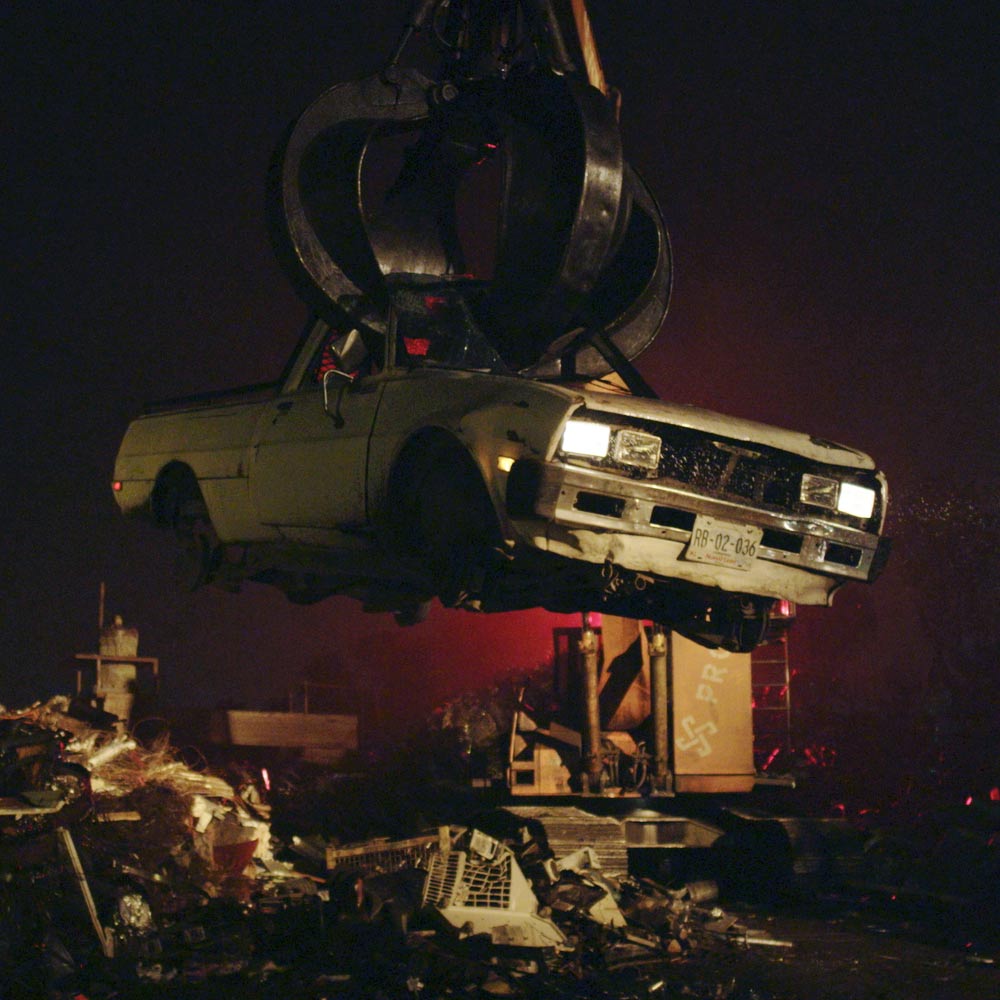
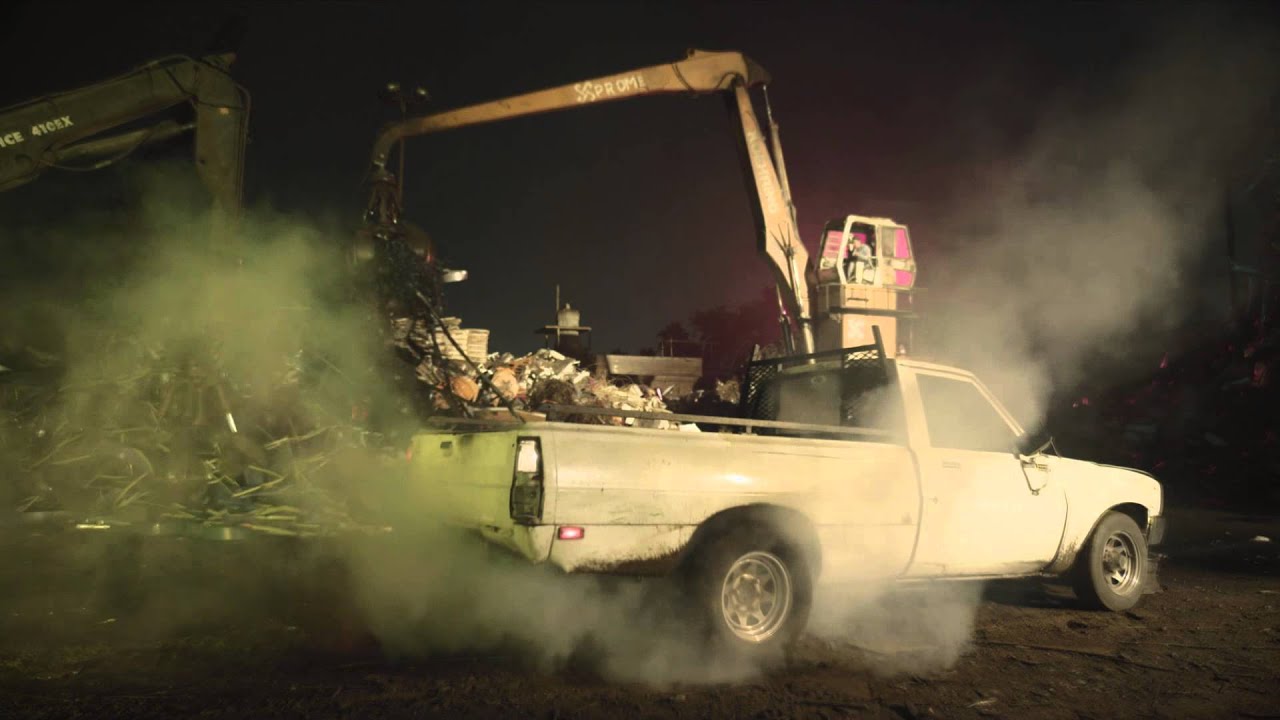
“The Sacrifice” is an installation composed of an audiovisual work narrating the metaphorical) sacrifice of a pick-up truck in a junkyard and the compacted truck itself transformed into a sculpture. In the video, the anthropomorphized protagonist tries to resist the attack by the antagonistic machines/ hitmen (cranes, tow trucks, compacter) controlled by a non-visible power. In this mythology, a symbol of power and status of capitalism (the car) is dismantled and compacted, and then exhibited in the galley as a trophy/offering.
Cinematography: Alex Albert

Sound Design: Israel and Diego Martínez

thesacrifice_goldbard_forwww
HD video / stereo sound
5:50 min

FIRE AND TRADITION, 2015-2016

docupolvora4_goldbard_800
docupolvora1_goldbard_800
docupolvora6_goldbard_800
docupolvora3_goldbard_800

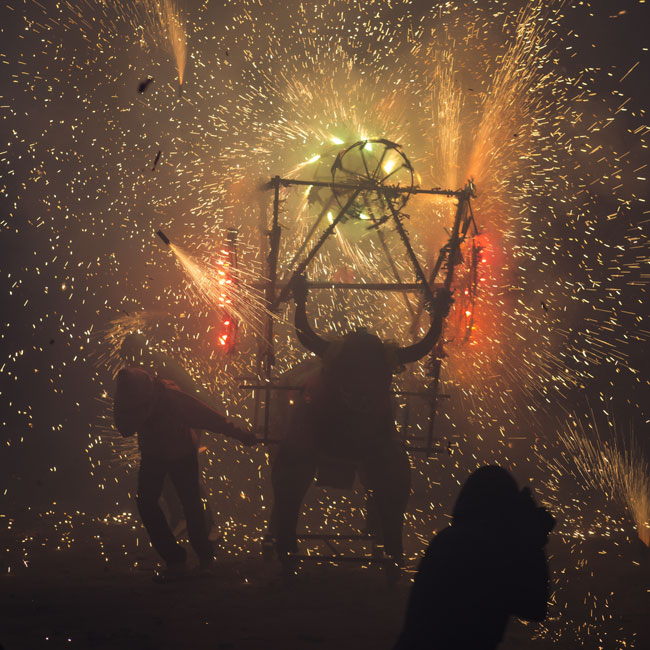
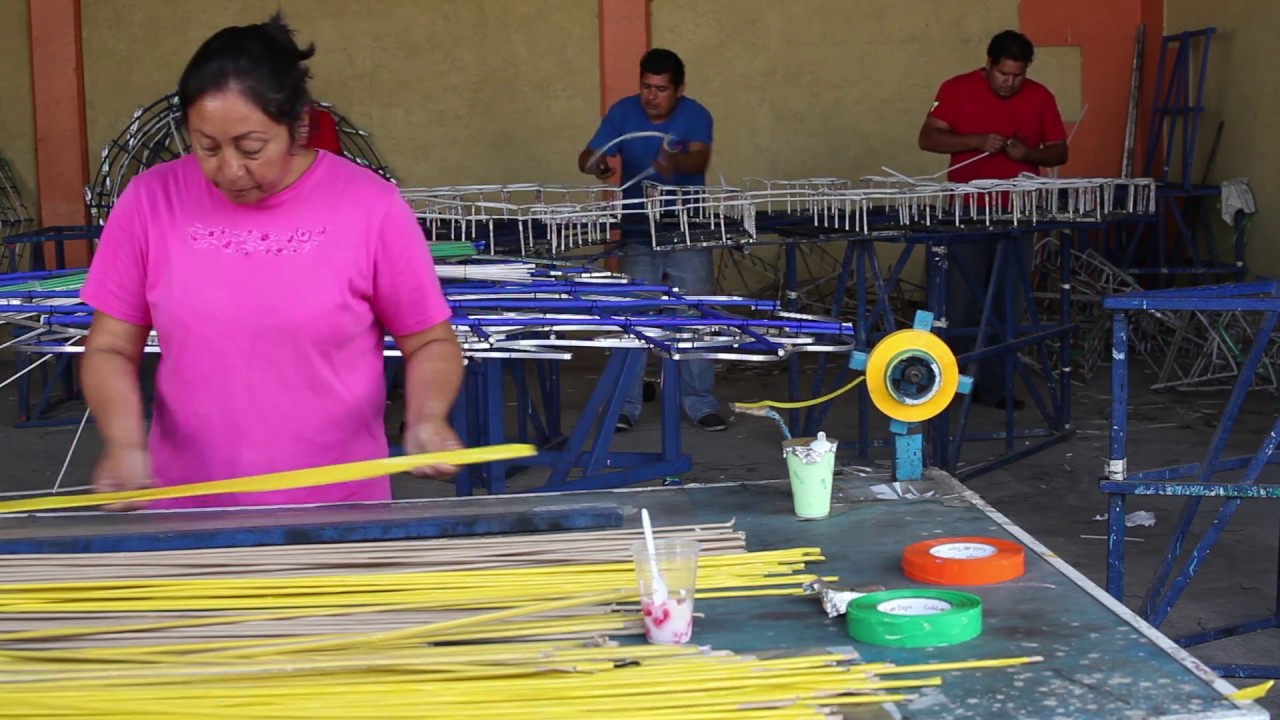
Documentary short-film/visual ethnography about the fabrication of gunpowder and fireworks in Tultepec, Mexico. This audiovisual work takes an observational stand point and concentrates on the materials, labor and traditional processes of a territory where 80% of the population works in the production of fireworks, producing more than 70% of the fireworks in the country, hence its name: “the capital of pyrotechnics”.

HD video / stereo sound
7 min

Privacy Settings
We use cookies to enhance your experience while using our website. If you are using our Services via a browser you can restrict, block or remove cookies through your web browser settings. We also use content and scripts from third parties that may use tracking technologies. You can selectively provide your consent below to allow such third party embeds. For complete information about the cookies we use, data we collect and how we process them, please check our Privacy Policy
Youtube
Consent to display content from - Youtube
Vimeo
Consent to display content from - Vimeo
Google Maps
Consent to display content from - Google