Blog Archives

INVADIERON POR MAR, RESPONDEMOS CON FUEGO. UN PRESAGIO. (THEY INVADED BY SEA, WE RESPONDED WITH FIRE. AN OMEN.), 2025

Public Sculpture / Pyrotechnic Performance

A time-based artwork in the form of a quarter-scale replica of a 17th-century sailing ship used by European colonists landing in the Americas. Constructed in Mexico using invasive common reeds and incorporating additional phragmites gathered from New England using twinning techniques for boat-building, this public sculpture brings together reed-weaving techniques from Tultepec, México, and from Lake Titicaca in Peru.

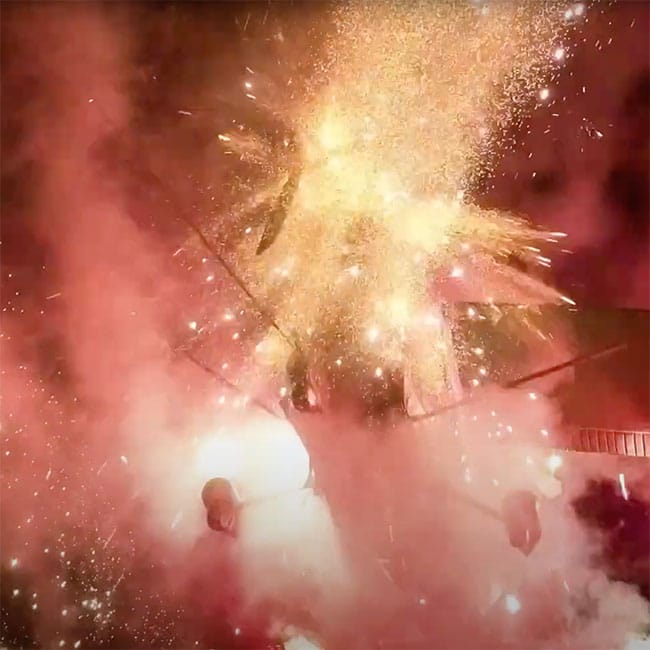
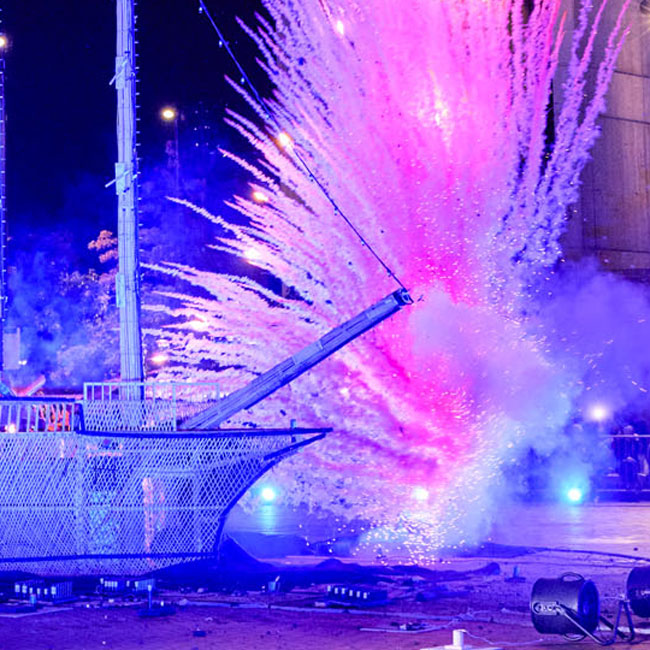
The ephemeral sculpture, becomes prop and site in a fictionalized “first encounter” performance between Indigenous people and European colonists. Accompanied by live Brazilian drumming, the performance transitioned from a somber battle into a festive traditional Mexican pyrotechnic display and the theatrical destruction of the ship. This work addresses the legacy of colonization across the Americas, highlighting the painful and violent process of cultural erasure and hybridization. Primary partners in the construction of the work have been the Artsumex (pyrotechnic) collective from Tultepec, Rhode Island-based pyrotechnician John Ruggieri of Ocean State Pyrotechnics, Aymara-American artist Aymar Ccopacatty, Marcus Santos and his afro-brazilian band Grooversity, and the Arnold Arboretum of Harvard University.

Commissioned by Boston Public Art Triennial

Photos by Robert Gallegos
Public sculpture installed on City Hall Plaza, Boston, August 30-September 12, 2025
Effigy burning ritual/pyrotechnic performance, City Hall Plaza, Boston, September 12, 2025
Phragmites harvesting, Barrington, Rhode Island. May, 2025
Public sculpture installed on City Hall Plaza, Boston, August 30-September 12, 2025
Effigy burning ritual/pyrotechnic performance, City Hall Plaza, Boston, September 12, 2025


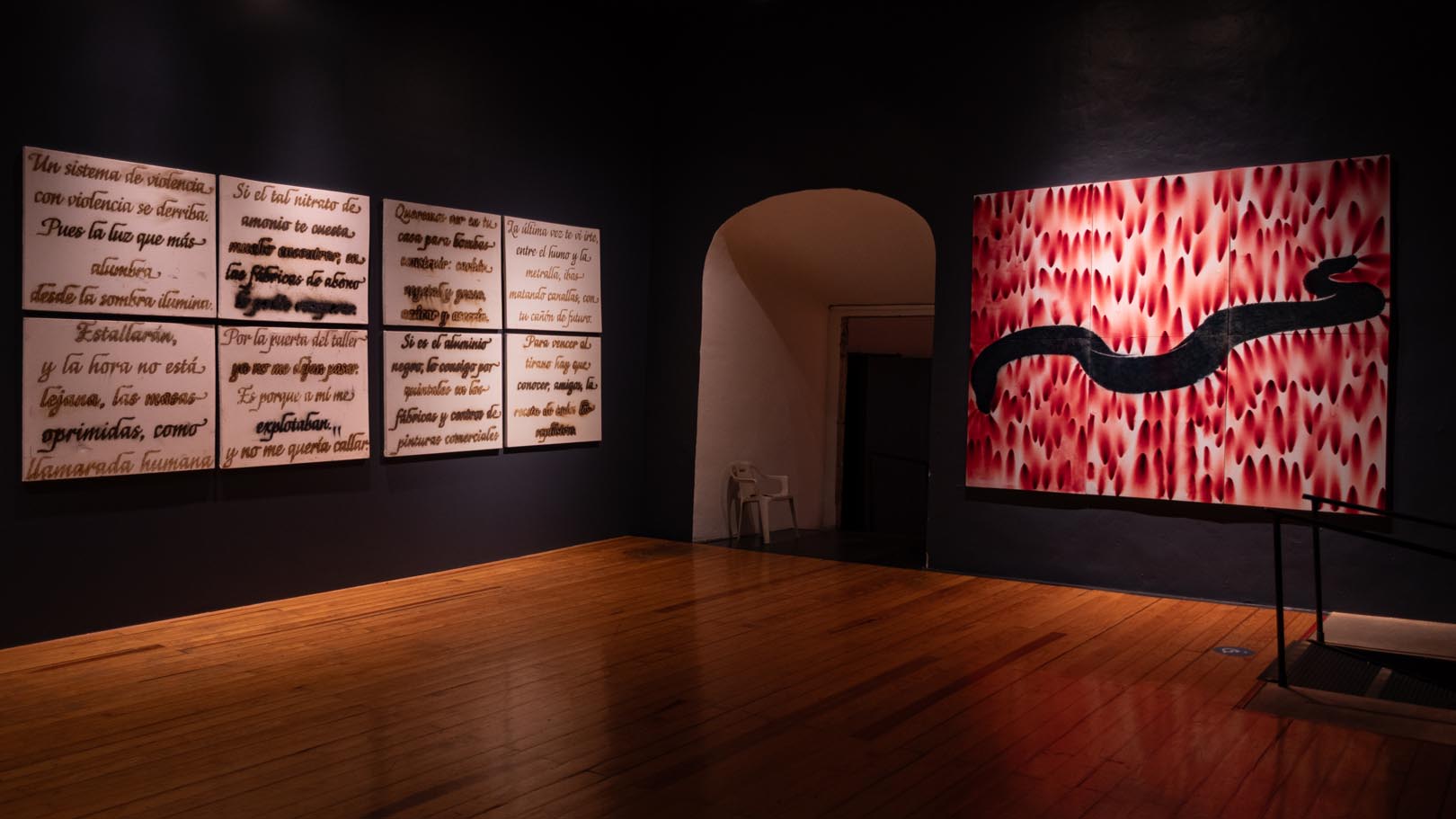
PYROTECHNIC PAINTINGS, 2025
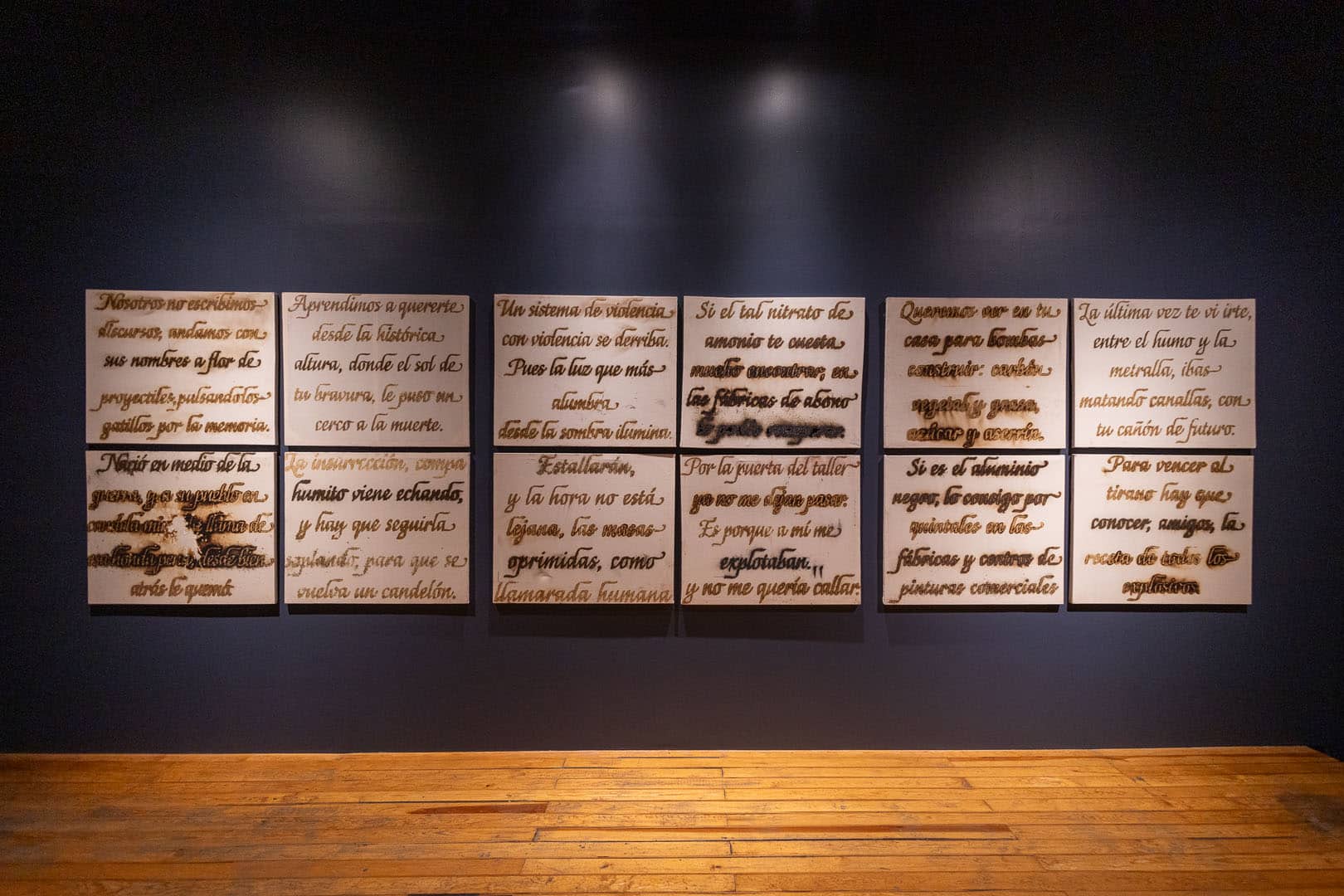
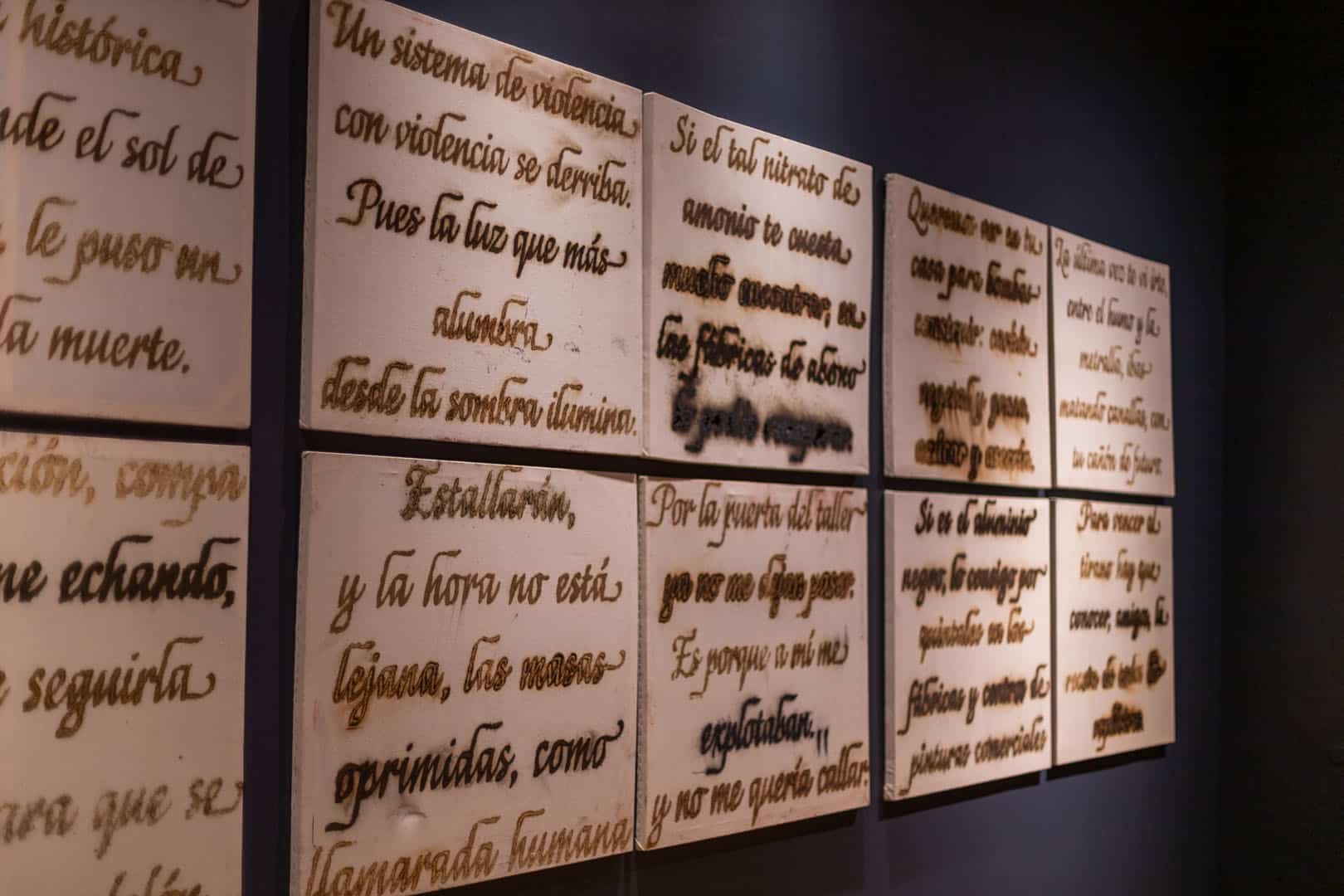
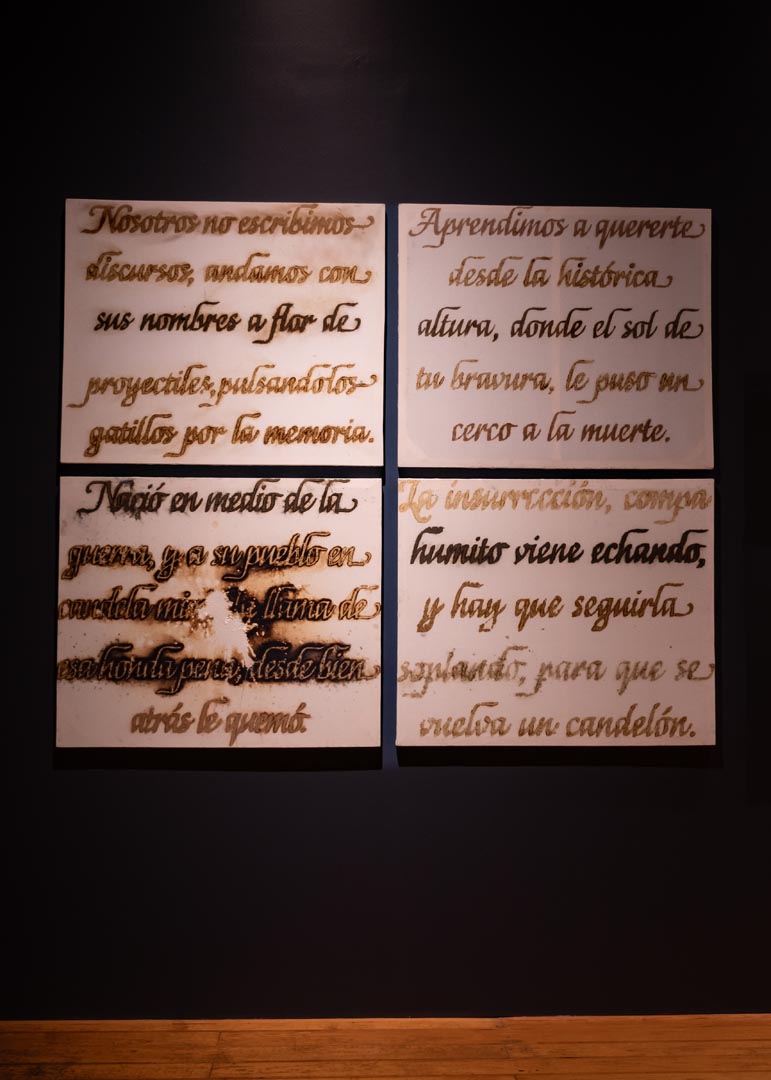
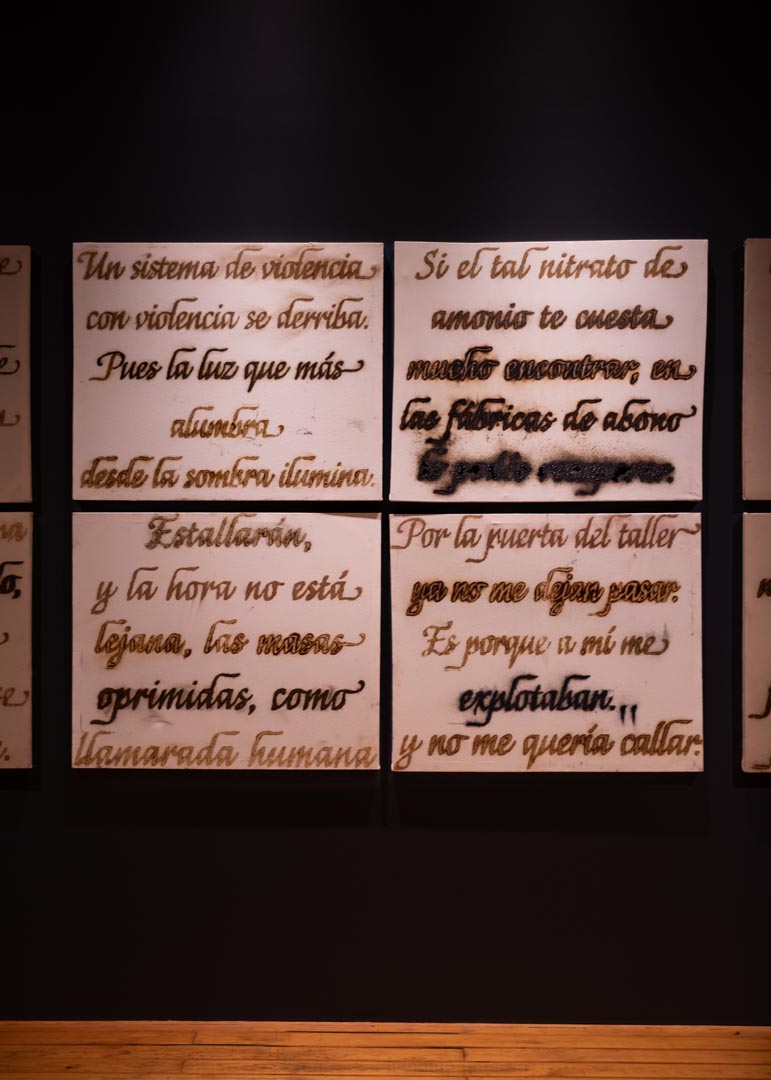
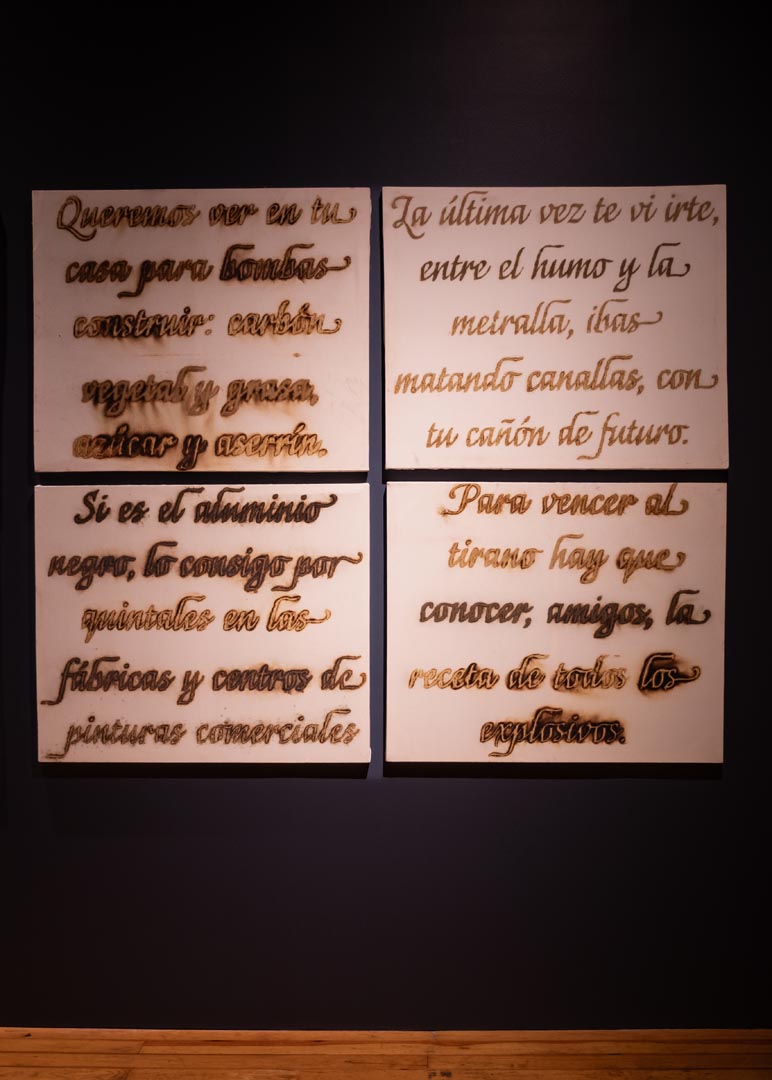
EXPLOSIVE SONGBOOK, 2025
Text traced with pyrotechnic powders on canvas.

Text traced with pyrotechnic powders on canvas

1. *To Defeat the Tyrant*
2. *The Little Smoke Insurrection Is Coming*
3. *A System of Violence Is Brought Down*
4. *I Saw You Leave Amid Smoke and Gunfire*

This series of handwritten texts draws on the lyrics of protest songs and anthems of social struggle in Latin America, by authors from Uruguay, Colombia, Cuba, and Nicaragua. Like a printed songbook, these works suggest a shared narrative that intertwines stories of oppression and sovereignty across the continent. The technique was specially developed by the artist in collaboration with master pyrotechnicians Alberto Sánchez, Vanessa Lorena Linares, and Adolfo Álvarez in Tultepec, State of Mexico.

Credits:
Texts: Julio Conrado, César Vallejo, Carlos Puebla, Pancasán, Sergio Rojas Ravelo

Research: Camilo Martínez

Design: Adela Goldbard

Fabrication: Adela Goldbard and PESLI Team: Roberto Sánchez Olvera, Vanessa Lorena Linares Garzón, Adolfo Álvarez Soberanis

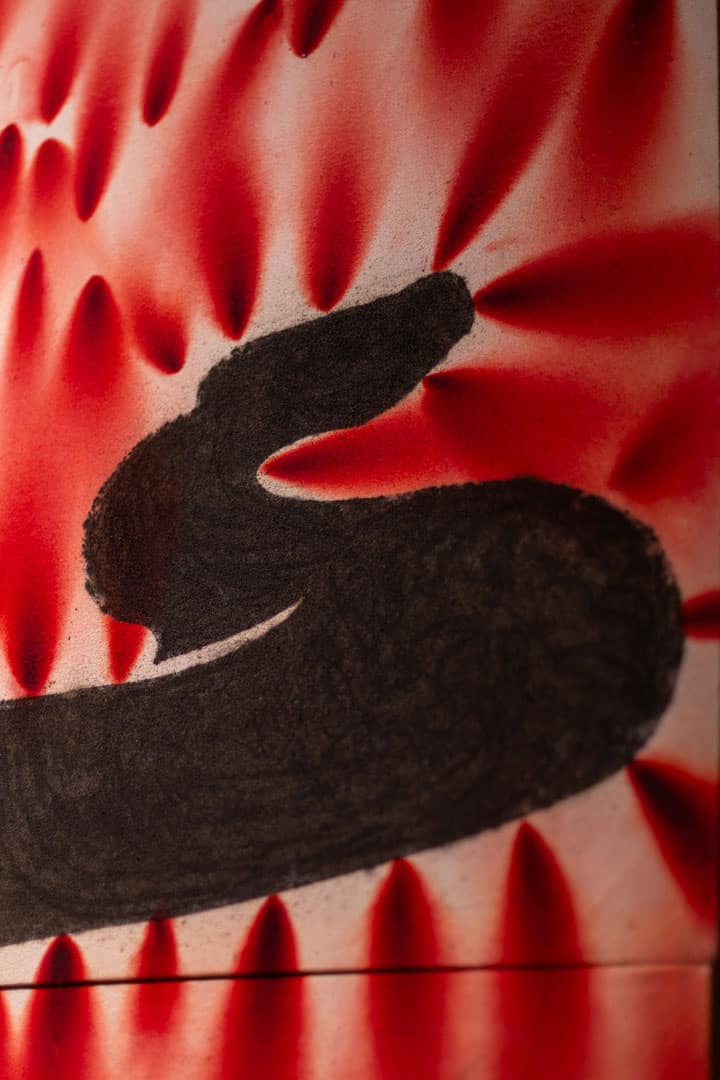
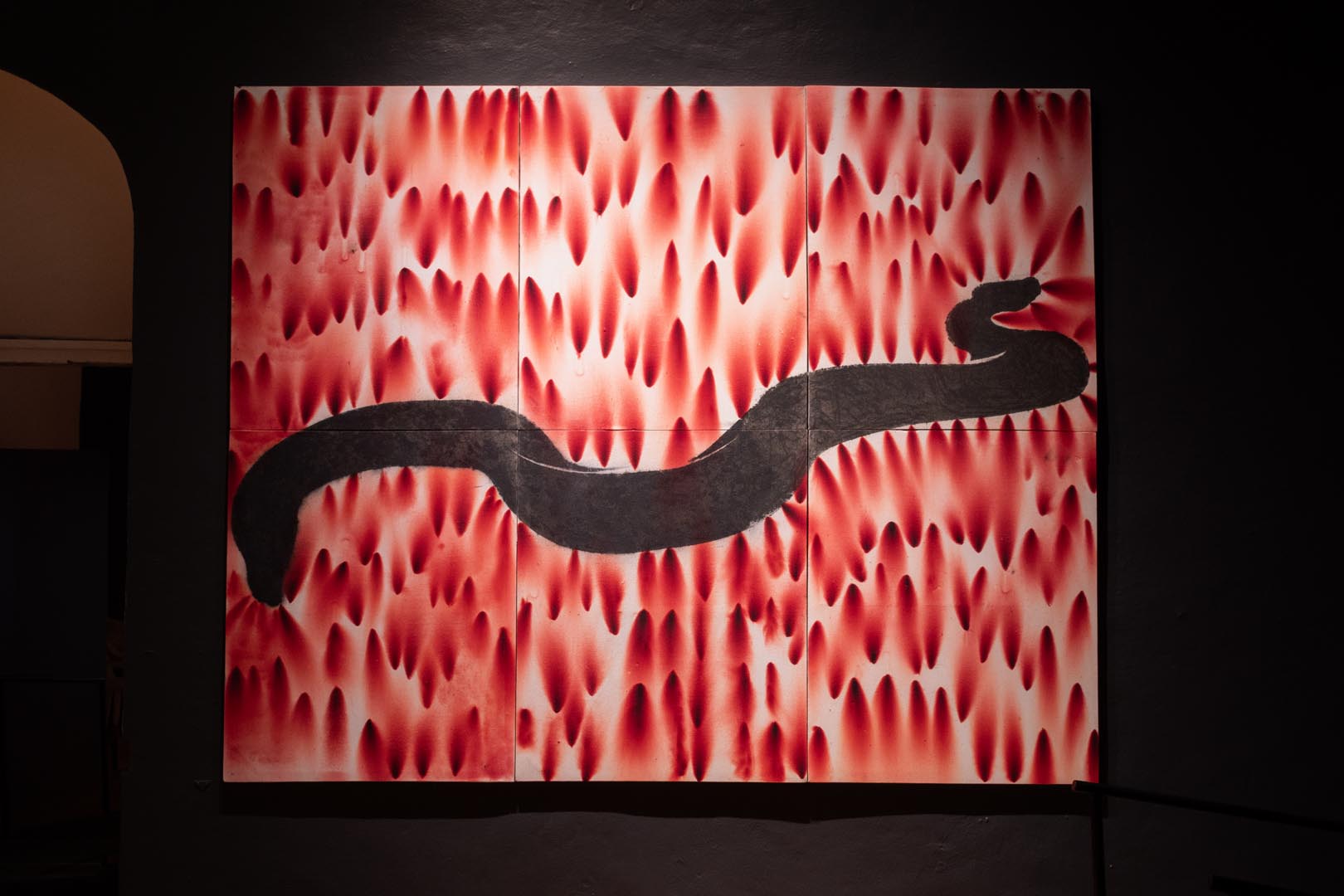
FIRE SERPENT

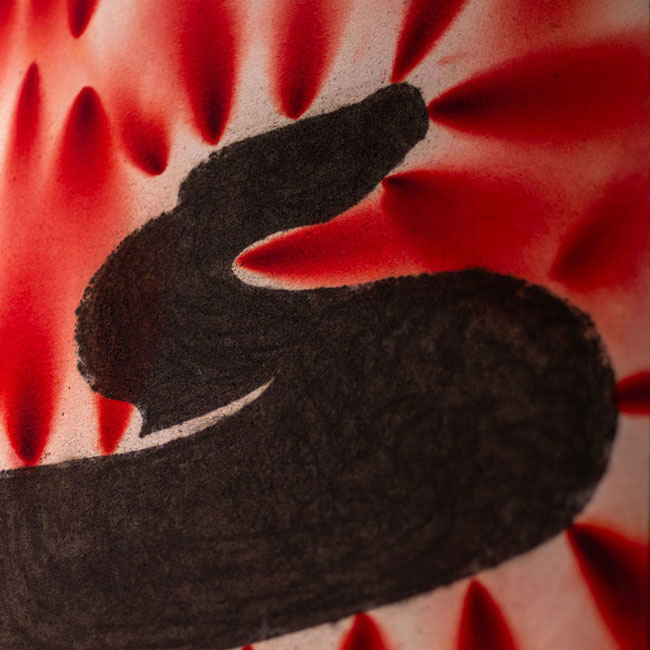
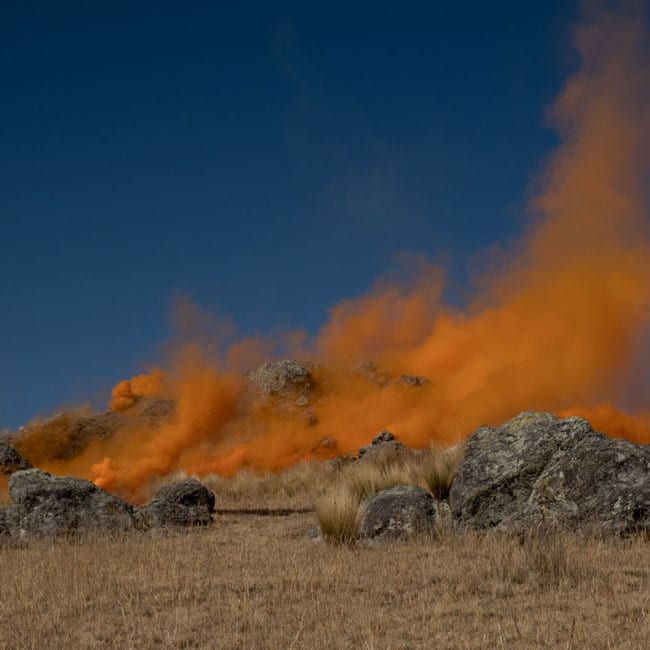
Pyrotechnic painting detonated with colored smoke on canvas

Produced in Tultepec, State of Mexico—a hub of pyrotechnic craft—*Fire Serpent* employs a technique developed by the artist in close collaboration with master pyrotechnicians Alberto Sánchez, Vanessa Lorena Linares, and Adolfo Álvarez. Explosives and pigments were detonated directly on the canvas during a performative action, creating a serpent of fire.

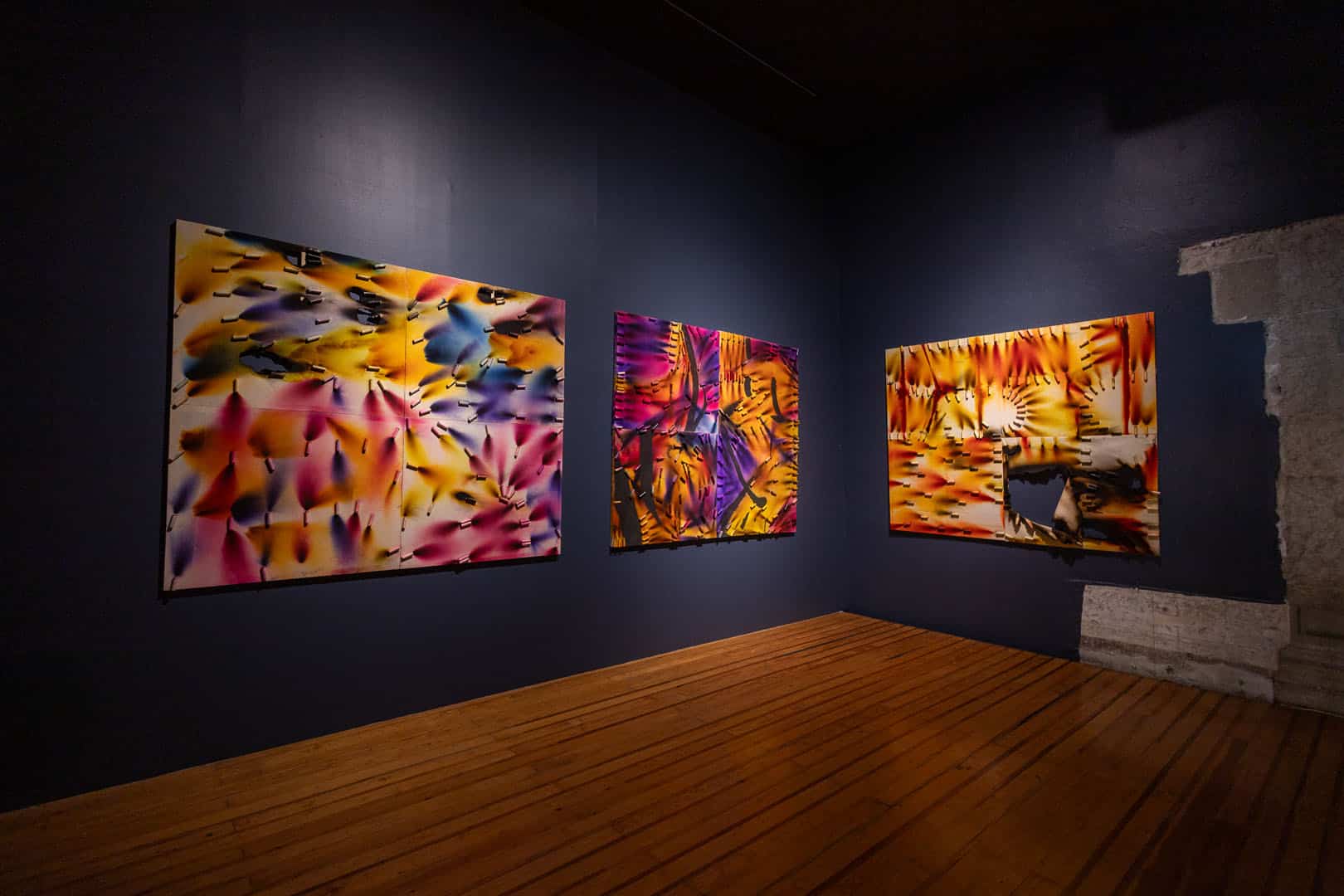
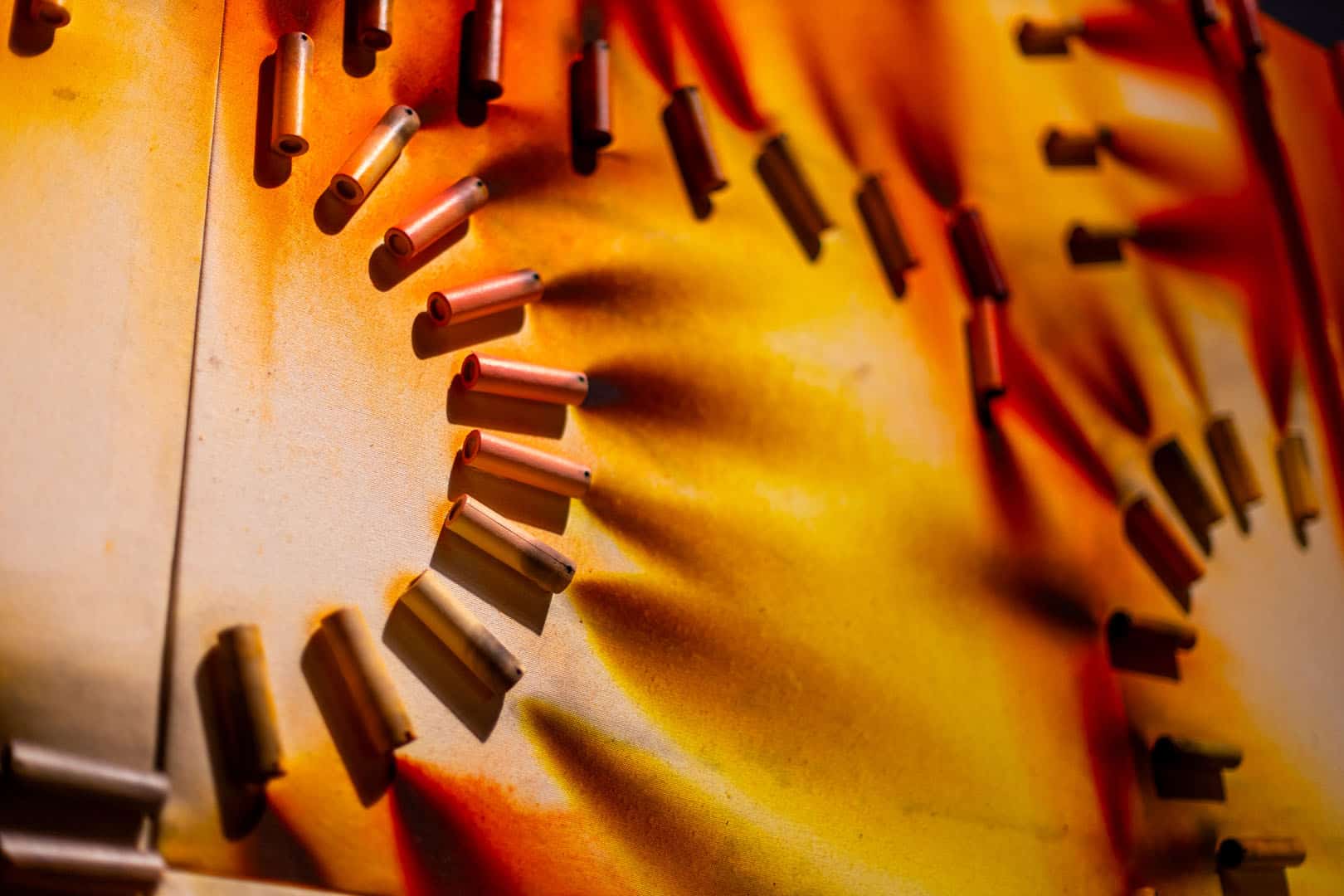
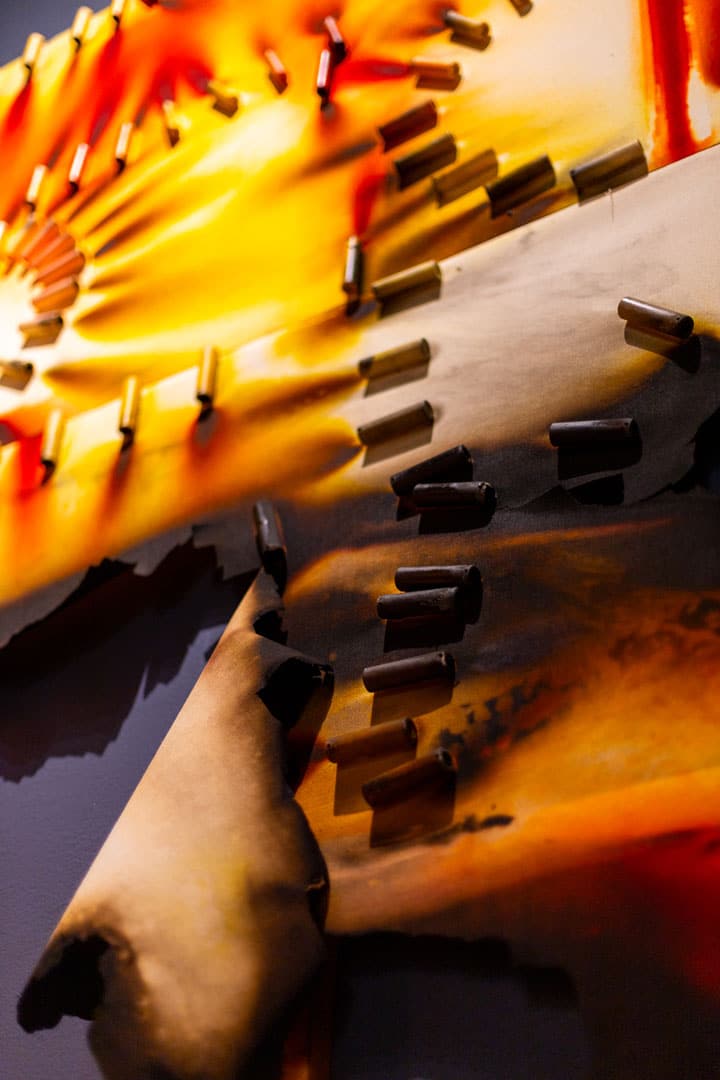
DRAFTS 1, 2, & 3

Pyrotechnic painting detonated with colored smoke on canvas.

Pyrotechnic painting detonated with colored smoke on canvas

Created in Tultepec, State of Mexico—a town renowned for its tradition in explosive technologies and host of the annual International Pyrotechnics Fair—this series uses a technique specially developed by the artist in collaboration with master pyrotechnicians Alberto Sánchez, Vanessa Lorena Linares, and Adolfo Álvarez. The works feature chromatic compositions that evoke a sense of movement on the canvas, produced through the detonation of explosives and pigments during live performative actions.

Texts by: Julio Conrado, César Vallejo, Carlos Puebla, Pancasán, Sergio Rojas Ravelo

Credits:
Design: Adela Goldbard

Fabrication: Adela Goldbard and PESLI Team: Roberto Sánchez Olvera, Vanessa Lorena Linares Garzón, Adolfo Álvarez Soberanis


CESSNA 182 SKYLANE, 2024–2025
HD video, stereo sound.
5 min.

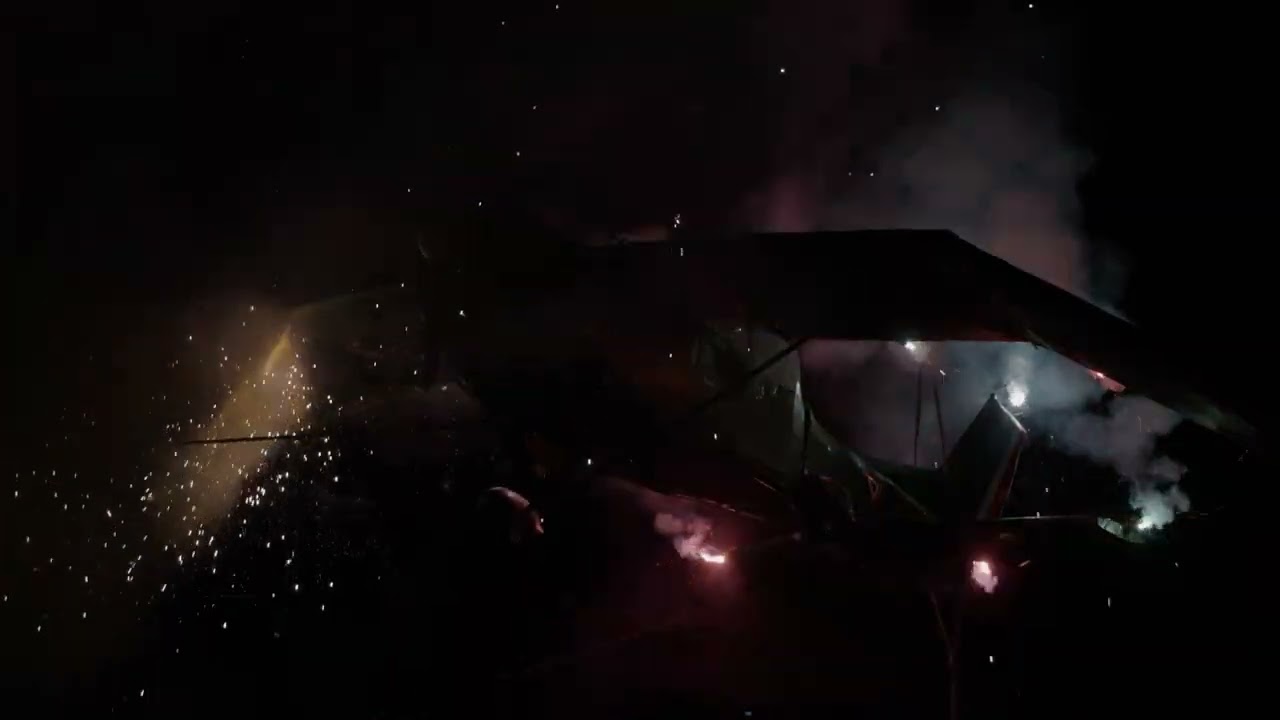
In the video, a replica of a Cessna 182 5498 airplane slowly burns. The work is part of—and marks the culmination of—La isla de la fantasía, a long-term project initiated by Adela Goldbard in 2012, in which she created a series of ephemeral sculptural replicas of recently crashed government and military aircraft to be photographed in reenacted scenes of these accidents.

For the reconstructions—including the Cessna plane featured in this video—materials such as reed, cardboard, newspaper, and wheatpaste were used. The stagings took place in locations resembling the original crash sites. This life-sized replica was built using press photos of the accident and following the traditions of the Quema de Judas and Toritos.

The materials and techniques employed highlight not only the fragility of the structures and technologies represented, but also of the political system they embody. The video also invites reflection on the media’s metaphorical manipulation of reality.

Credits:

Director: Adela Goldbard
Sound Design: Rogelio Sosa
Cameras: Mario Arturo Amaro Poot, Carlos Ernesto Sanches Estrada, Edith Vázquez
Direct Sound: Armando Melo Hernández
Editing: Cuautli Morales Montejo
Color Correction: Miguel Escudero, Constanza Moctezuma
Still Photography: Omar Gámez
Reed Structure: Colectivo Artsumex
Special Effects – Pirofamily Company: Irwing Jesús Urban Urban, Gerardo Urban Sánchez, Norberto Urban Solano, Jovany Norberto Urban Urban, Edgar Adrián Romero Urban, Jesús Alberto Solano Solano, Mauricio Urban Sánchez, Salvador Hernández Solano, Sebastian De la Puente Reséndiz, Cristofer Cortes Guzmán, Mónica Reséndiz Rutia, Karen Hernández Reséndiz, Johana Hernández Reséndiz, Jocelin Hernández Reséndiz


NIGHT VISION, 2024-25

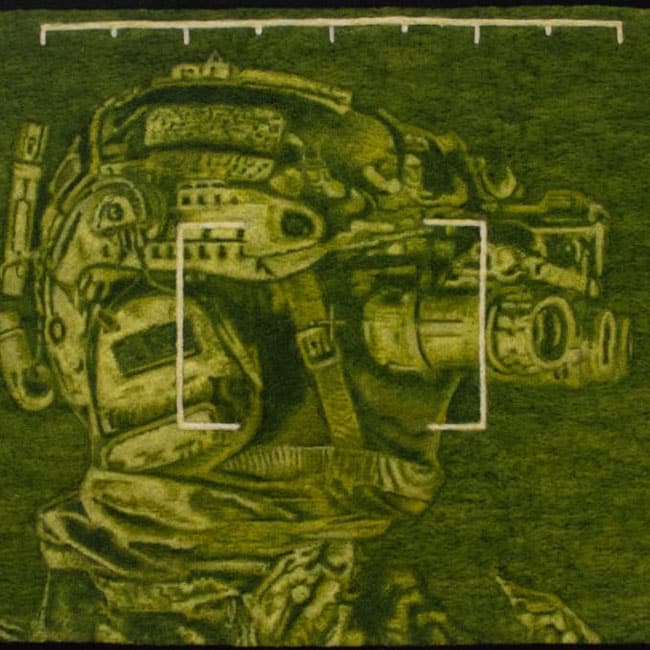
Soldier of Fortune I, felted wool textile dyed with natural pigments, 37.4 in (95 cm) diameter.
Coyote, felted wool textile dyed with natural pigments, 37.4 in (95 cm) diameter.
Línea 1 [The Line 1], felted wool textile dyed with natural pigments, 37.4 in (95 cm) diameter.
Línea 2 [The Line 2], felted wool textile dyed with natural pigments, 37.4 in (95 cm) diameter.
MQ Predator, felted wool textile dyed with natural pigments.
The JEDI Contract, felted wool textile dyed with natural pigments

This series of six textiles was created using natural dyes that replicate the range of greens characteristic of night vision recordings. Produced in collaboration with female artisans from San Agustín Etla, Oaxaca between 2024 and 2025, the pieces feature a selection of images related to surveillance technologies used along the northern border: a desert coyote caught in a crosshair, a group of migrants climbing The Wall, a view of the sky framed by nocturnal vegetation, drone diagrams, a soldier wearing a surveillance helmet being recorded by another night vision device, among others.

By depicting these motifs through the technique of felting, traditional craft practices are traversed by images of contemporary conflicts that deeply affect various communities and regions of the country—conflicts that are rarely represented in the more conventional forms of so-called “folk art” historically promoted by Mexican cultural nationalism.

Produced in collaboration with the Felting Studio at Centro de las Artes de San Agustín Etla (CaSa): Marcela Ortega, Alejandra Sánchez Salgado, Blanca Miguel Doquiz, Fátima Armengol Bustos, Xochitl Ruíz Nuñez. 


K’ALLPANAKUY ORCCONCHISKUNAPI (RAGE IN THE ANDES). 2023 – 2025
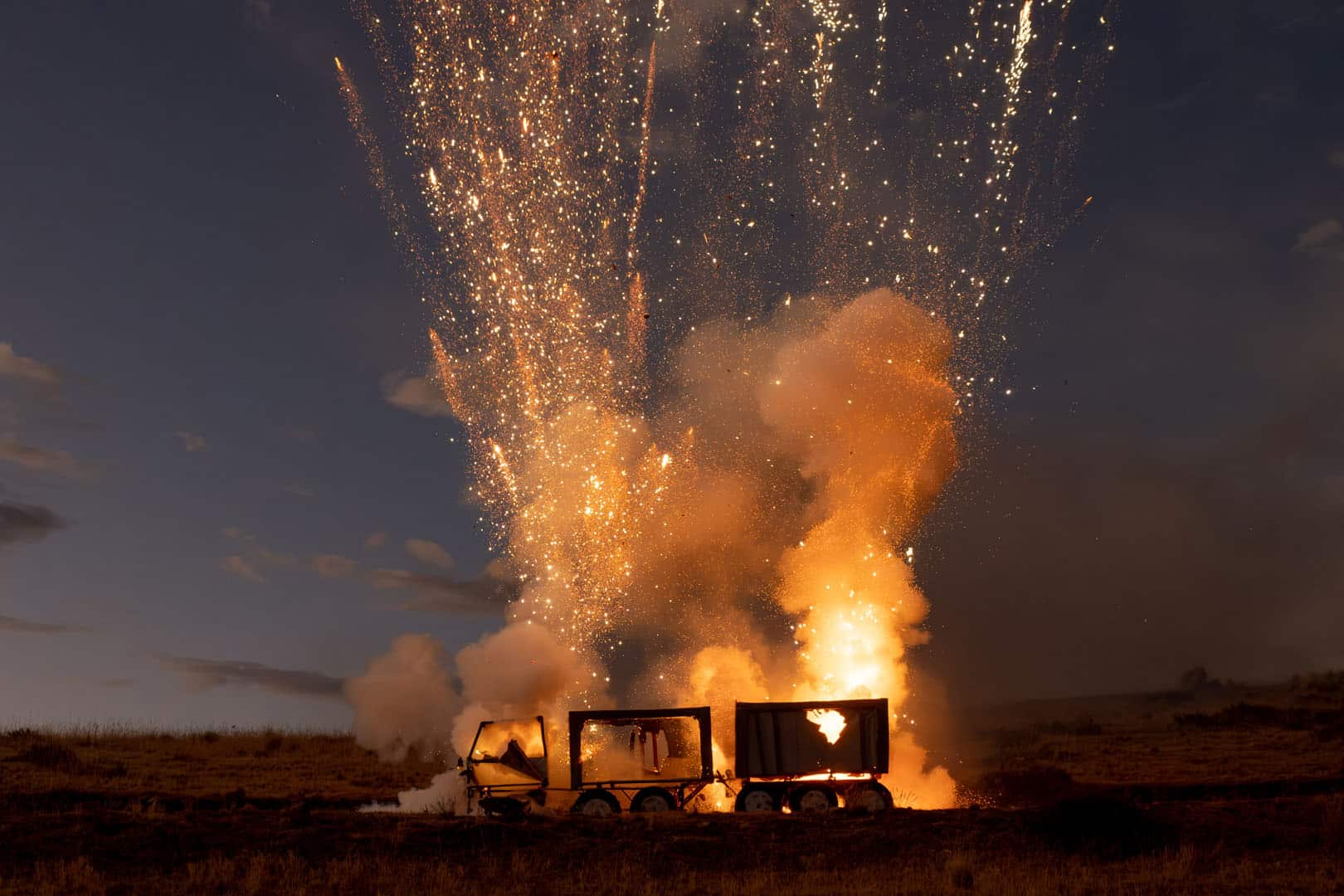


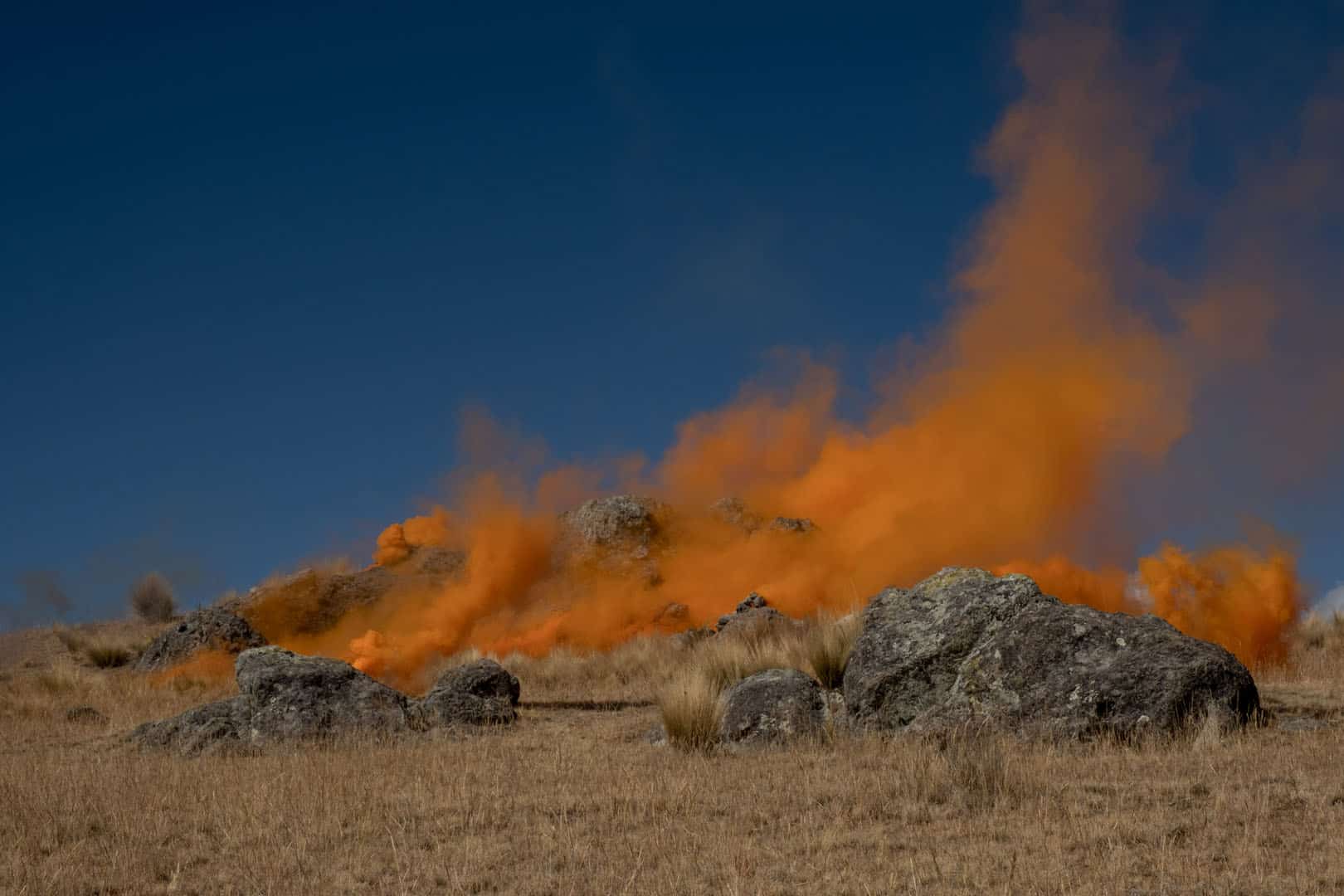
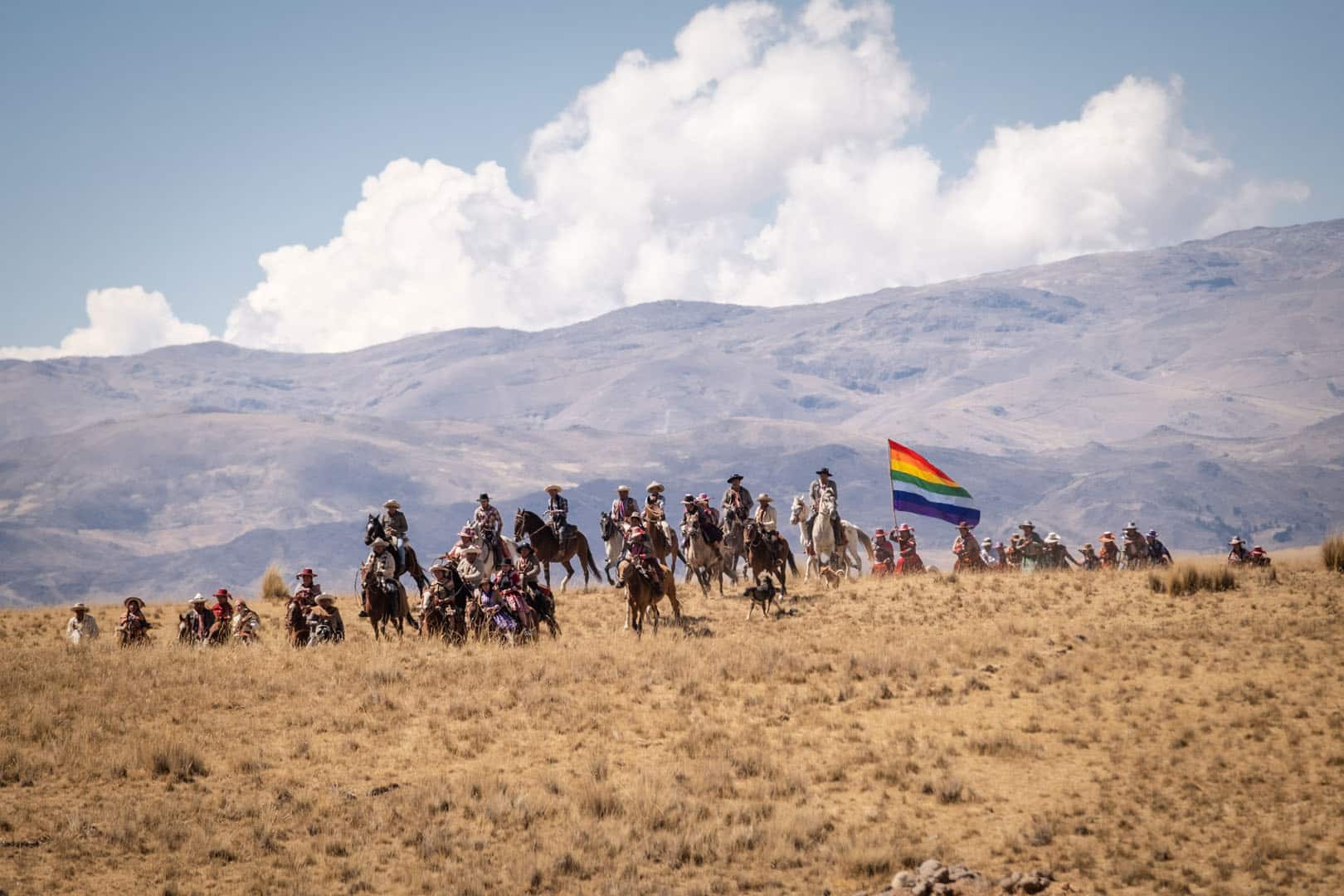
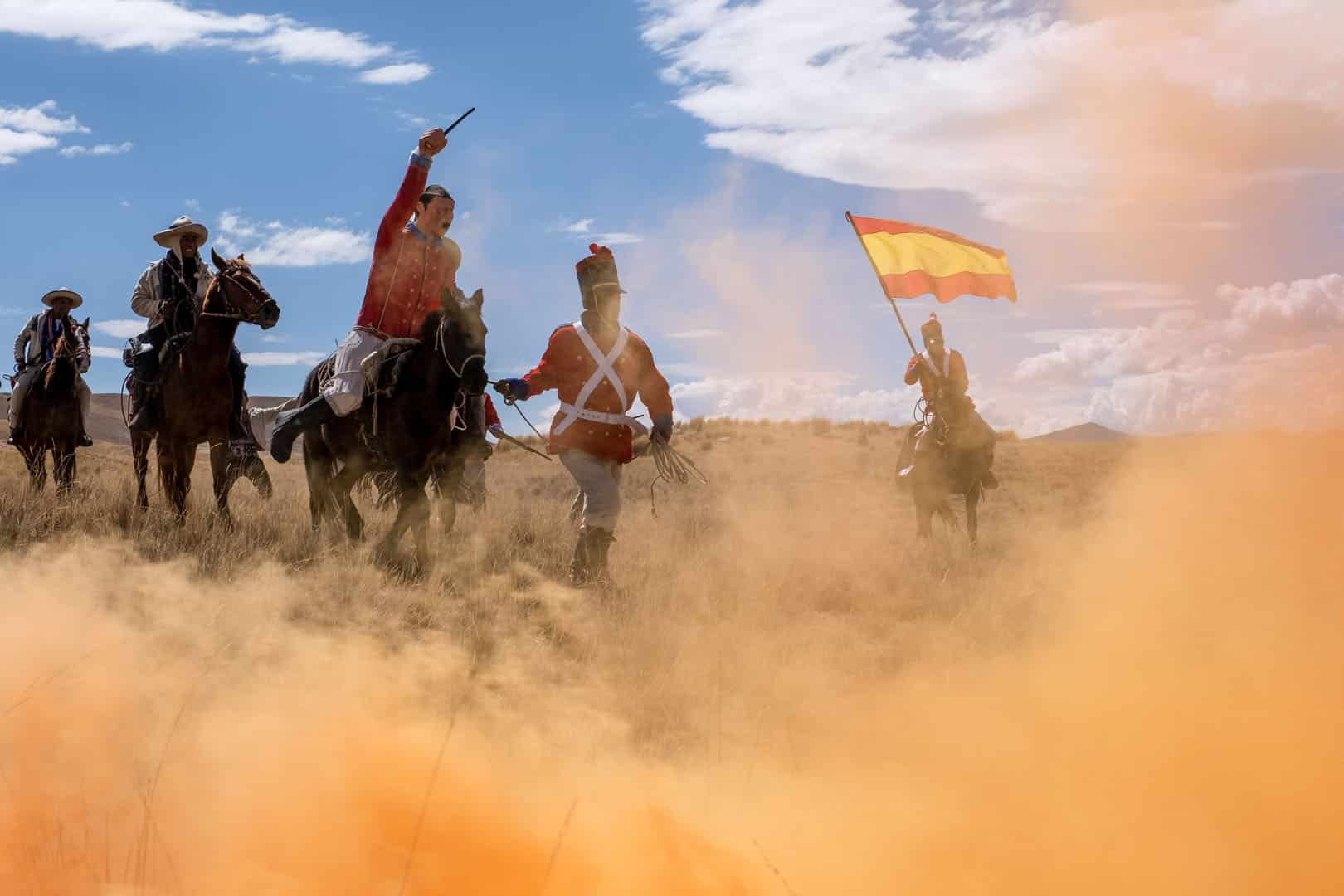
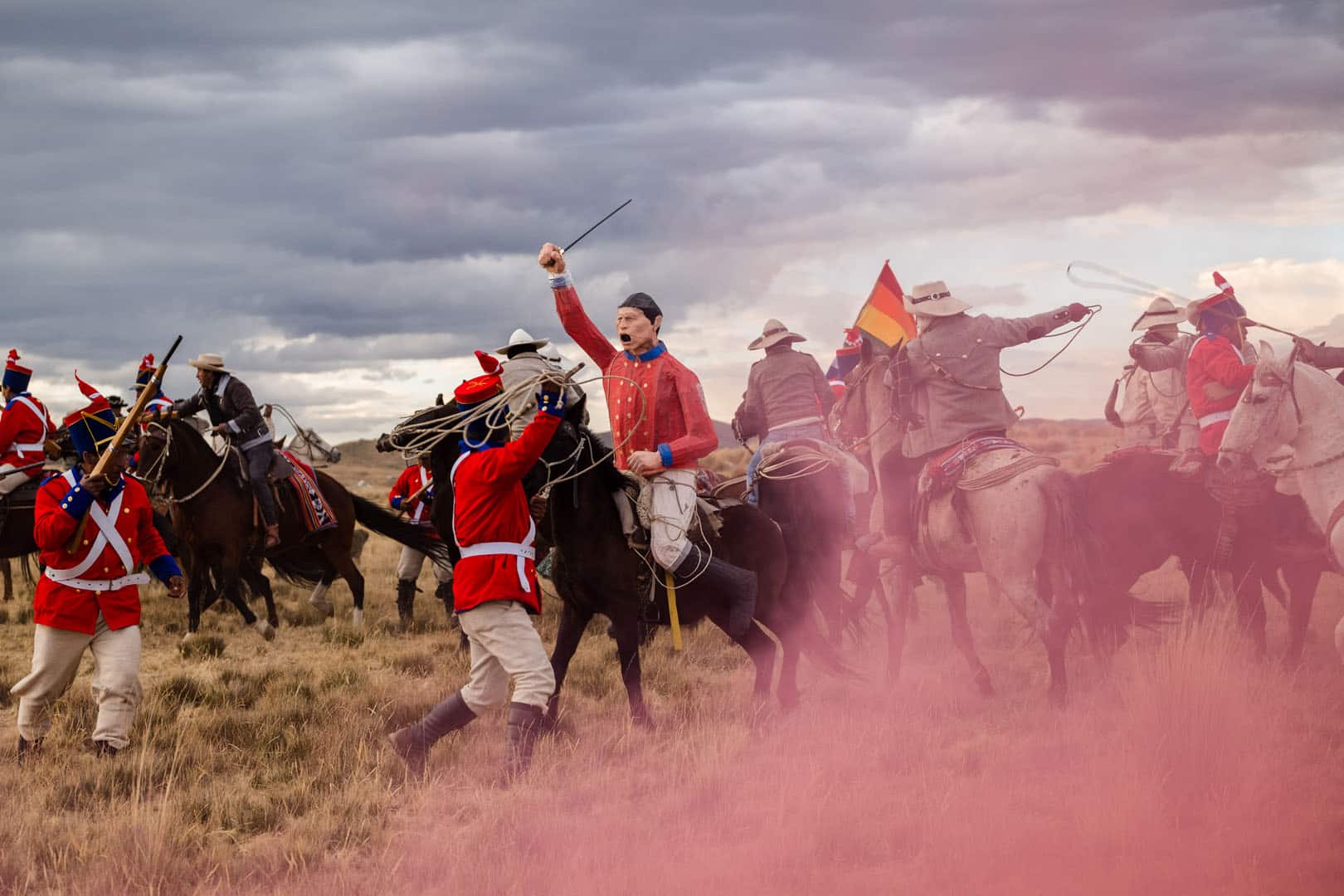
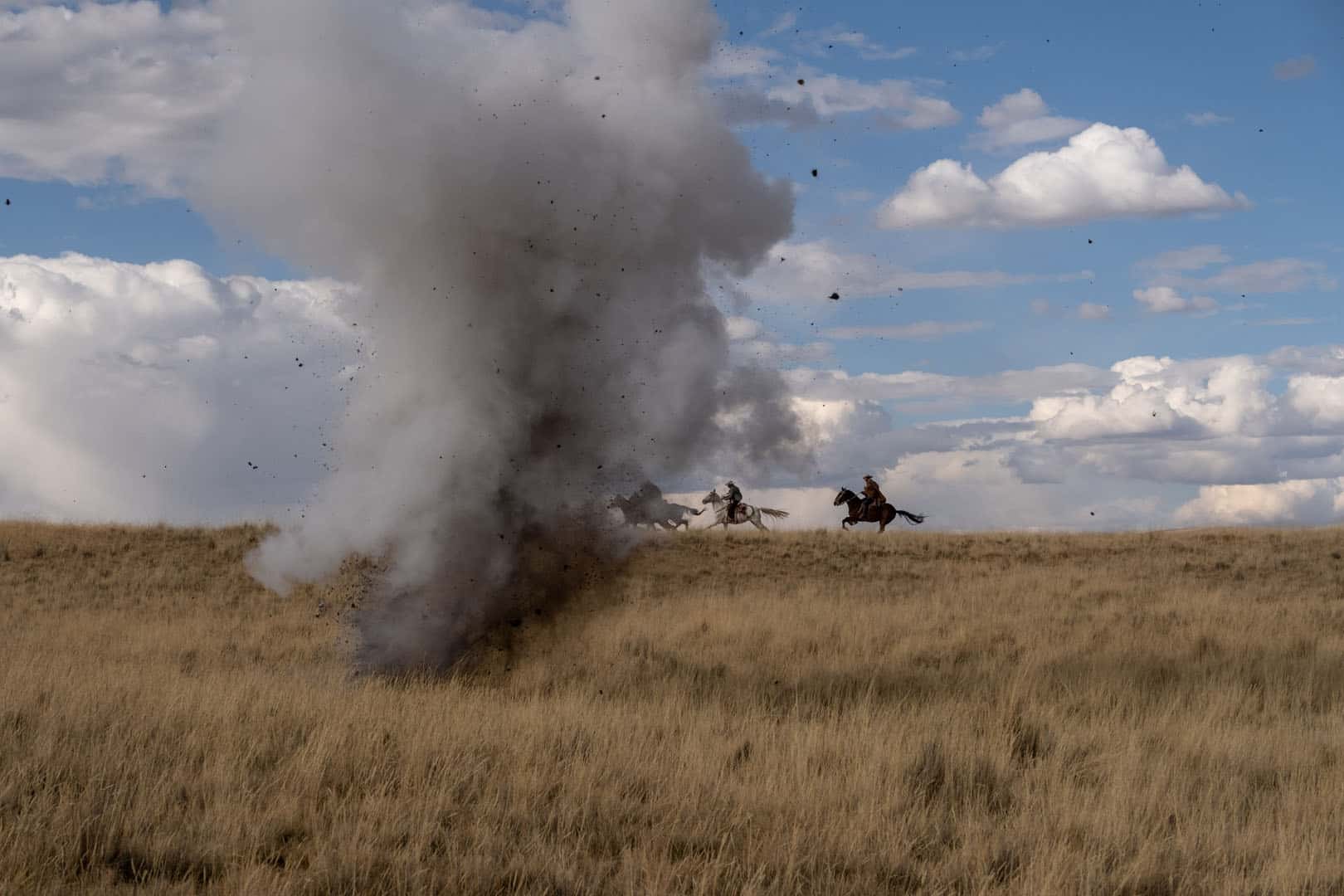
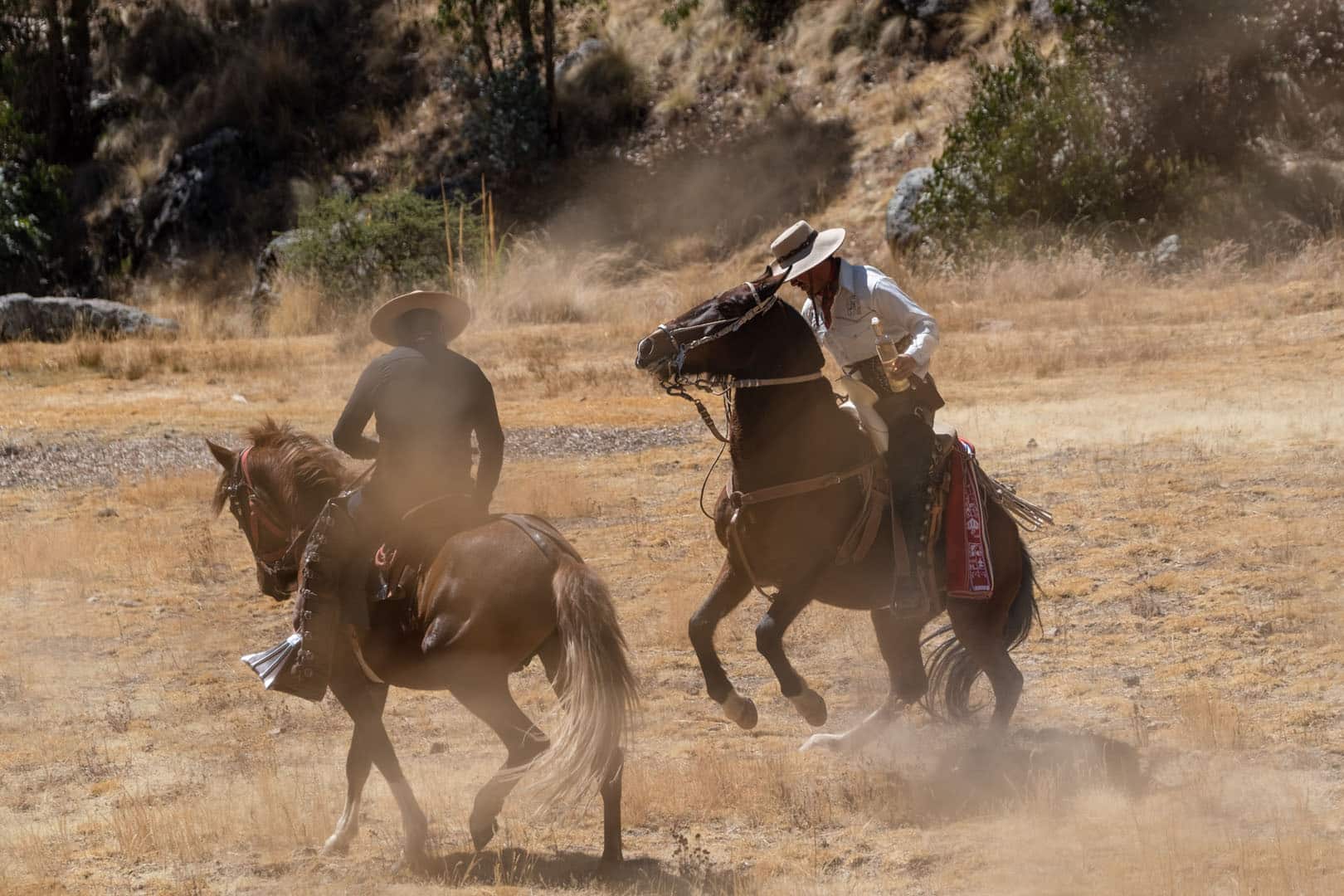
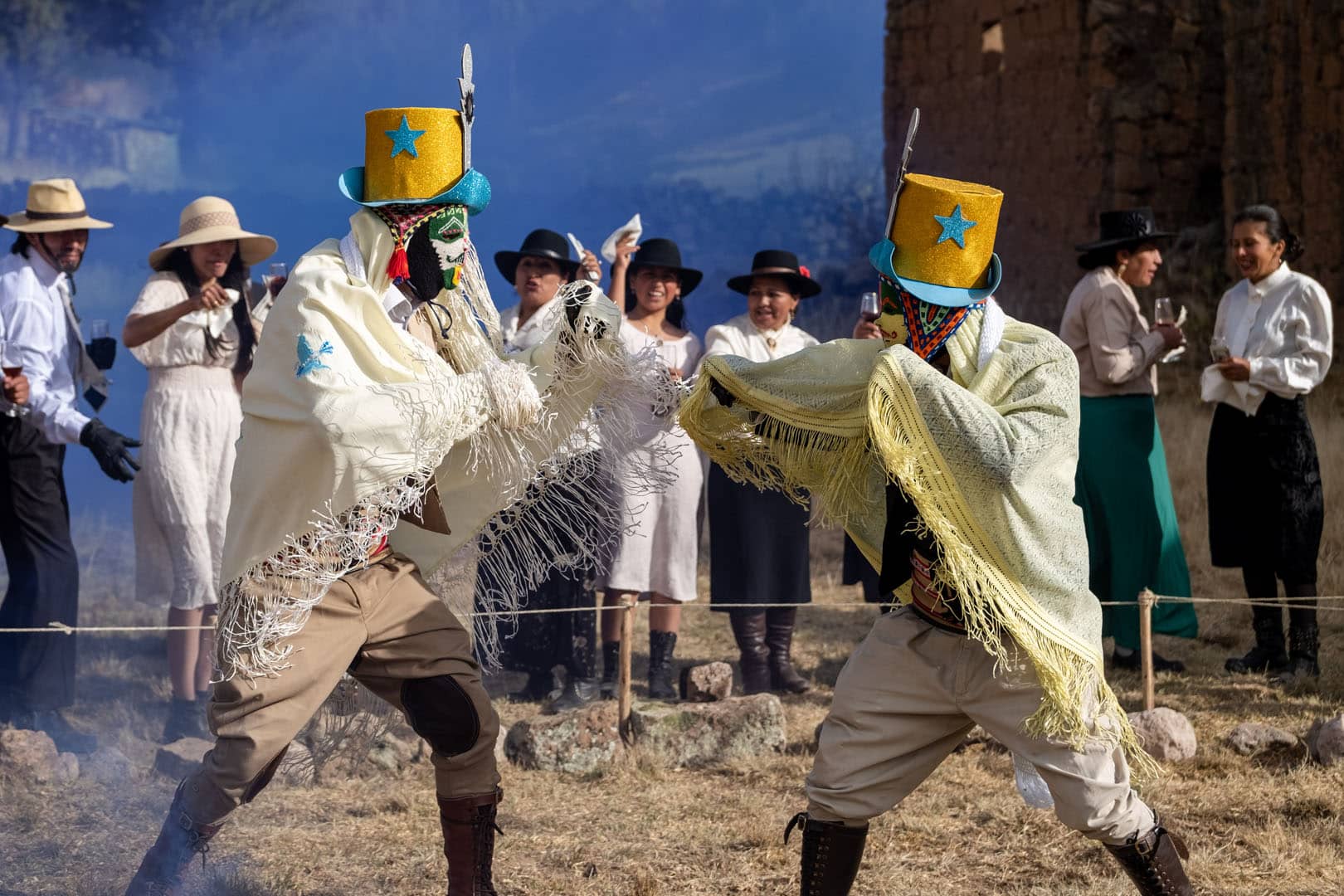
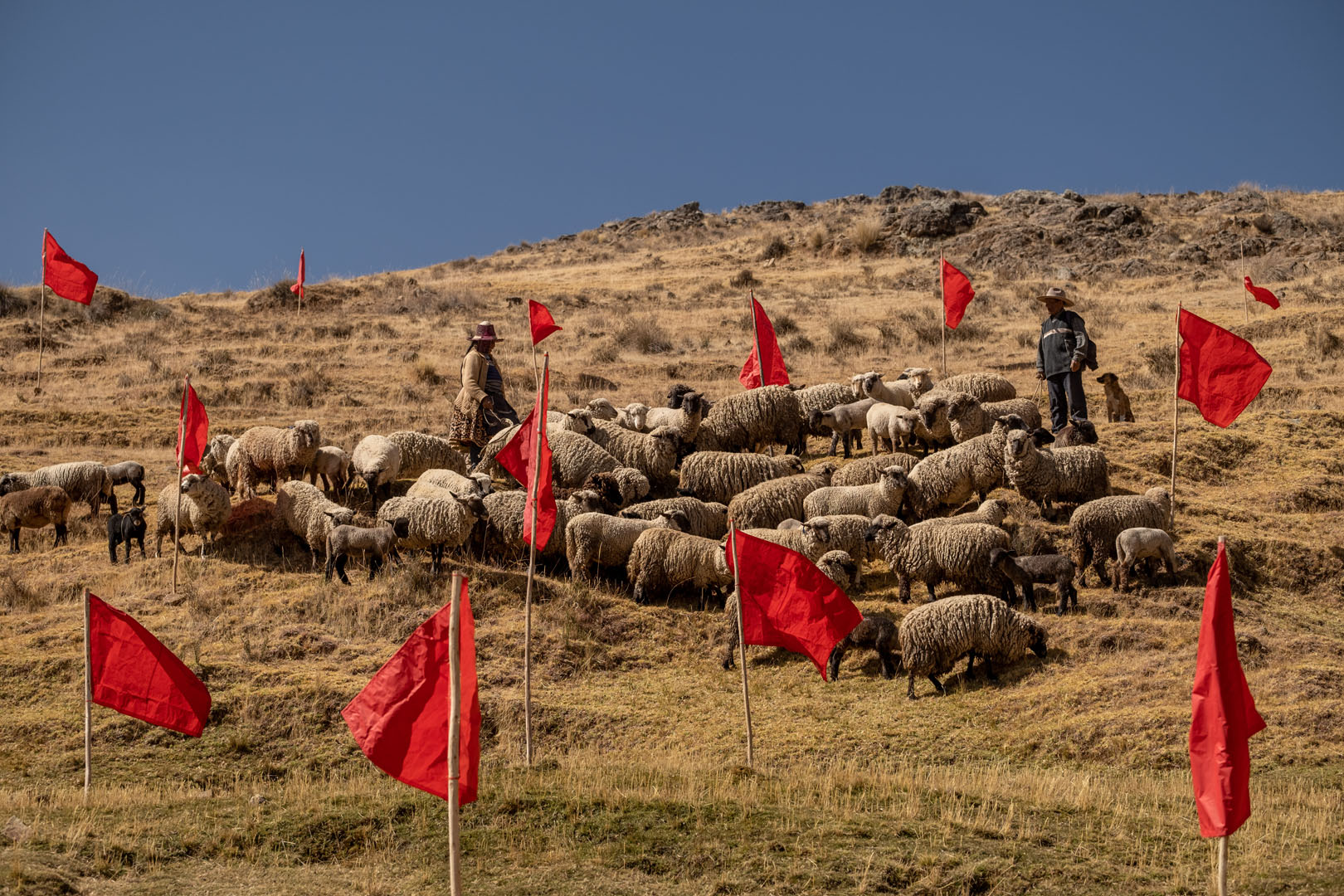
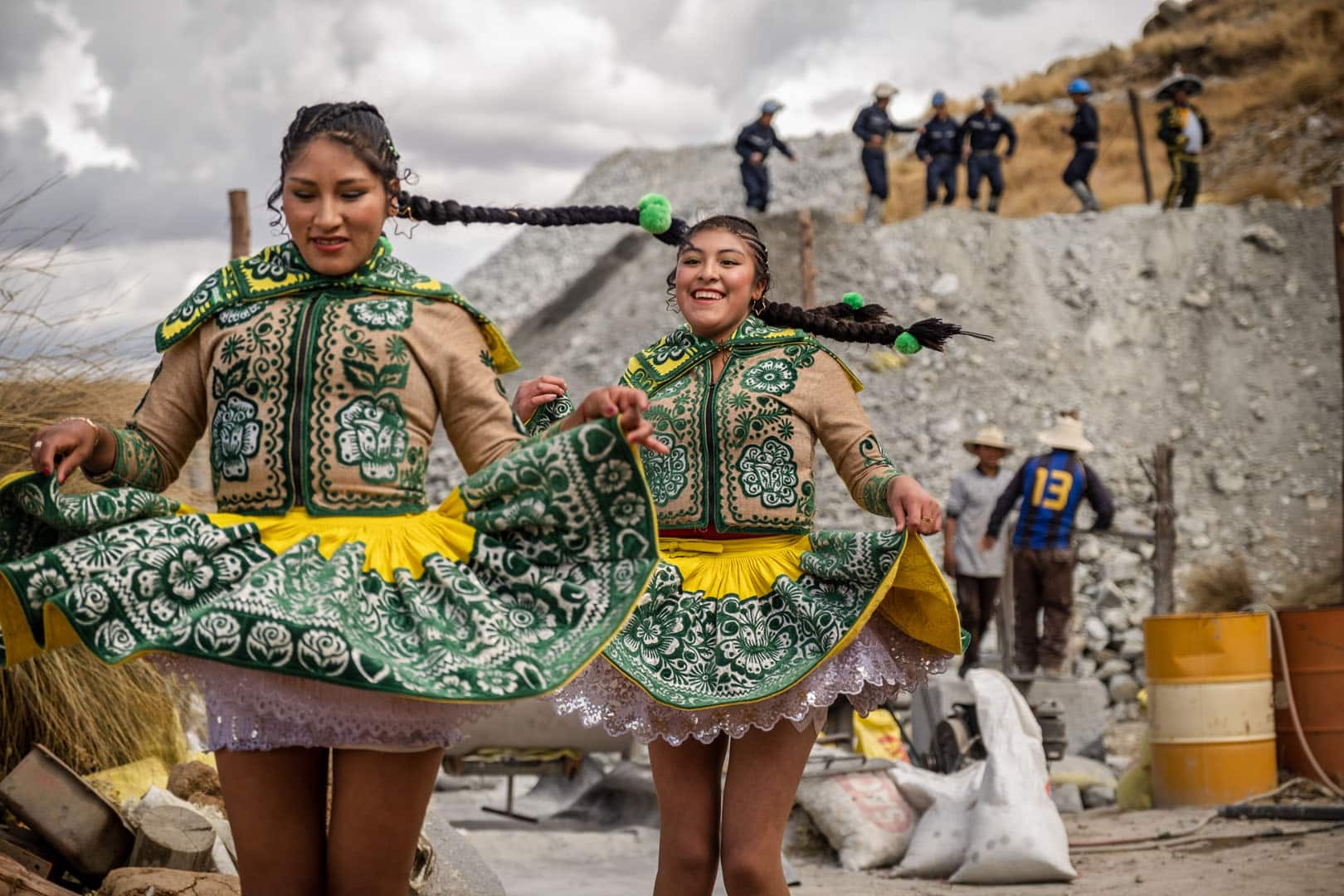
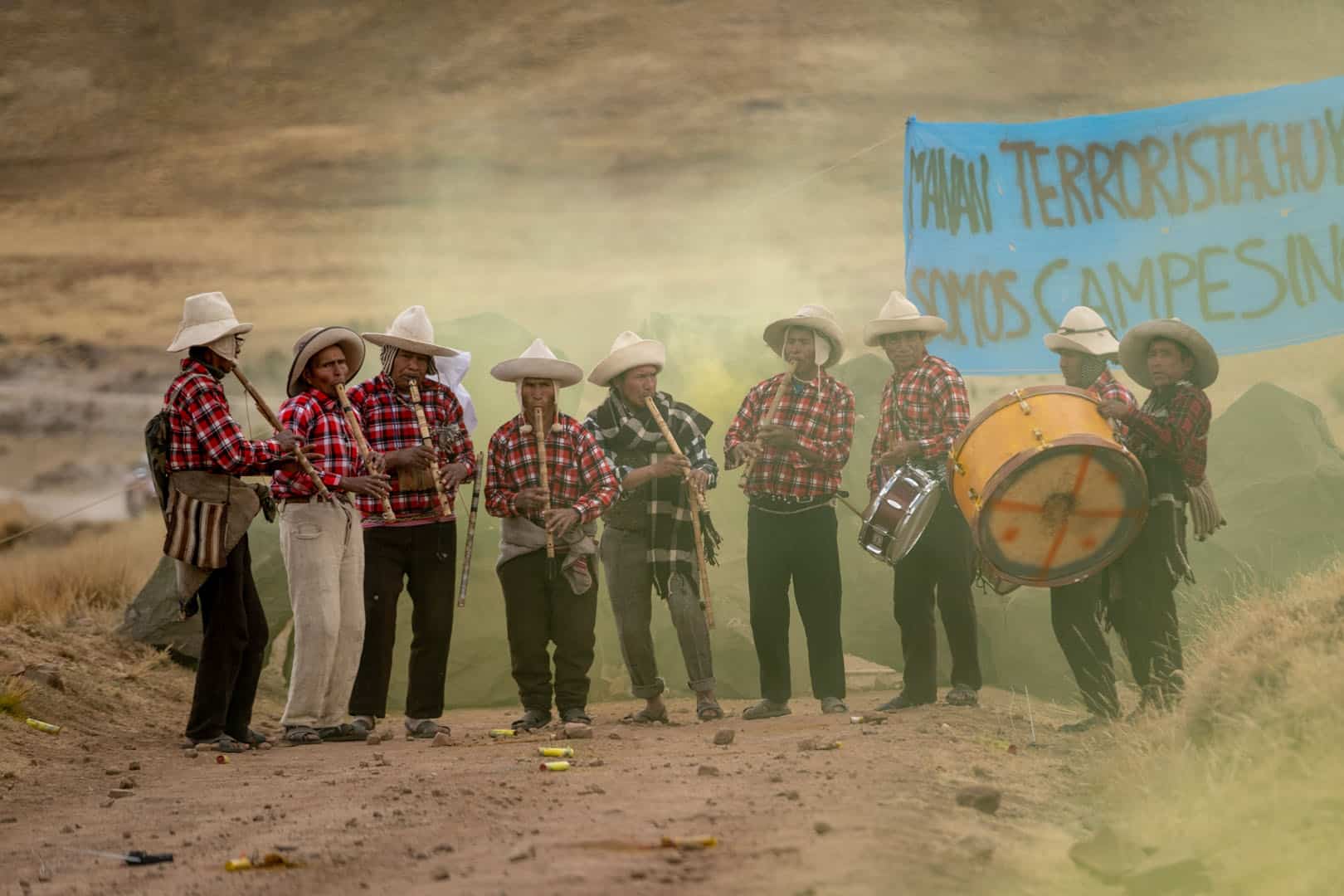
The three-channel video installation K’allpanakuy orcconchiskunapi (Rage in the Andes), is an experimental, collaborative, and interdisciplinary film project conceived and produced with the participation of residents of Chumbivilcas, a province in the Cusco region of the Peruvian Andes. The work weaves together testimonies that blend documentary information with speculative fiction, followed by re-enactments performed by the protagonists themselves. Through sensory ethnography and the re-creation of historical events and cinematic passages, the piece addresses the dense history of the region—from the battles of Túpac Amaru and the ravages of the internal armed conflict to contemporary environmental struggles against mining exploitation of the territory.

3-channel video installation, 5.1 sound, 70’

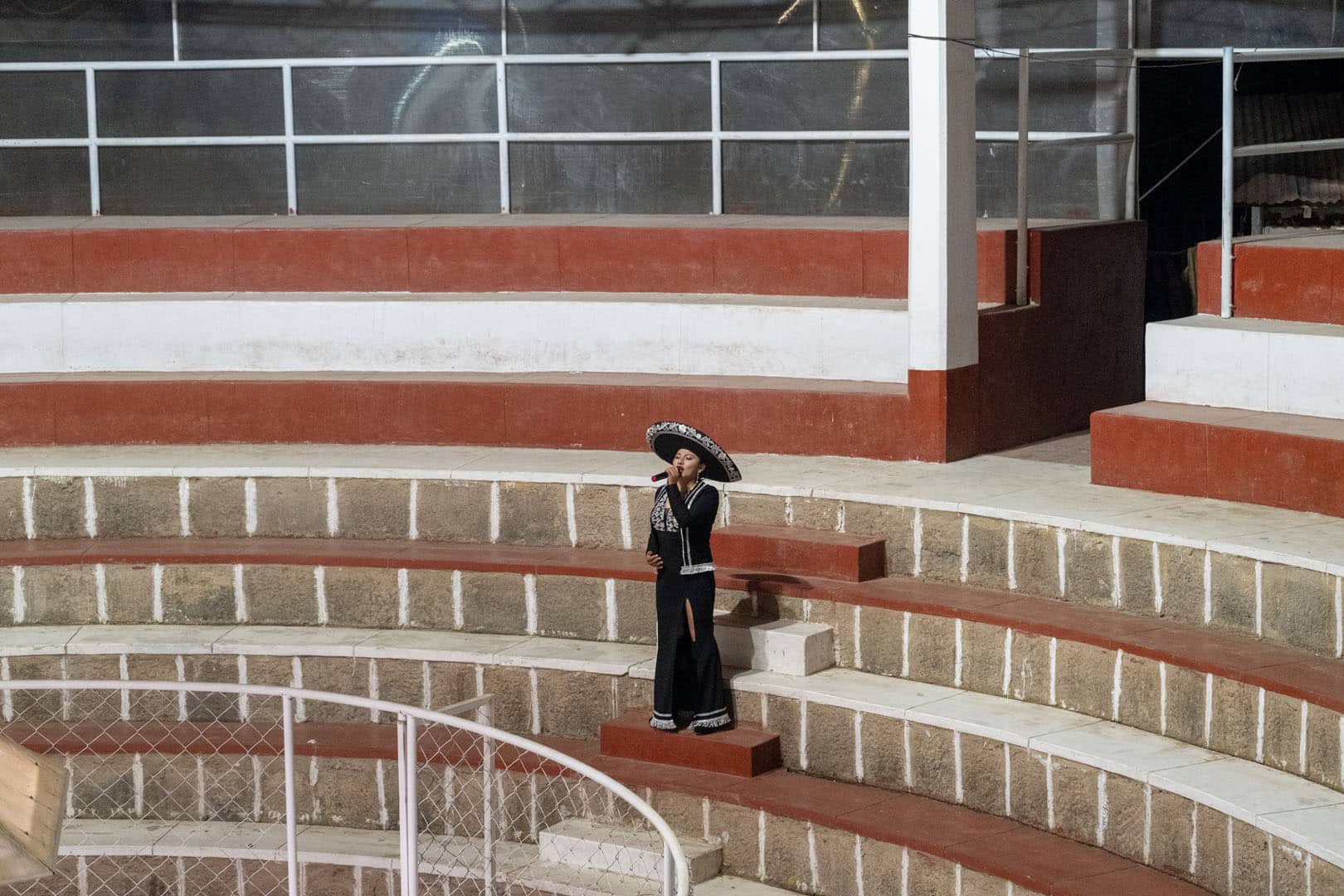
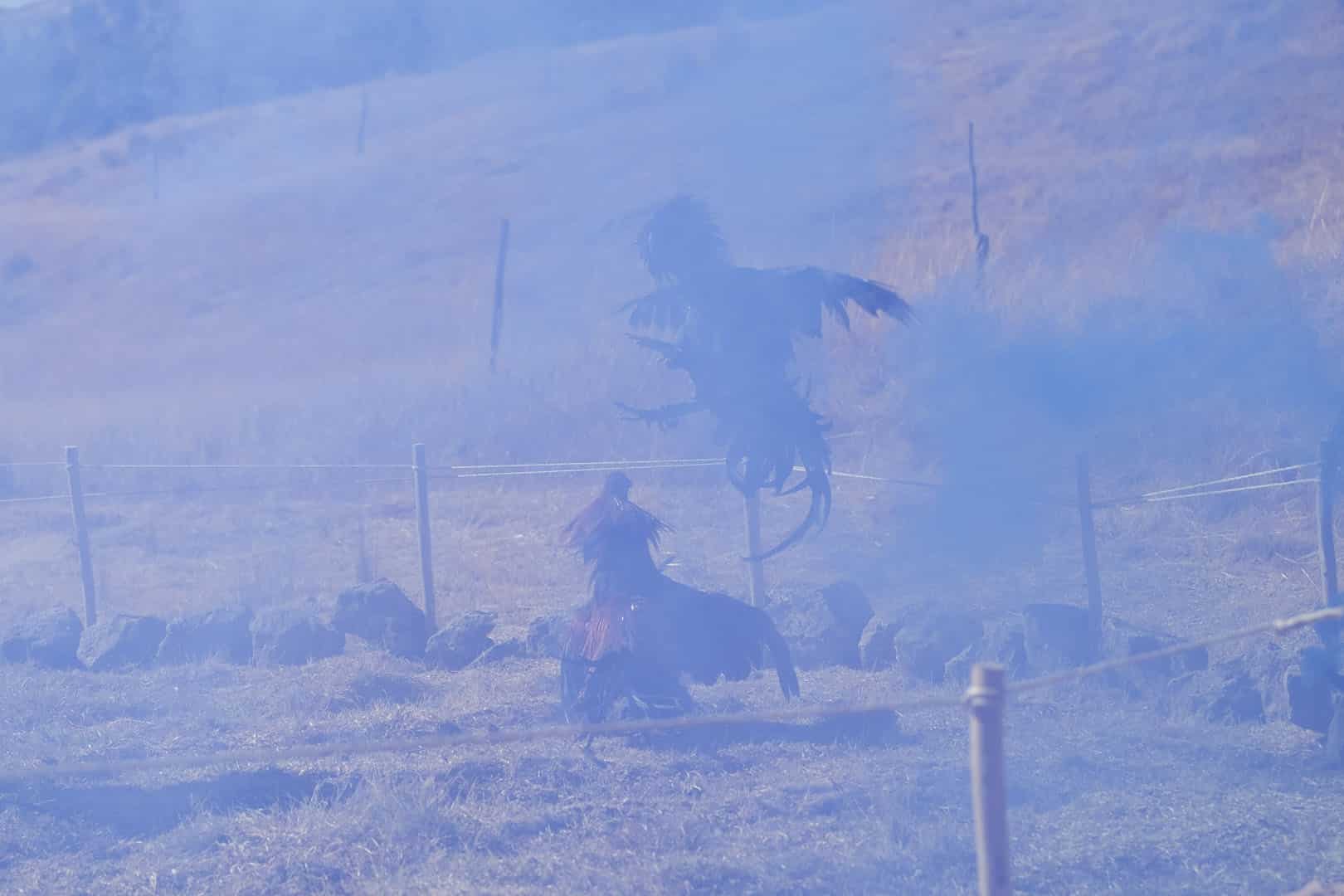
The work seeks to collectively dismantle stigmatizing discourses about Indigenous identity, deconstruct hegemonic masculinities, and foster critical dialogue on extractivism. The film opens with a prophecy: the wakas—sacred Quechua stones/sites—will return the land to Indigenous peoples. This omen is followed by the re-enactment of a scene from the film Túpac Amaru (1984), but here, the rebels are led by women. In another sequence set among the ruins of a colonial hacienda, a banquet and a cockfight culminate in a peasant uprising. The roosters, transformed into warriors of the takanakuy—an Andean martial art rooted in Chumbivilcas—rouse dancers and servants to expel the guests and take revenge. The Indigenous uprising is followed by the representation of a chase by the rondas campesinas of Ccoyo, a small community in Chumbivilcas. The community patrol captures two cattle rustlers, who are punished and publicly displayed. Later, a group of electronic huaylia singers and miners dance around an explosion of banknotes. Mexican cultural references—ranchera singers and mariachis—appear in several scenes, reflecting the local affection for and appropriation of Mexico’s cultural imagery. On this point, at the film’s end, one commentator asserts that Indigenous cultures are neither copies of each other nor mere folklore, but rather are intertwined. These are some of the allegorical images that evoke diverse forms of anti-colonial struggle and resistance in Chumbivilcas.

WOVEN STORYBOARD, 2023 – 2024

Backstrap-woven wool textile, artist’s collection

Produced by the Asociación Artesanal de Textilería Surpuy (Santo Tomás, Chumbivilcas, Peru) as a complement to the audiovisual installation, the textile functions as a visual storyboard, translating the film’s imagery into woven form.

Weavers: Felipa Silvana Bautista, Rosa Peña Puma

Credits

Director: Adela Goldbard
Original Script: Adela Goldbard
Producers: Nina Andrea Juárez, Claudia Farfán, Adela Goldbard
Research: Claudia Farfán, Adela Goldbard
Director of Photography: Johan Carrasco
Direct Sound: César Centeno
Art Direction: Edi Mérida
Editing: Rogelio Díaz, AMEE
Sound Design: Suplex Estudio, Mariachi Antiguo de Acatic
Assistant Editor: Fernanda Sandoval
Color Correction: Rogelio Díaz, AMEE
Acting Coach: Waldo Facco
Special Effects Coordination: Luis Matamoros
Assistant Camera: Manuel Landeros, Mario Arturo Amaro Poot
Production Assistant: Katerine Quispe
Direct Sound Assistant: Victoria Lecaros
Oracle Texts: José María Arguedas, José Carlos Mariátegui, Eduardo Galeano
Subtitling: Rogelio Díaz, AMEE
Quechua Translation: Amaru Cárdenas

Cast: Adrian Lima Patiño, Alexis Alain Zuñiga Araujo, Alipio Layme Sivana, Amber Puma Mendoza, Aniba Mendoza Lima, Annette Montalvo Layme, Arturo Chaucca Tinta, Audina Esquivel Bobadilla, Avelino Ancalla Oquenta, Avelino Sivana Solis, Ayben Carrillo Soncco, Baciledes Salas Orosco, Balvino Quispe Bautista, Bautista Millio Yucra, Belen Cruz Caceres, Belinda Quispe Sacsi, Benancia Y. Ccapa, Benita Sillcahue Hullcayquepa, Benito Molina Treviño, Betsy Lis Peña Cjuro, Bonefacia Soncco Quispe, Candi Yanina Valdez Uraccanva, Carlos Manuel Boza Ojeda, Carlota Molina Aquima, Cecilio Omanis Kipe, Claudio Quispe Peña, Cledia Janampa Madueño, Cleotè Alccahuamoi Mollo, Concepcion Aquino Molina, Cosme Huamani Huamani, Dalmacia Huamani Alcca, Damian Huamani Bautista, Danata Chequera Husa, Dario Wilson Menacho Huamani, Didver Luis Calderon Romero, Dina Gomez Villa, Edgar Molina Llicahua, Edwin Amador Almiron Castillo, Edwin Mendoza Molina, Eleuterio Abiega Alviz, Elisabet Esquivel Bovadilla, Eliseo Huamoni Cabrera, Elizabeth del Carmen Carrera Alcalà, Emilio Castillo, Epifania Huamani, Eudes Zenaida Medina Valdez, Euginia Salhua Huamani, Eustaquia Sivana Ancalla, Eustoqui Mullo Zouccoya, Felipa Sivana Bautista, Felipe Uwalpa Cjuro, Fernando Flores, Florencia Venero Cabrera, Fortunato Ancalla Venero, Fortunato Yallercco Chacnama, German Quispe Peña, Ghilma Romero Molina, Gloria Quispe Sacsi, Gomercindo Ccorawa Achingipa, Goyo Caballero, Gregoria Llamocca Huayhua, Griseldo Sivana Huayllapuma, Gumercindo Ccorawa, Gumercindo O. Cos., Hugo Zambrano, Irene Huamani Cusi (on foot), Isaias Quimua Casquina, Jaime Sivana Huayllapuma, Jhomal Jareth Trelles Ataucum’, Jimena Jesusa Milio Cruz, Jorge Chacnama Mendoza, Jorge Luis Alvarez, Jorge Molina P., Jorge Molina Pecho, Jose Huamaney Ancalla, Jose Huamani Vilcas, Jose Ronaldino Laura Castillo, Juan Carlos O. Càrdenas, Juan Ccoremanya Yallerco, Juan Salcedo Salcedo, Juan Valencia Condo, Julia Pallo Silinch, Julio Molina Rucho, Karina Quispe Pallo, Koni David Huamani P., Leonarda Laymi Condori, Leonidas Laime Valdez, Lourdes Maribel Pumacallahui Achahui, Lucio Huamani Condori, Luis Ayben Caballero Rios, Luis Molina Millos, Maglorio Castillo Alvis, Magnolia Peña Salas, Manuela Huancahuire Teniente, Marcelina Rendón Mendoza, Marco Taipe, Maria Jesus Romero Alvarez, Maria Sahua Peña, Marina Romero Chicata, Mario Edgar Valencia Molina, Marisol Alvarez Chàvez, Maura Sacsi, Mauricio Salhua Peño, Mauro Peña, Maycol Caballero, Mercedes Sevana Bautista, Miranda Molina, Miraya Romero Huamani, Nadia Liz Pallo Arotaipe, Nelson Huamani Cruz, Nicanor Benavides, Nixon Yeistin Villa Arcos, Nuri Cusi Quispesivana, Olivia Venero Bobadilla, Orlando Rayàn Sivana, Oscar Salhua Choqque, Oscar Trelles Venero, Pedro Pablo Ancall R., Rafaela Boza Llano, Raul Espinoza Huamani, Remijco Sivana R., Rene Huilcana Castro, Roberth Molina Leandres, Rocio Cayllahua Salcedo, Rofina Borroa P. (on foot), Romulo Peña Huachoca, Ronaldo Ttito Mendoza, Roque Ccorawa Achingipa, Rosa Layme Huillcaiquipa, Rosa Peña Puma, Rosa Rimachi Molina, Rosalia Aymara Sillcahue, Rossa Angelica Huachuca Zelaya, Rosy Pèrez Guruina, Roy Eliazar Huamani P., Royer Alesc Ancalla Ancalla, Santiago Huamani Alccahua, Santos Claudio Molina, Sebastiana Alarcon Chavez, Sergio C. Gòmez Cruz, Shermely Karen Molina Lopez, Shilda Marianela Molina Huamani, Shirley Oblitas Huamani, Silvio Abiega Alviz, Sofia Huillcana Castro, Teodora Almanacin Sivincha, Tito Alberio Montañez Alvia, Tomas Huamani Yucra, Tomas Salhua Peña, Toribia Huamani Corsino, Ubaldo Ttito Cjuro, Urbano Huamani Alccahuama, Victor Layme, Vilma Huamani Castro, Walberto Villafuerte C., Washington Abiega Alviz, Wenceslao Almiron Roluna, Wilber Carrillo, Wilber Romer Ancalla Ancalla, Wilfredo Jucharo Muisa, Willber Ccorahua Huamani, Willy Cuba Venero, Wily Cuba Venero, Wily Marquez Huanca, Yeferson Jaime Ataucuri Saldivar, Yonh Romero Yaris, Yony Gliadys Huamani Rodriguez, Yony Quispe Batallanos, Yulisa Pèrez Guruina, Zacarias Ccalluche Rendoza, Zacarias Yallerca, Zandy Cheye Huancahuire


RINXUI (IN THE NIGHT), 2019- 2025
 
Stills from Rinxui (In the Night).
Two-channel HD video, 4-channel sound (double stereo) 15’

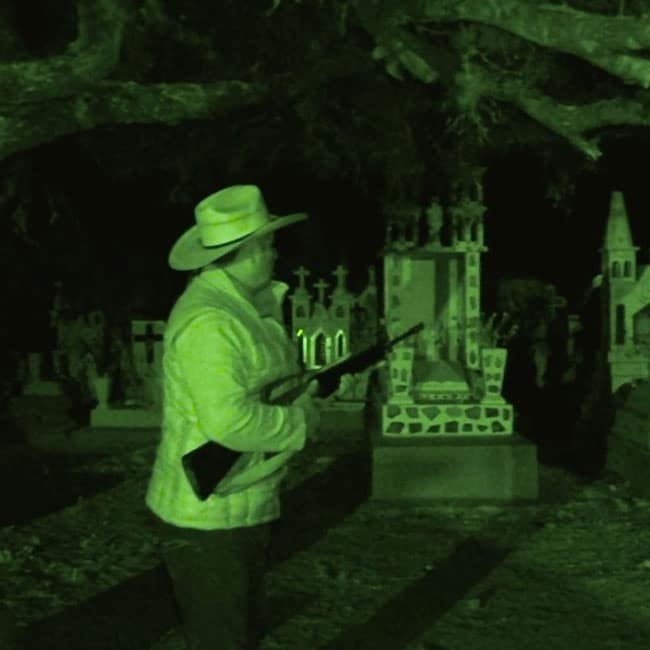
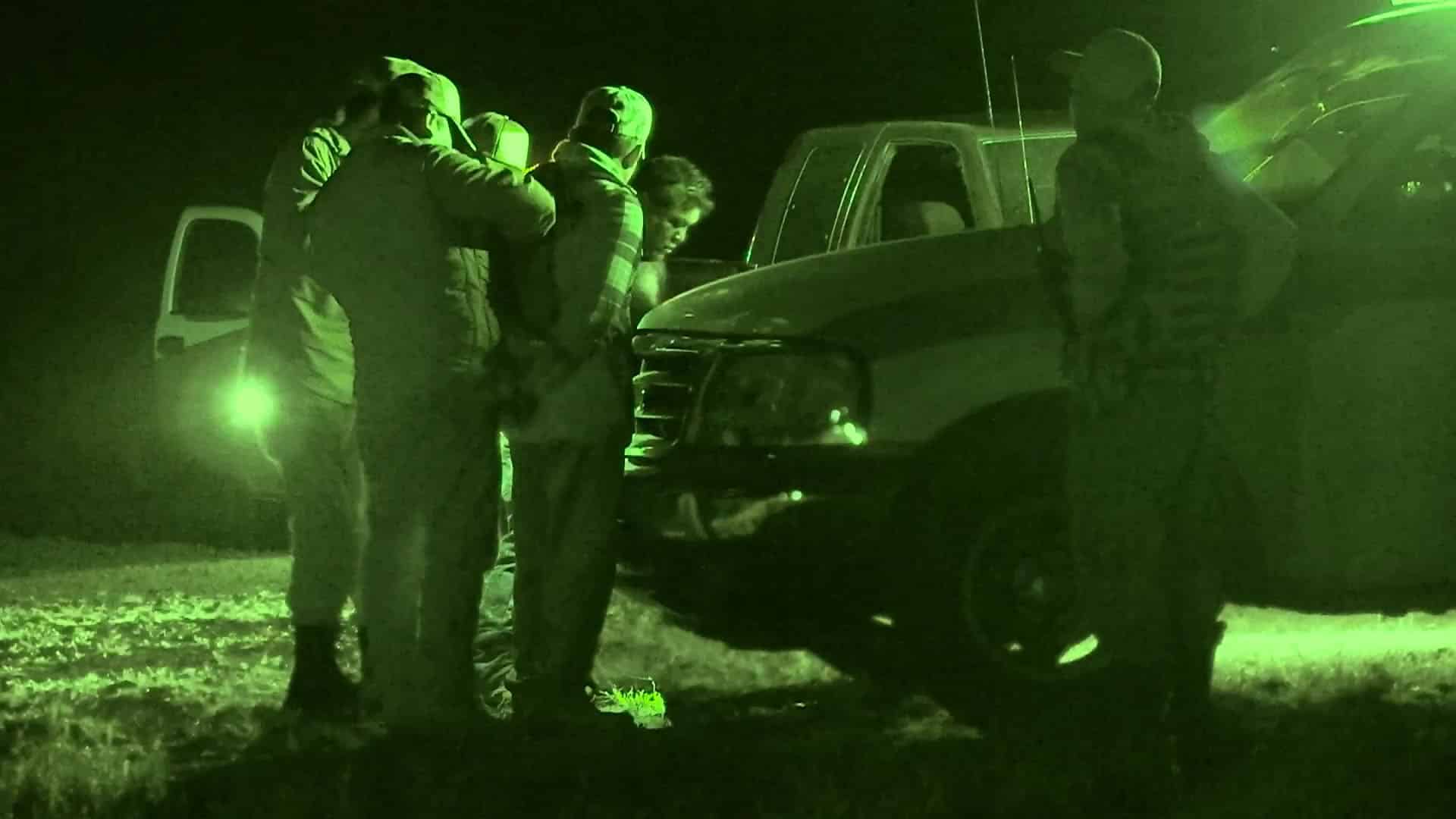
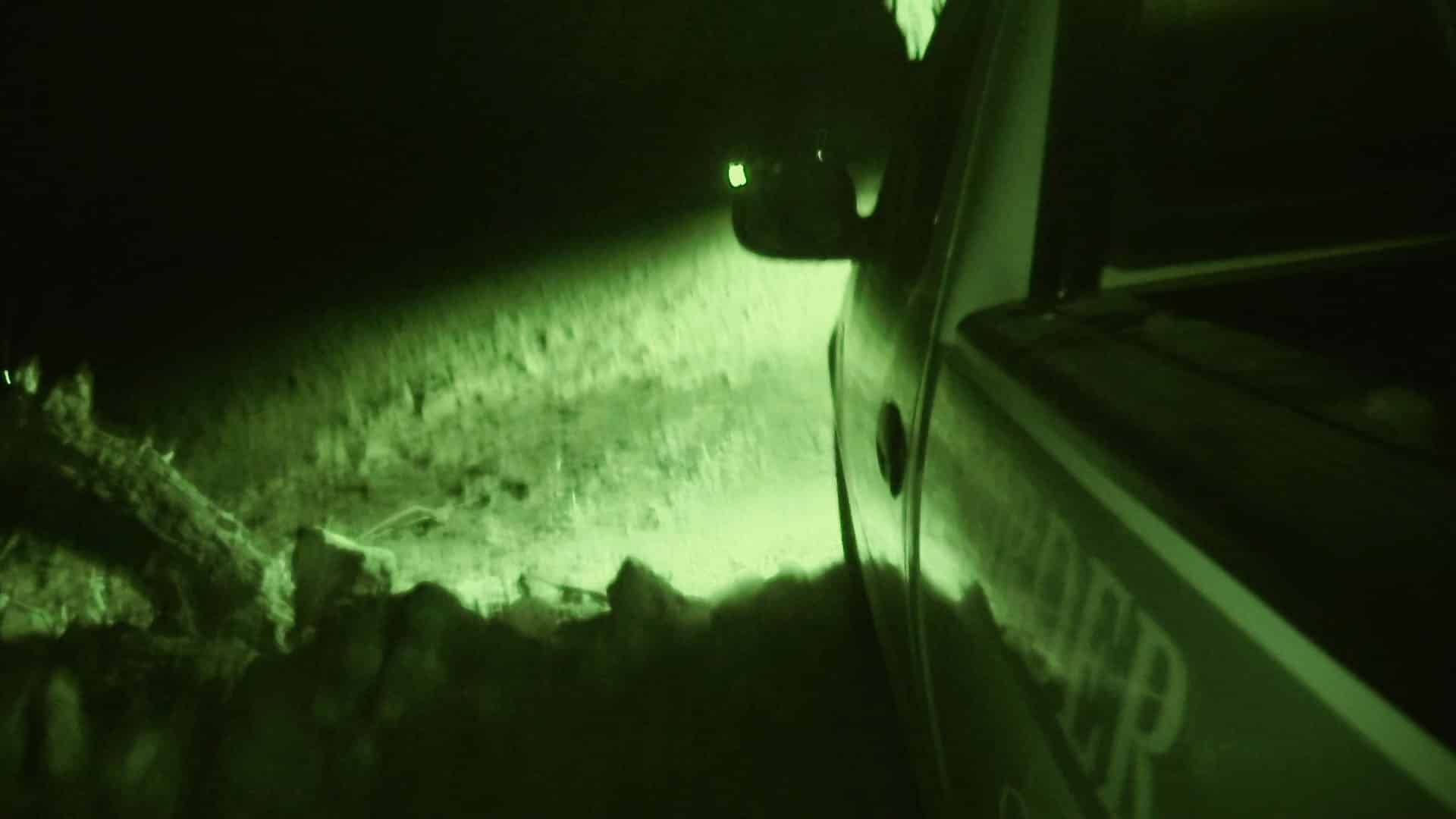
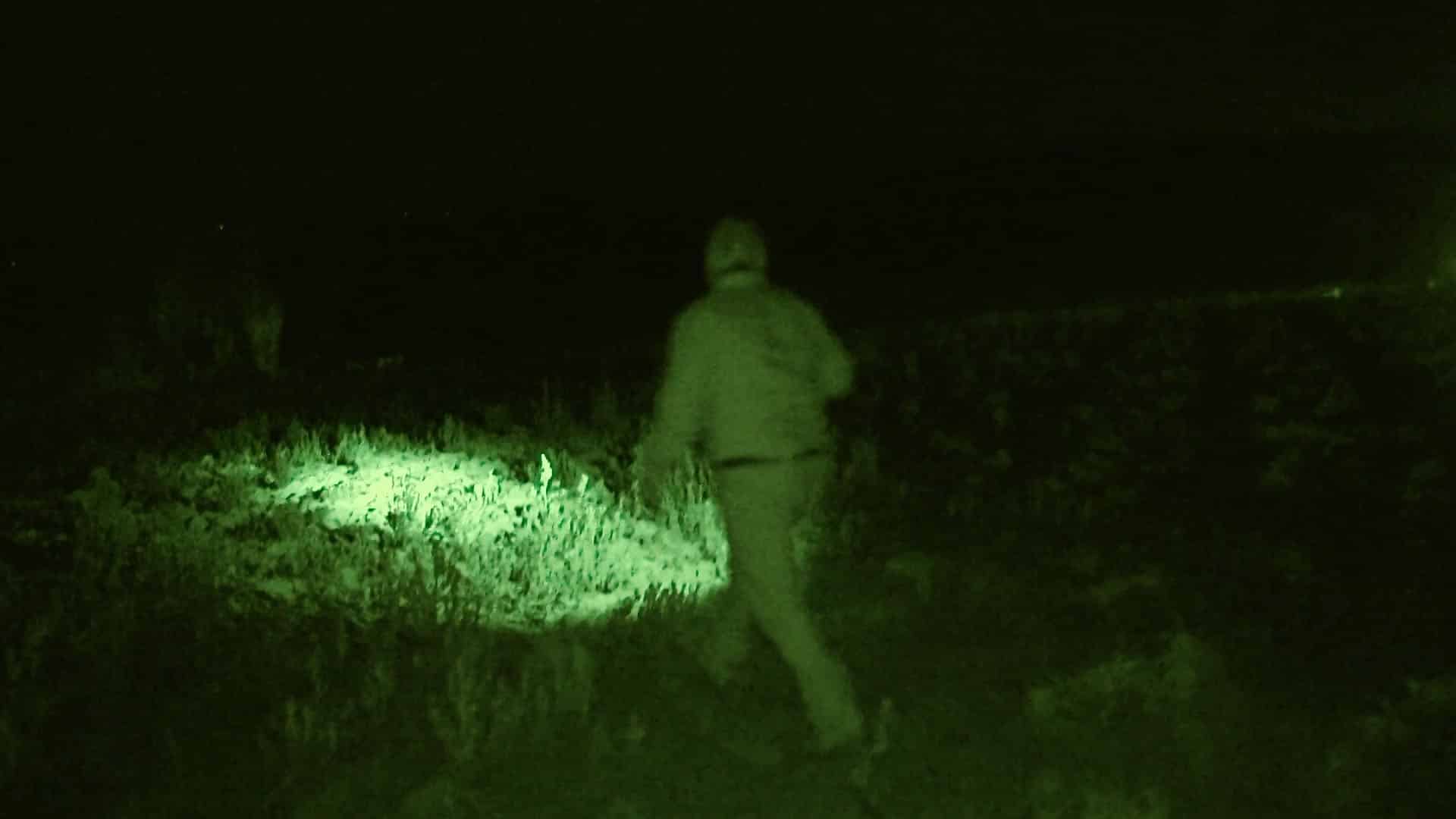
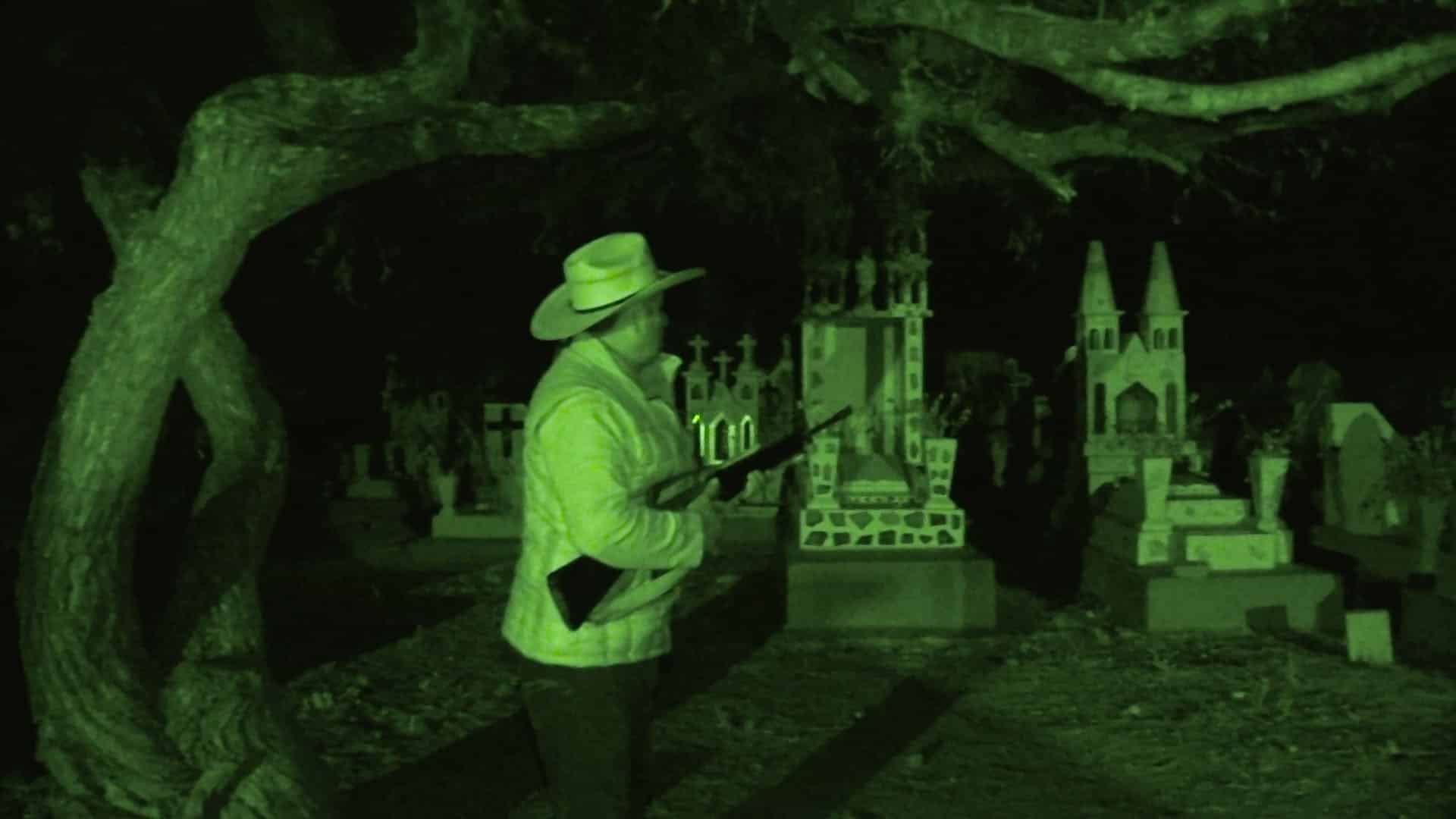
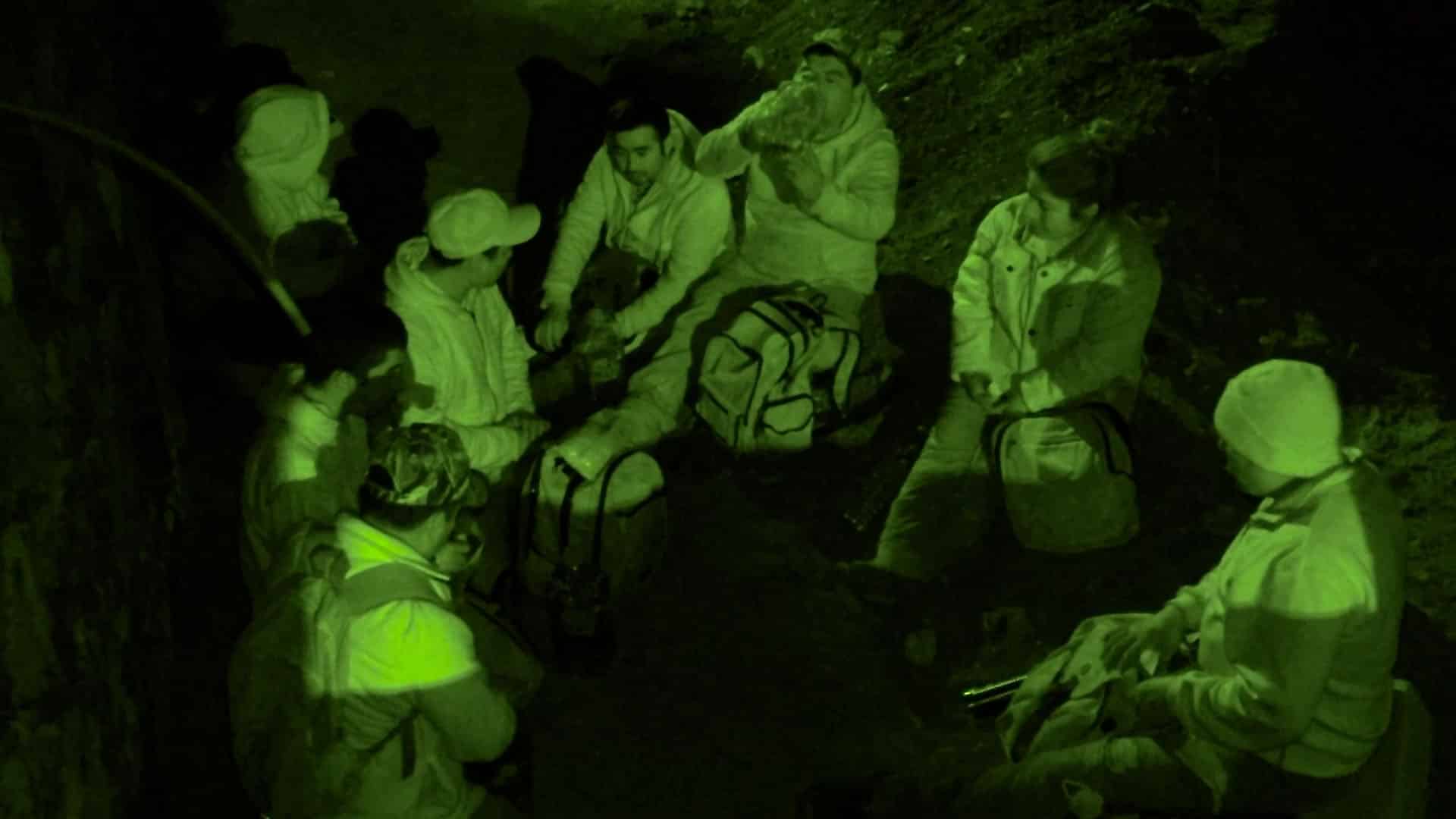
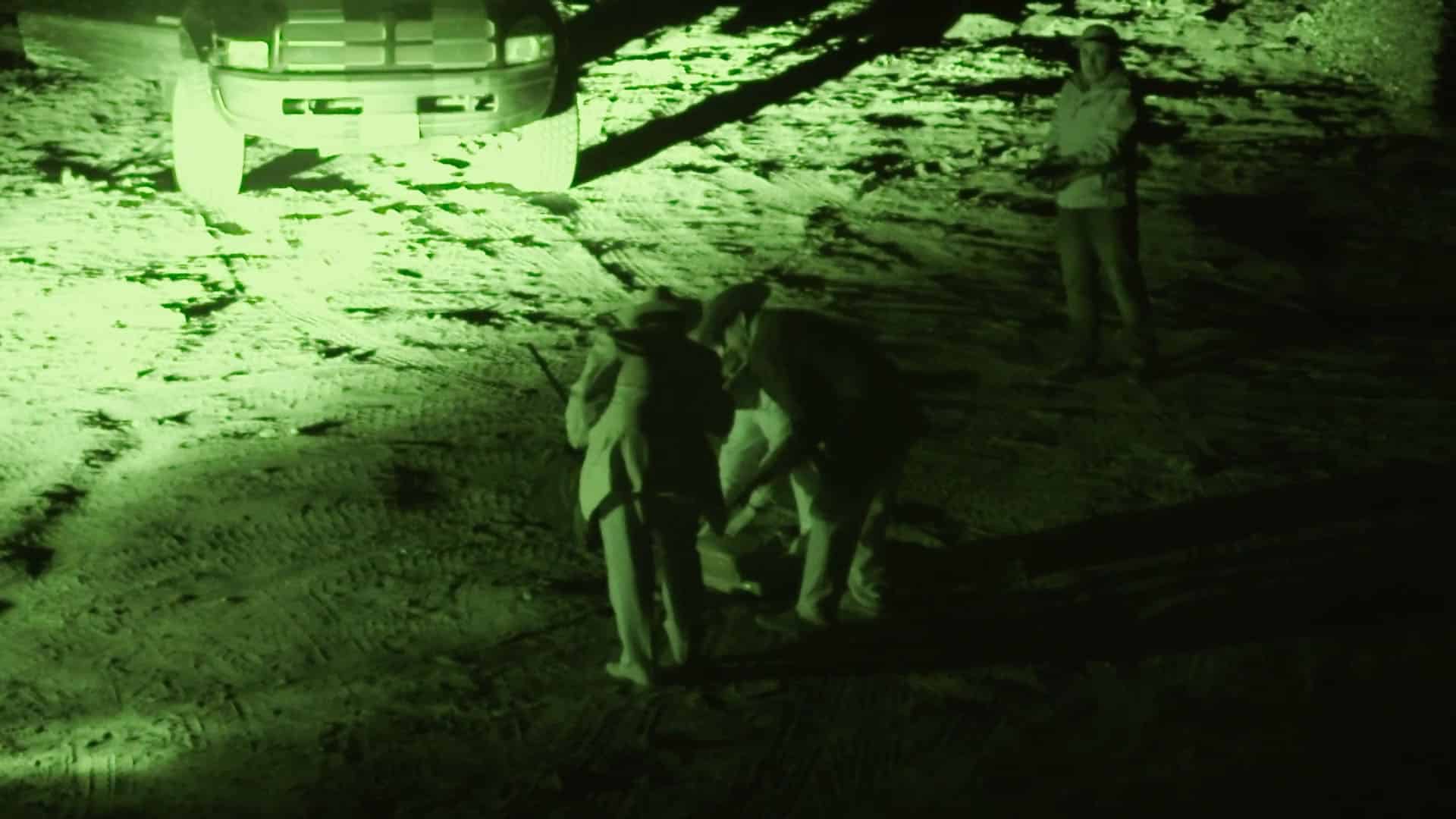
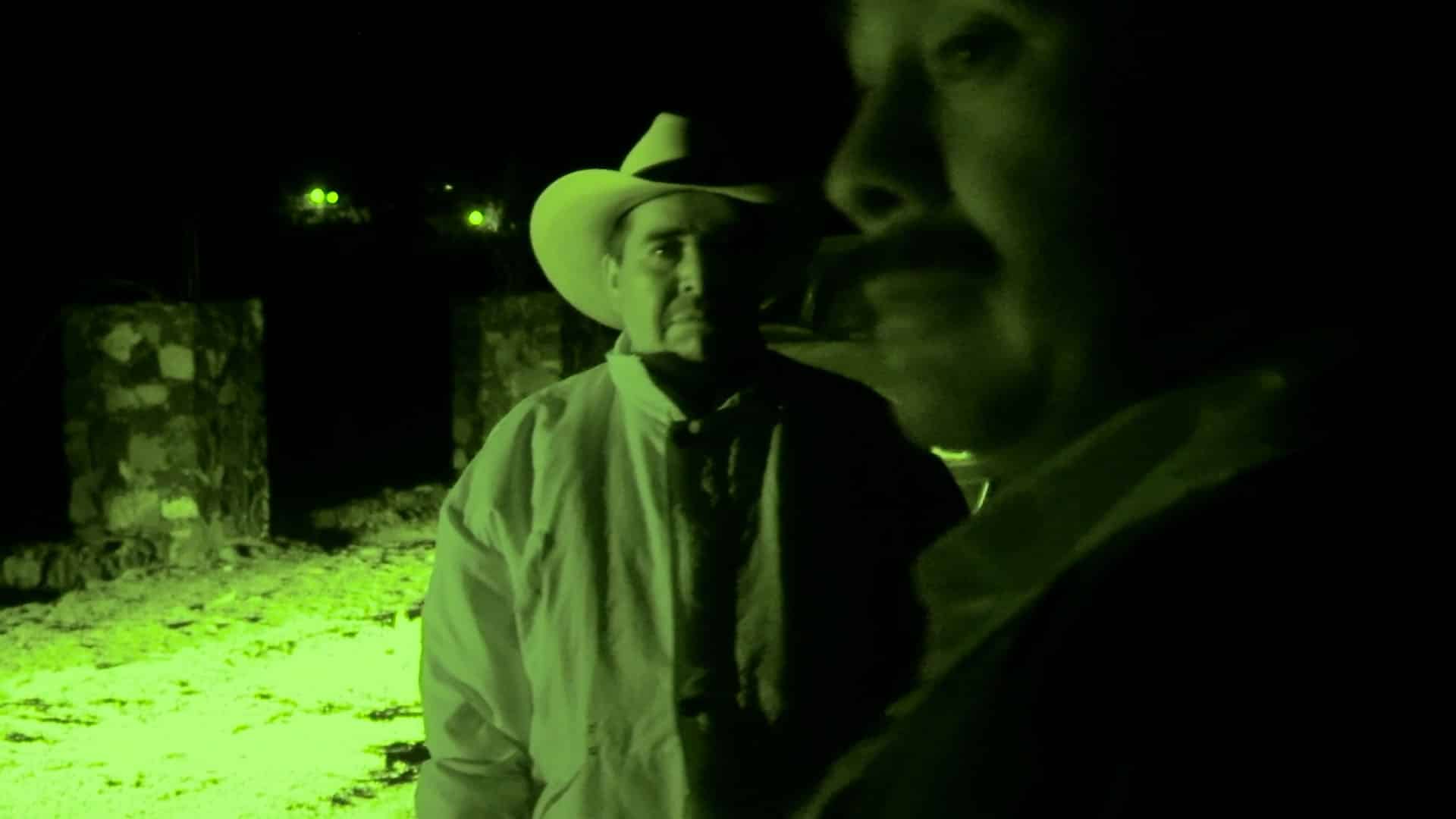
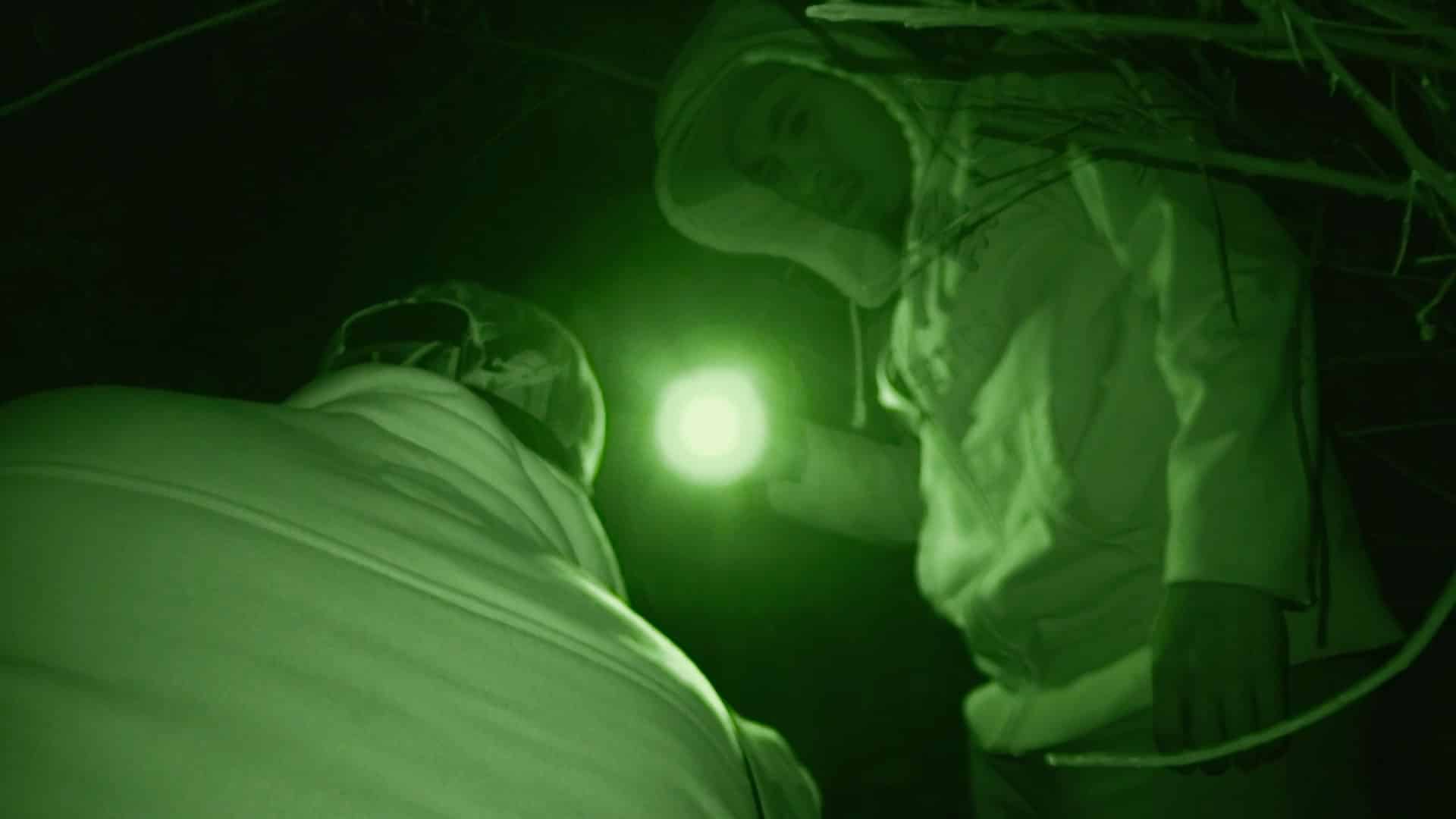
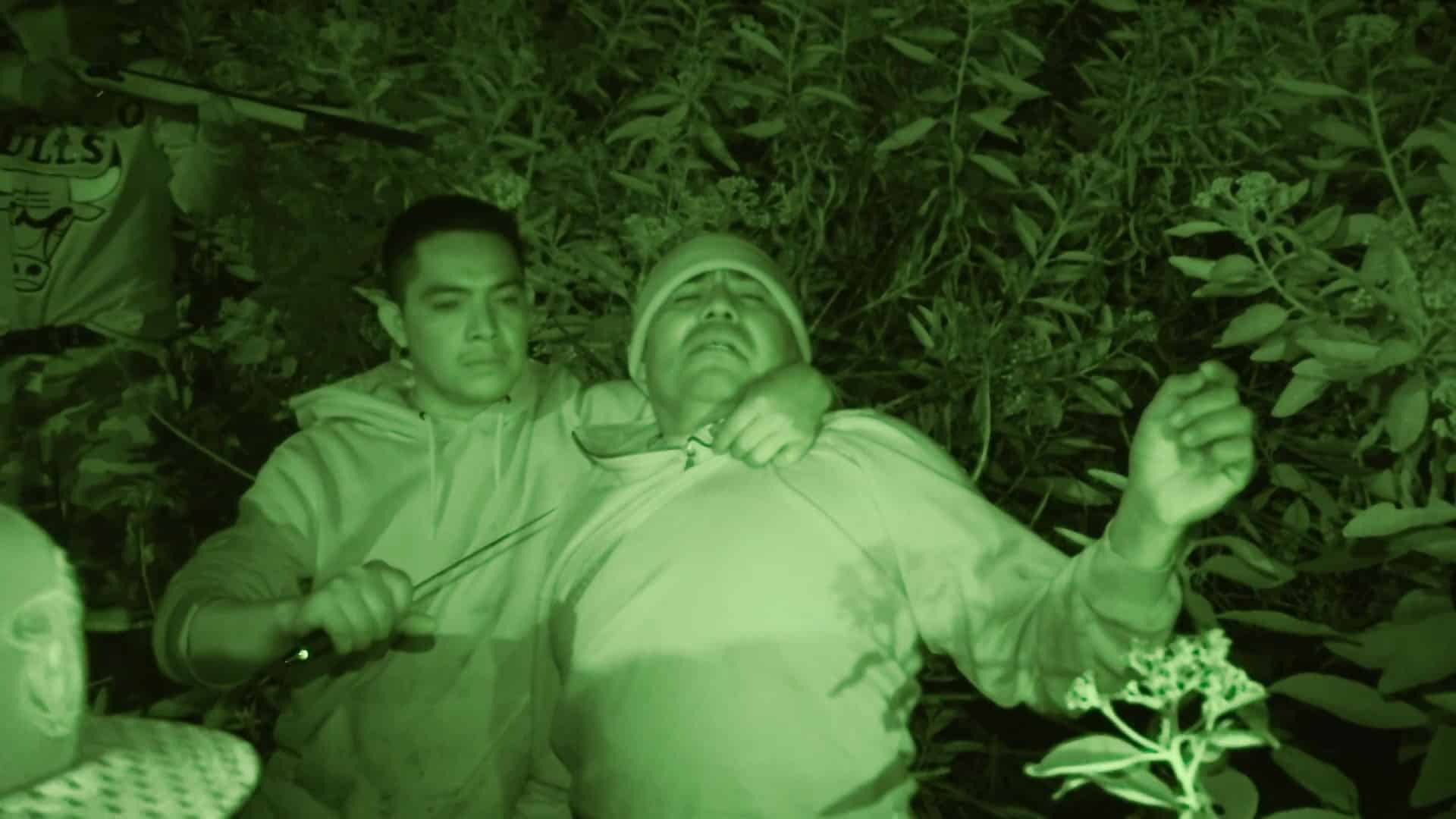
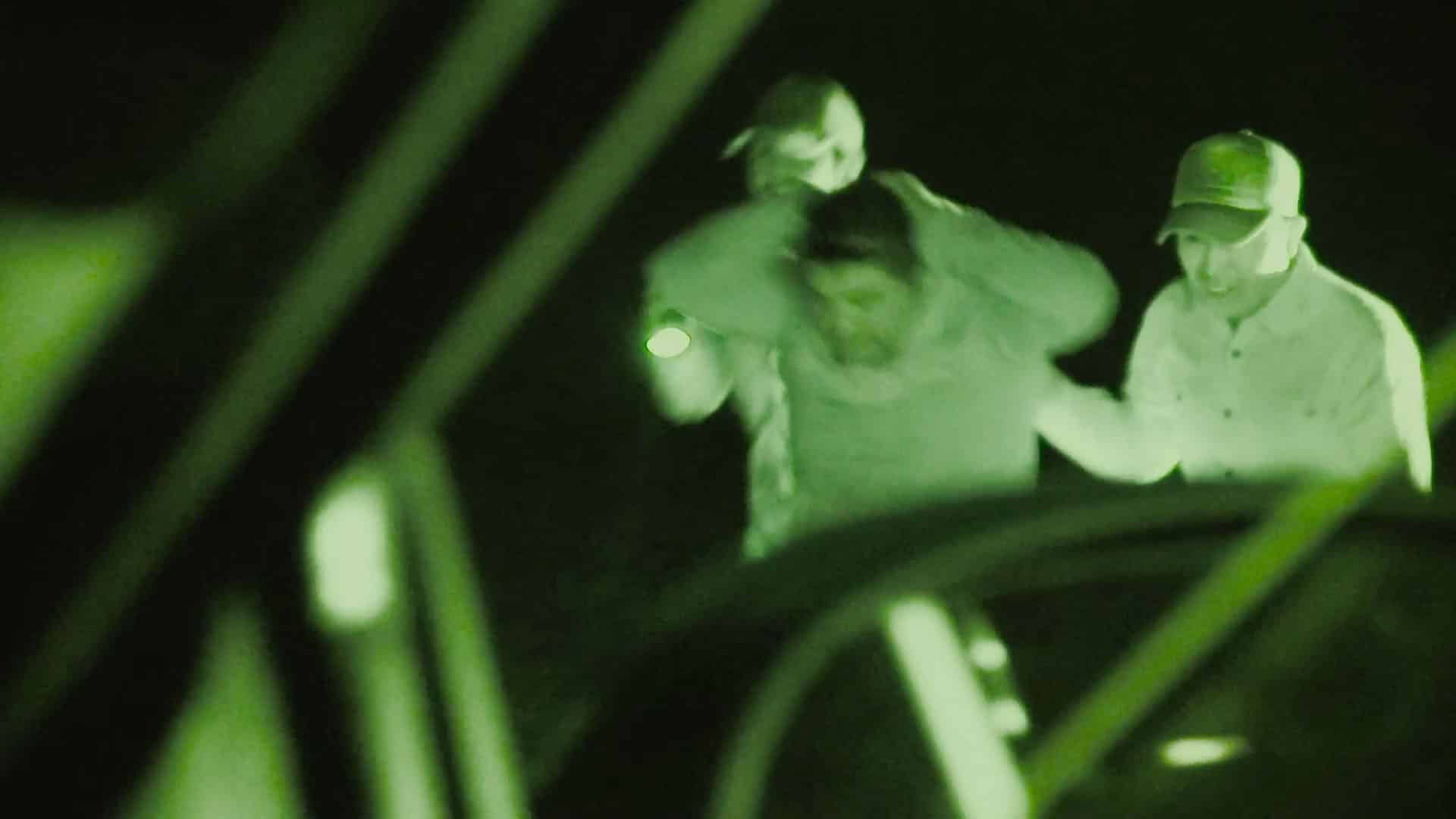
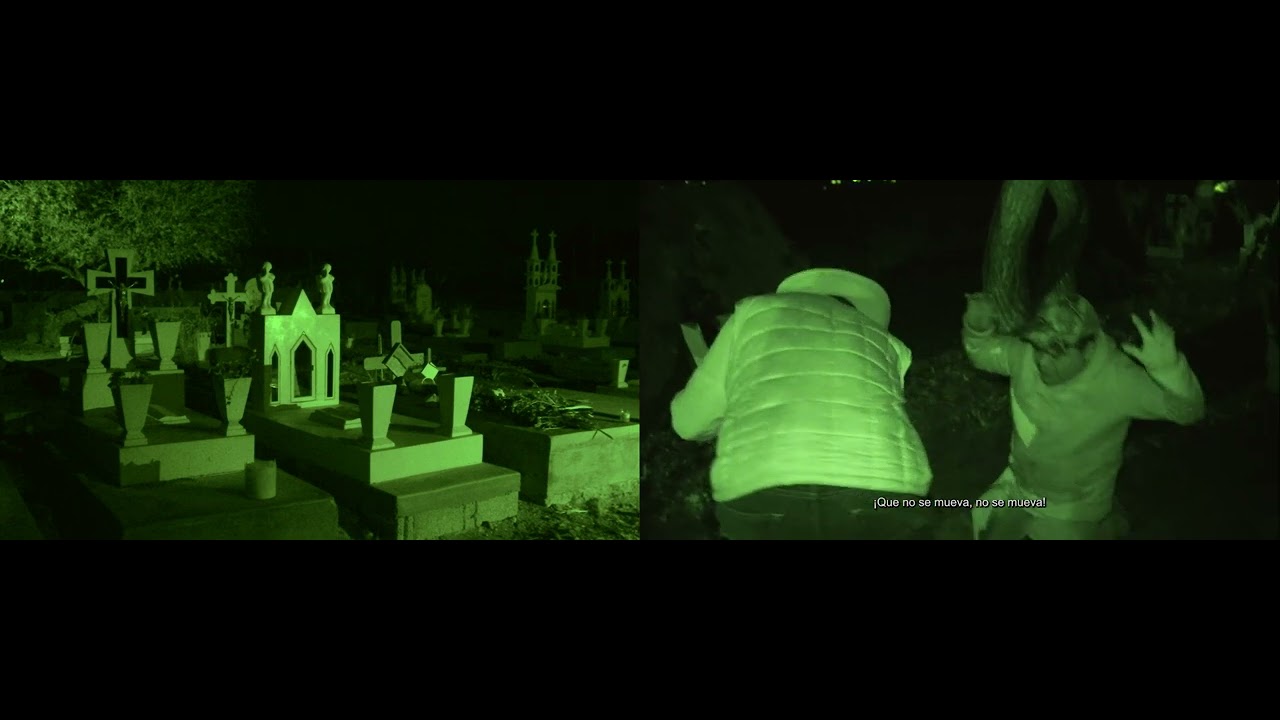
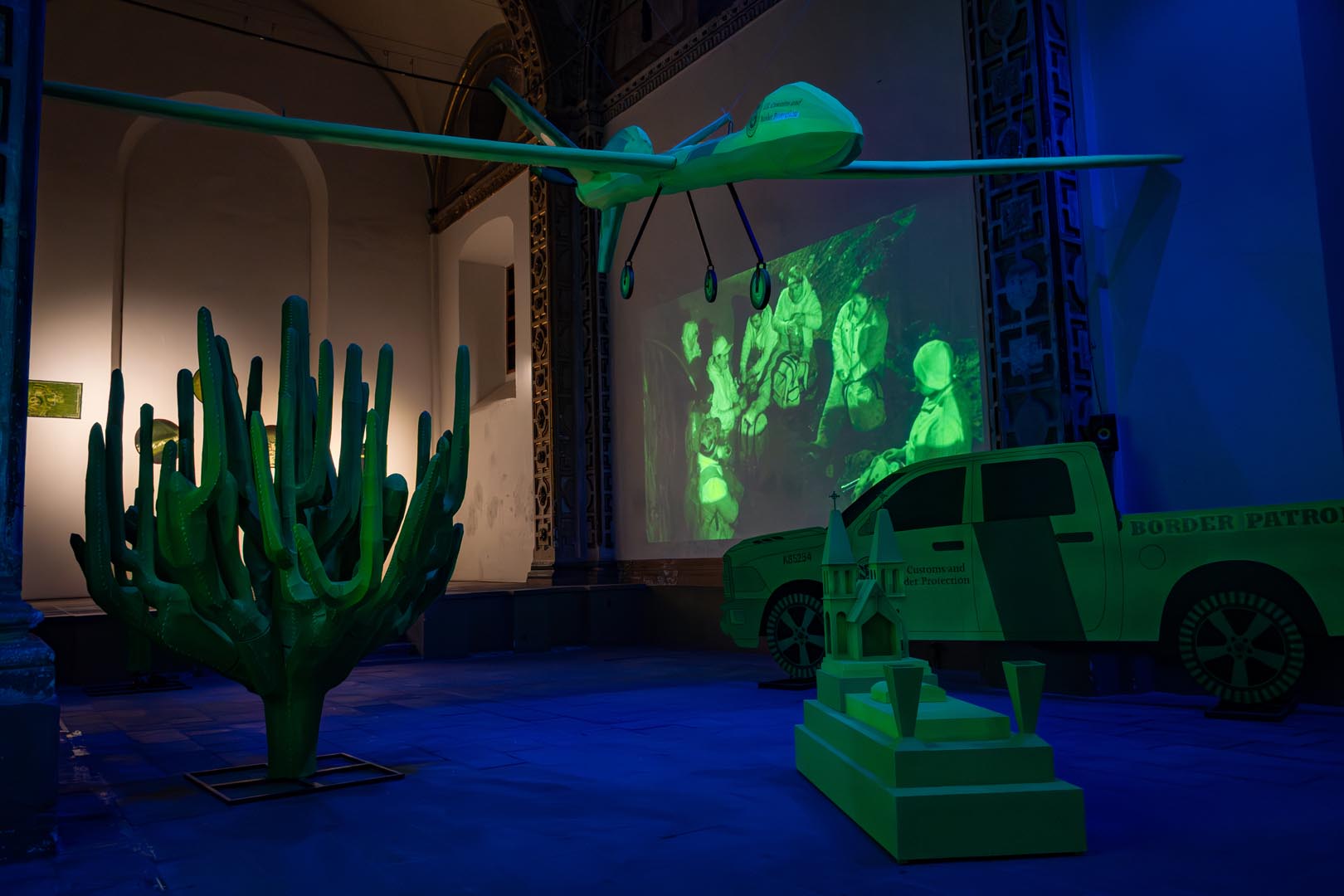
Filmed in collaboration with the Hñähñu community of El Alberto, Hidalgo, Rinxui (In the Night) draws on the collective’s long-running reenactment of the U.S. border crossing, the Caminata nocturna (Night Walk), staged as both a tourist attraction and a community-led act of awareness. Captured entirely with night-vision cameras, the work underscores the surveillance and harassment migrants face, while reframing the performance as a radical exercise in communal memory and resistance.

Sculptural installation  
Papier-mâché, fiberglass, reed, fluorescent paint, rotary mechanism
Sculptural installation  
Papier-mâché, fiberglass, reed, fluorescent paint, rotary mechanism
Sculptural installation  
Papier-mâché, fiberglass, reed, fluorescent paint, rotary mechanism
Sculptural installation  
Papier-mâché, fiberglass, reed, fluorescent paint, rotary mechanism
Sculptural installation  
Papier-mâché, fiberglass, reed, fluorescent paint, rotary mechanism

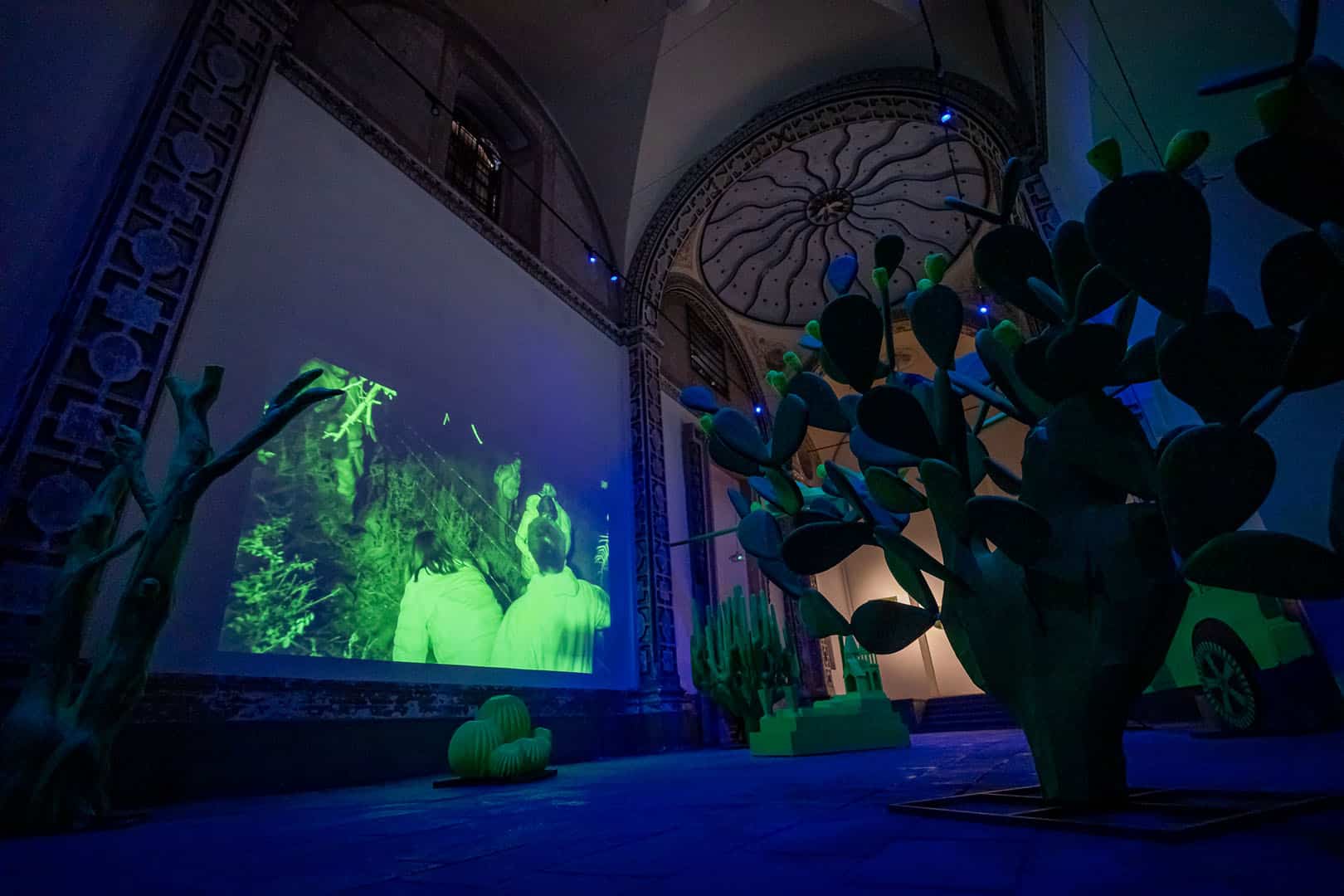
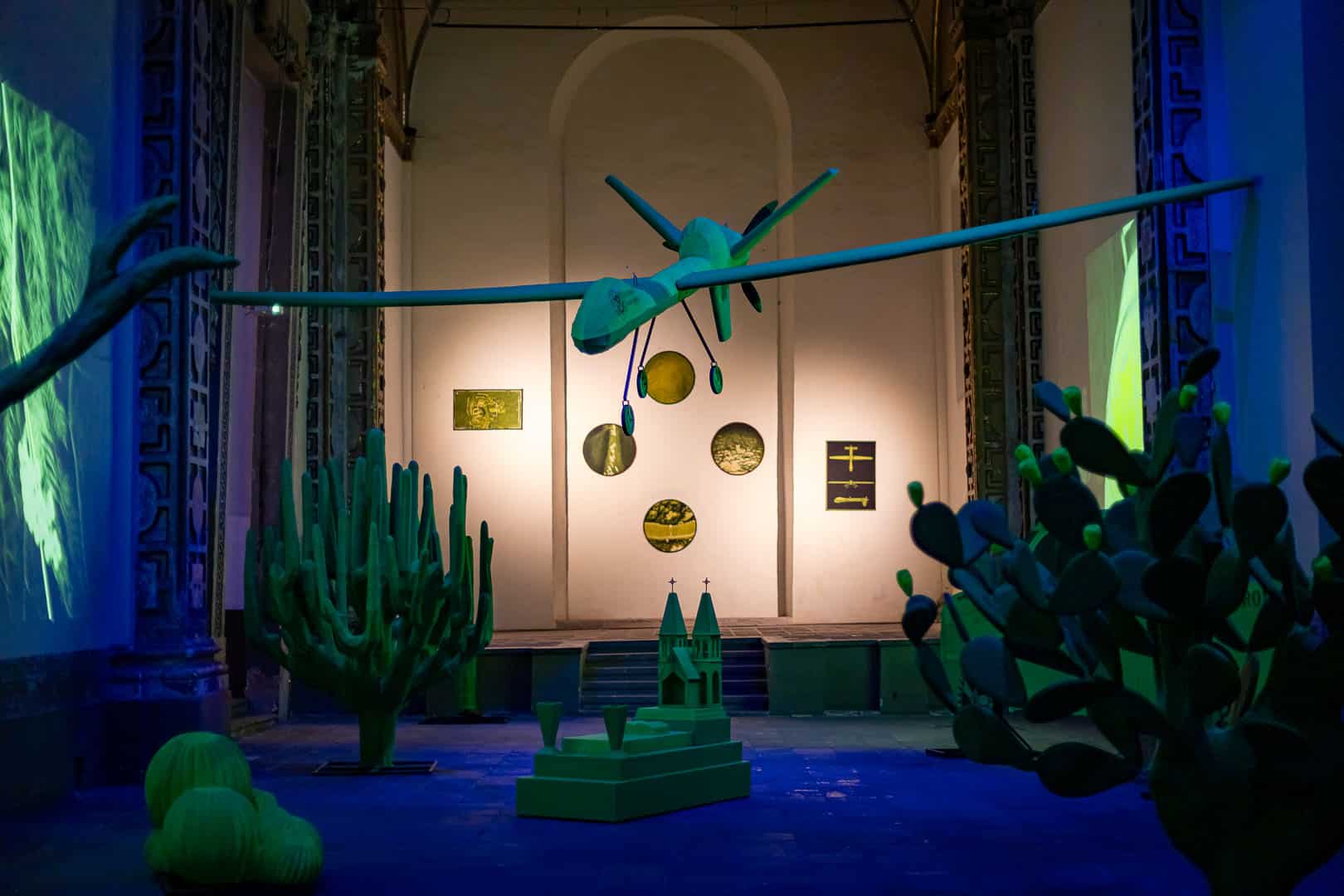
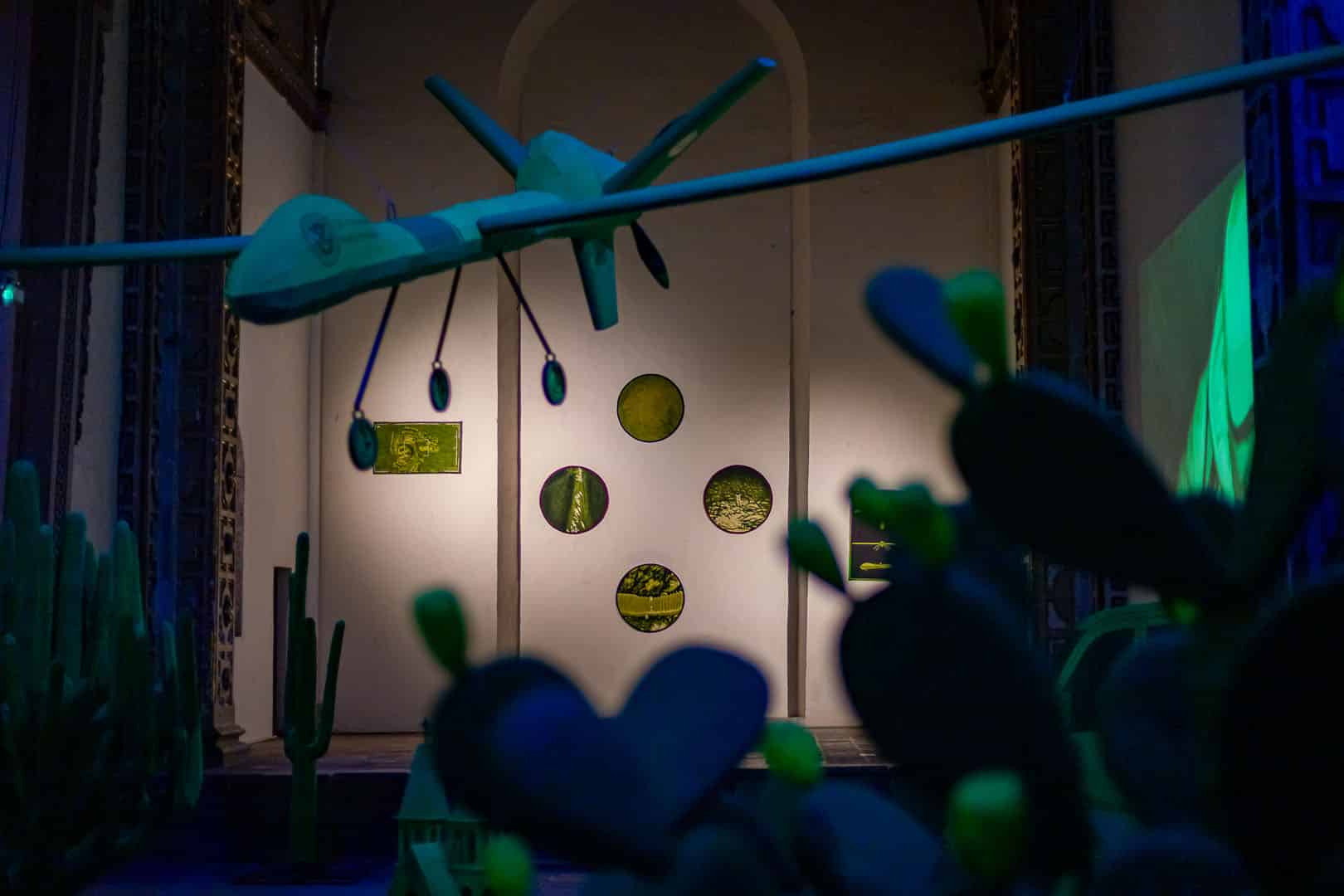
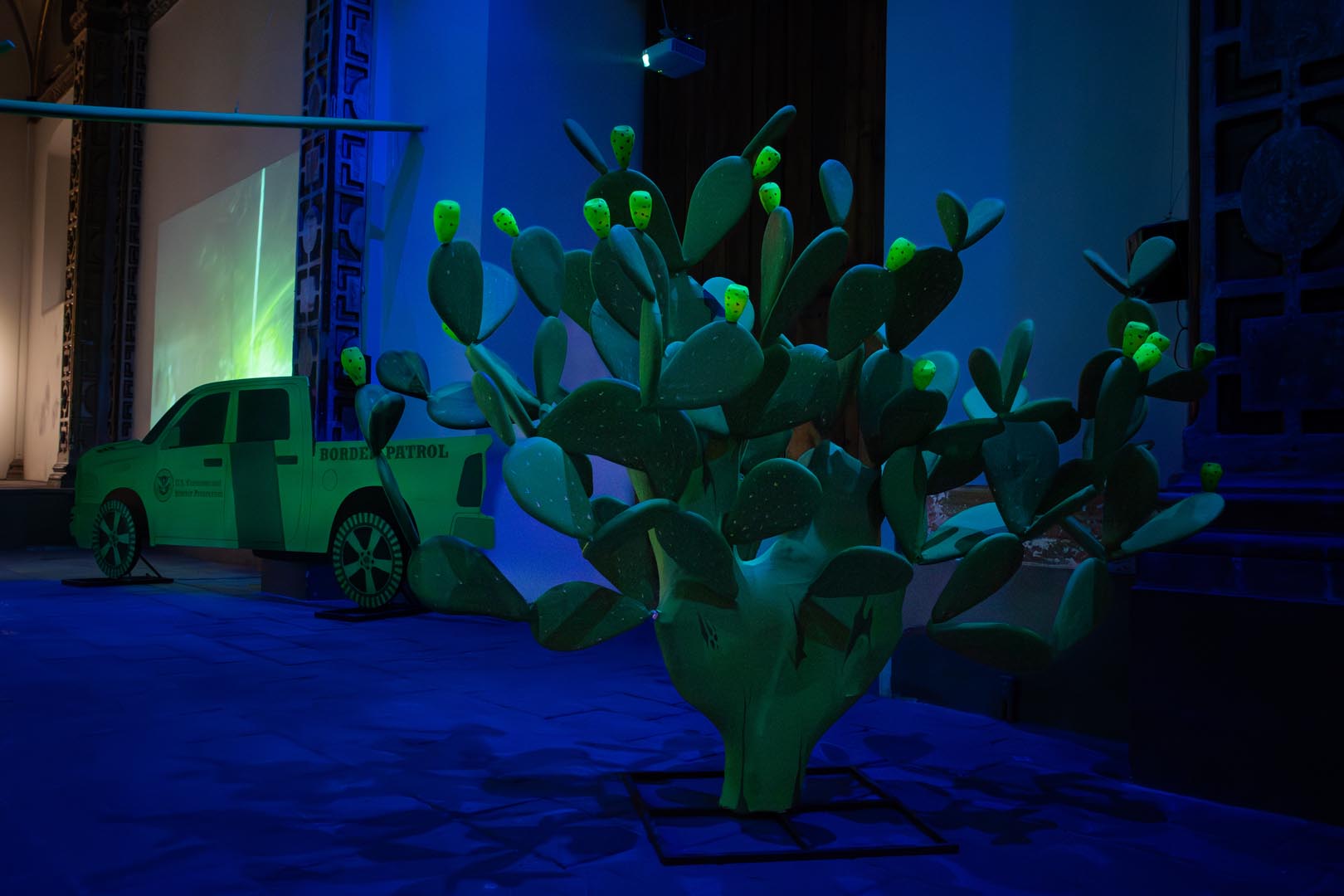
Exhibited alongside the video, Enchanted Landscape features rotating sculptures made with the Artsumex collective in Tultepec. Crafted with woven reed, papier-mâché, fluorescent pigments, and UV light, the works evoke the green hues of night-vision optics and the flora, fauna, and military technology of the borderlands. Native desert species, a handcrafted drone, and a laser-cut patrol truck merge artisanal tradition with imagery of control and migration.

Credits:

Videoinstallation
Direction: Adela Goldbard; Production: Adela Goldbard, Nina Andrea Juárez;
Field Production: Ivonne Castillo Hernández, Eugenio Cruz García, Federico Agustín Santiago, Francisco Ramón García;
Cinematography: Demián Barba;
Camera: Demián Barba, Mario Arturo Amaro Poot, José Solé;
Sound: Diego Martínez, Leo Santiago;
Sound Design: Suplex Estudio;
Editing: Cuautli Morales Montejo, Israel Santamaría;
Color: Miguel Escudero, Constanza Moctezuma;
Subtitles: Cuautli Morales Montejo;
Acting Coach: Waldo Facco;
Cast: members of the El Alberto Hñiihñu community: Heriberto Agustín García, Miguel Agustín, Alfredo Bautista García, José Castro, Eugenio Cruz García, Gerardo Cruz García, J. Concepción García, Francisco Ramón García, Federico Agustín Santiago, Genaro García Guerrero, Heriberto García Guerrero, Juan García, Leticia García, Jesús Martín Agustín, German Martín Bautista, Benito Martín Oliva, Antonio Oliva Morales, Enrique Reyes Jerónimo, Roberto Sanjuan, Rubén Santiago, Mario Simón Pedro, Víctor Pérez Quezada.

Sculptural Installation
Artsumex Collective: Jesús Sanabria Urban, Amauri Rafael Sanabria Urban, Levi Urbán Hernández, Itzel Urbán Hernández, Jan Martín Alejandro Castillo Cortes, Eli Benjamín Cuateta Falcan, Mercado Rodríguez Atzin Alain, Sinahi Solano Montes, Natividad de María Sanabria Urban, Eduardo Pérez Morales, José Andrés Solano Sánchez, Emilio Gallardo Esparza, Elizabeth Bautista Marín.


FURIA SIN ENEMIGO (RAGE WITHOUT ENEMY): ZAPANDUKUA, 2023

Full HD video / stereo sound, 9 min.

This audiovisual work investigates the visual, aural, performative and historical connections amongst the writings of Mexican author José Revueltas on the formation of the Paricutín volcano in the 1940s–in the P’urhépecha region of Michoacán–and the traditional P’urhépecha ballgame zapandukua, which is played with a ball on fire. Furia sin enemigo is a politically charged work that ignites an apparently anachronic analogy between the volcano’s violent birth and Mexico’s history and present, by using artisanal fabrication techniques and pyrotechnics to craft an ephemeral event for the cameras.

Comissioned for the exhibition “Eje neovolcánico. Aproximaciones artísticas al paisaje ígneo” curated by Daniel Garza Usabiaga and Paulina Ascencio at the Museum of Modern Art in Mexico City.

Direction, production, cinematography and original idea: Adela Goldbard
Pyrotechnic effects: Emmanuel Reyes (Pireemar Pyrotechnics) & Roberto Sánchez (Pyromartin FX)
Construction of reed structure: Amauri & Jesús Sanabria (Artsumex Collective)
Camaras: Vito Amaro, Silvestre García & Adela Goldbard
Direct Sound: Sebastián Rico & Uriel López
Editing: Sebastián Rico, Israel Santamaría & Adela Goldbard
Sound design & post-production: Sebastián Rico
Original music: Weyes
Texts: José Revueltas, “Visión del Paricutín,” 1943


Pólvora y estrellas (Gunpowder and Stars), 2020-21

HD video/stereo sound
3:40min.

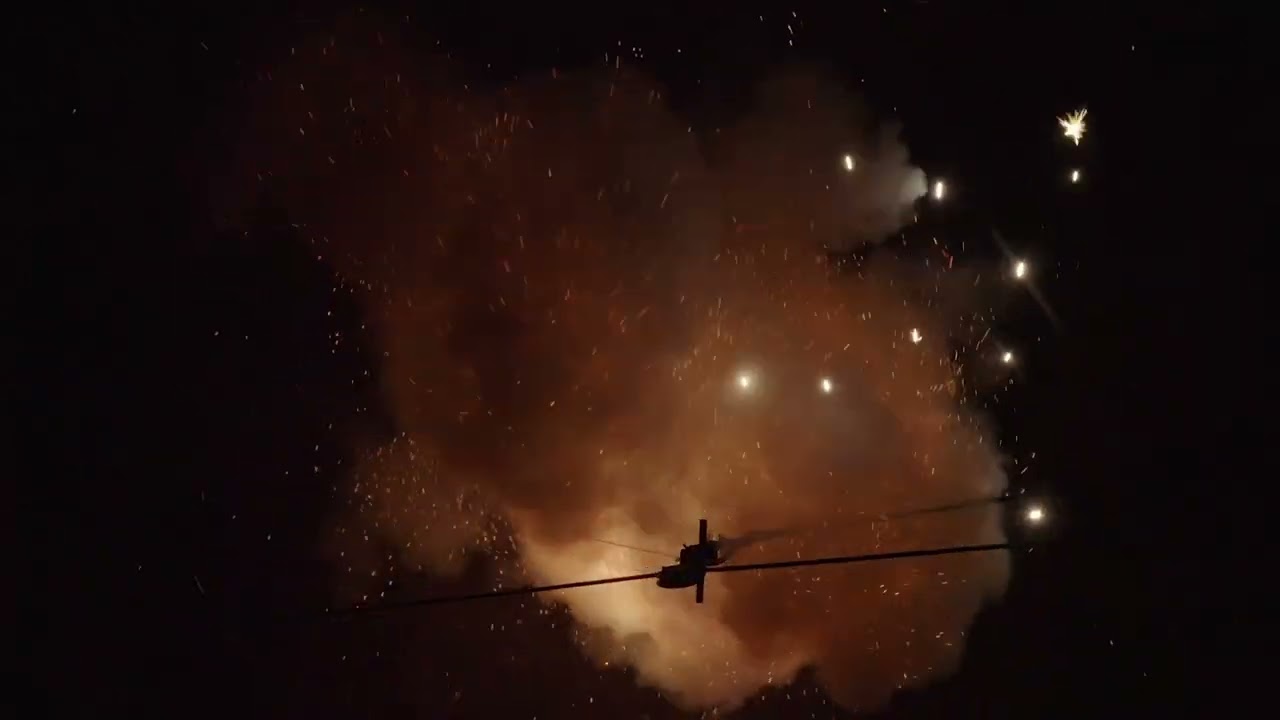
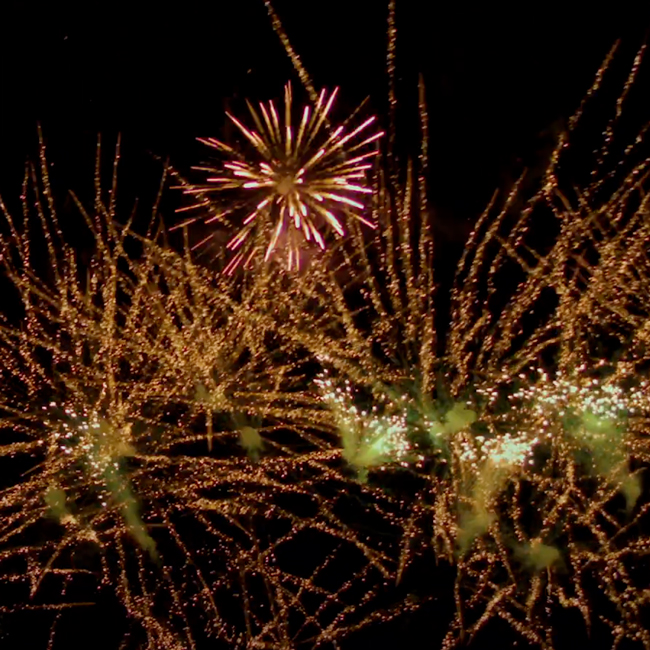
Appropriated audios from YouTube videos of recent shootings in México juxtaposed with video documentation of festive pyrotechnics. An affective reflection on the dire but quotidian question: “¿son cohetes o balazos?” [are these (noises) fireworks or gunshots?]

Direction, production, and original idea: Adela Goldbard
Sound Design: Diego Martínez, Suplex Estudio
Camera: Yoni Goldstein, Hadley Austin & Gonzalo Escobar
Editing: Adela Goldbard
Mastering: Sebastián Rico


KURHIRANI NO AMBAKITI (QUEMAR AL DIABLO): PORQUE SÓLO ASÍ NOS ESCUCHAN, 2020

Video documentation of the ritual burning carried out in Arantepacua, Michoacan, Mexico, on December 4, 2020 / Wood, reed, papier-mâché and fireworks
11:30 min
Cross-stitched textiles by female embroiders of Arantepacua

Quadraphonic installation (stereo version) / Interviews with Arantepacua community members

By Arantepacua’s Communal Indigenous Council 2019-2021 & Adela Goldbard

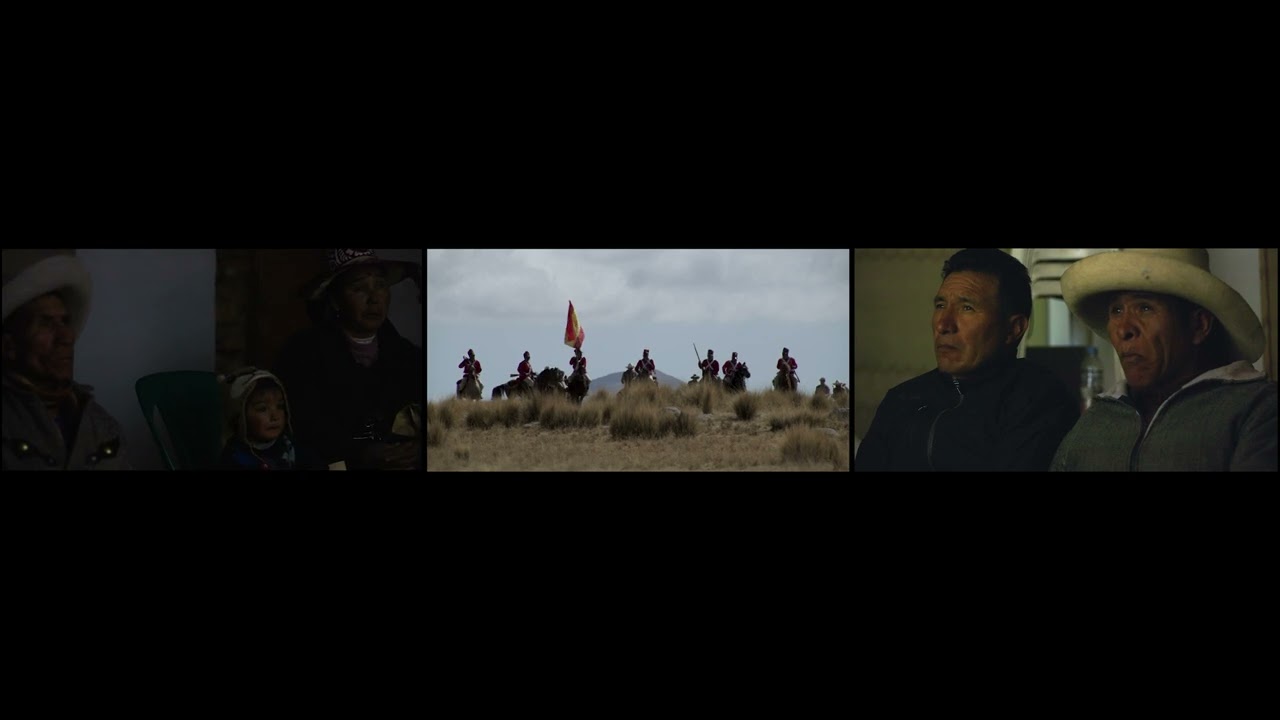
The core of Kurhirani no ambakiti is what happened on April 5, 2017, in the P’urhepecha community of Arantepacua, when more than 400 elements of the Michoacan police, armed civilians and army forces entered the town and attacked the community aboard more than 50 pick-up trucks, patrol cars, three helicopters and a “rhinoceros” tactical armored tank, in an operation that resulted in four community members dead and nine detained. Kurhirani no ambakiti presents a chronology of these events through a series of interviews with community members and through textiles created by local female embroiderers based on photographs from the communal archive of the clashes. Pyrotechnicians from Cheran, another self-governed P’urhépecha community of the region, were commissioned with the elaboration of a life-size rhinoceros, as an allegorical representation of the vehicle used by the police forces and the harm and evil it represents for the community. After being carried in a procession through the town, the paper-mâché rhinoceros was destroyed with fireworks in the main plaza, while local musicians performed commissioned pirekuas (traditional music from the region) that narrated and remembered the events of 2017 and the community’s subsequent fight for self-governance. 400 ceramic devils (diablitos), a traditional craft from the P’urhépecha community of Ocumicho, dressed with police and military uniforms and on board 55 wooden police cars made in Pichátaro, another neighboring self-governed P’urhépecha community, complete the installation. The project proposes a conjunction of popular art and community-engaged processes that makes visible the excessive use of violence of the government and its agencies while contributing to the reconstruction of the collective memory of Arantepacua.
Commissioned by the XIV FEMSA Biennial, Michoacan, Mexico, 2020

Arantepacua, making-of, and testimonies of community members (trilingual), 2020-23
Video documentation of art workshop, Arantepacua’s main plaza, Summer 2021.

In honor of the community of Arantepacua, their struggle and the victims of the attack on April 5, 2017: Estudiante Luis Gustavo Hernández Cohenete, Comunero Francisco Jiménez Alejandre, Enfermero José Carlos Jiménez Crisóstomo, Comunero Santiago Crisanto Luna

Menkixi uantakuriakaxi ka noxi meni kuantantojka kuapini juchari ambe
Siempre alzaremos la voz ante la injusticia,
nunca nos cansaremos de defender lo nuestro
AUTONOMÍA, AUTOGOBIERNO Y LIBRE DETERMINACIÓN


Installation shots: Aratepacua, December 4, 2020 / Centro Cultural Clavijero, Morelia, December 11, 2020 – February 15, 2021. Photo and video: Marco Antonio López Valenzuela

CREDITS:

Arantepacua’s Communal Indigenous Council 2019-2021: Valentín Jiménez Montaño, Adelina Valdéz Álvarez, Francisco Cohenete Hernández, Marco Antonio Pascual Jiménez, Florentino Jiménez Álvarez, Juana Morales Hernández, Delfino Cohenete Álvarez, Juana Jiménez Antonio, Miguel Crisóstomo Salvador, Minerva Montaño Crisanto, Luis Miguel Ángel Álvarez, Luis Soria López

The swarm

Sculptures: Ángela Esteban Felipe, Ocumicho, Domitila Felipe Marcelo, Ocumicho, José Octavio de la Cruz Álvarez, Pichátaro, Baltazar, Domingo e Ignacio Ramos Guerrero, Cherán

Resistance Embroidered Archive

Archive images: Archivo Comunero Auani Pascual, Archivo Prof. José Luis Martínez Alonso,

Arantepacua’s Communal Indigenous Council 2019-2021/ Embriodery: Magdalena Jiménez Montaño, Cecilia Jiménez Montaño, Marbella Jiménez Quinto, Marbella Jiménez Gonzales, Juana Crisóstomo Crisóstomo, Fidelina Álvarez Jiménez, María Elena Morales Olivo, Maria de los Ángeles Jiménez Morales and embroiderers from Turícuaro / Interviews: Prof. José Luis Martínez Alonso, Prof. Hugo Martínez, Alonso, Prof. Elpidio Cohenete Olivo, Prof. José Cuitláhuac Crisóstomo Olivo, Prof. José Guadalupe Morales, Auani Pascual, Magdalena Jiménez Montaño, Cecilia Jiménez Montaño, Juana Morales Hernández, Valentín Jiménez Montaño, Adelina Valdéz Álvarez, Salomón Cohenete Baltazar, Adán Galván Jiménez, María Bautista Cisneros / Editing: Adela Goldbard / Cuadrafonía

Diego Martínez, Suplex Estudio

Pirekuas in memoriam

Music: Trio Joskua, Arantepacua / Composition of Pirekua Juchiti iréteri uekua: Sacramento Jiménez Jiménez, Pirekuas 5 de abril y Mintsita: Carlos Alfredo Quinto Ruiz, First and second voice and requinto: Sacramento Jiménez Jiménez, First voice and accompaniment: Carlos Alfredo Quinto Ruiz, Double bass: Juan Jesus Ramirez Jimenez // Pireris JIMÉNEZ jarhan pakua anapu, Arantepacua / Composition and music of Pirekua del 5 de abril: Prof. Primitivo Jiménez Crisóstomo, Letter and voice of the poem: Prof. José Cuitláhuac Crisóstomo Olivo, First voice and requinto: Cristofer Jiménez Cohenete, Second voice and accompaniment: Prof. Primitivo Jiménez Crisóstomo, Double bass: Juan Jesús Ramírez Jiménez // Areli Olvera Clemente, Zamora, Juchari uinapikua, composition and voice // Israel Morales, Arantepacua, El llamado del caracol, composition and voice // Studio recording and master: Kuri Morales, Cherán

Special thanks: Prof. Francisco Hernández, Teresa Prado Estrada, Anita Soria Sebastián, Celia Morales Maldonado, María Rosa Cohenete Policarpio, Natividad Cohenete Alvino, Juan Márquez Olivo, Cupatitzio Piña, Francisco Rosas, Francisco Huaroco, Daniel Garza-Usabiaga, Juan Carlos Jiménez, Marco Antonio López Valenzuela, José Luis Arroyo Robles, Livier Jara, Nuria Montiel, Circe Irasema.


EL JUICIO FINAL / THE LAST JUDGEMENT, 2019-2020

Pyrotechnic performance, October 10, 2020. Still photography: Dan Williamson & JI YAng

Sound installation at Gallery 400, quadraphonic sound

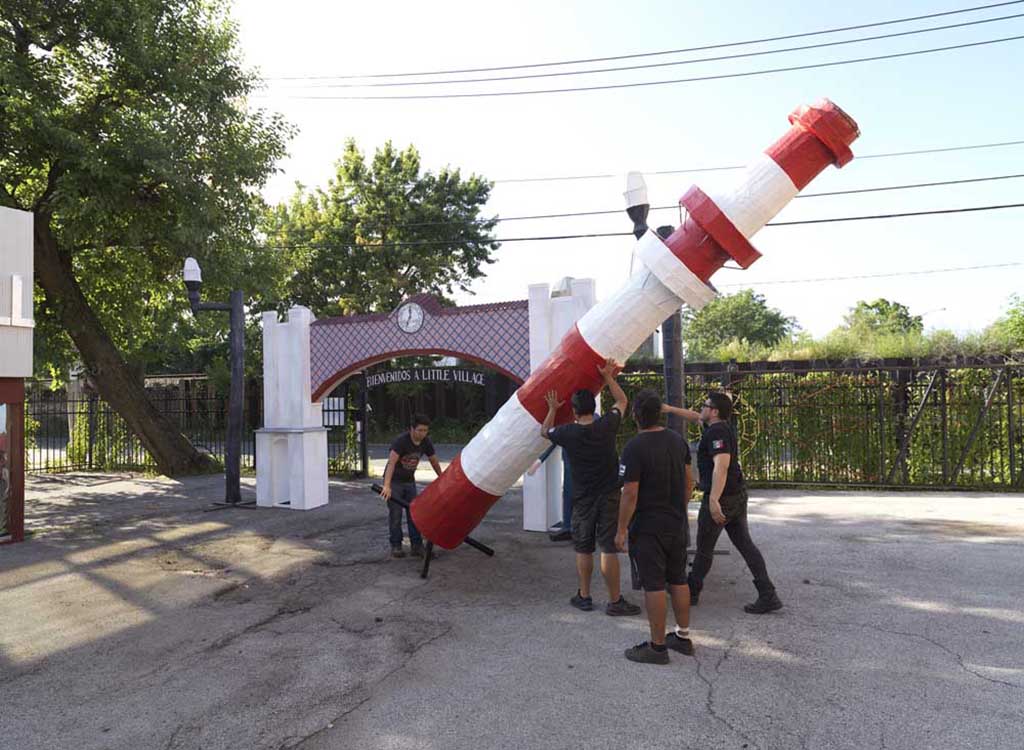
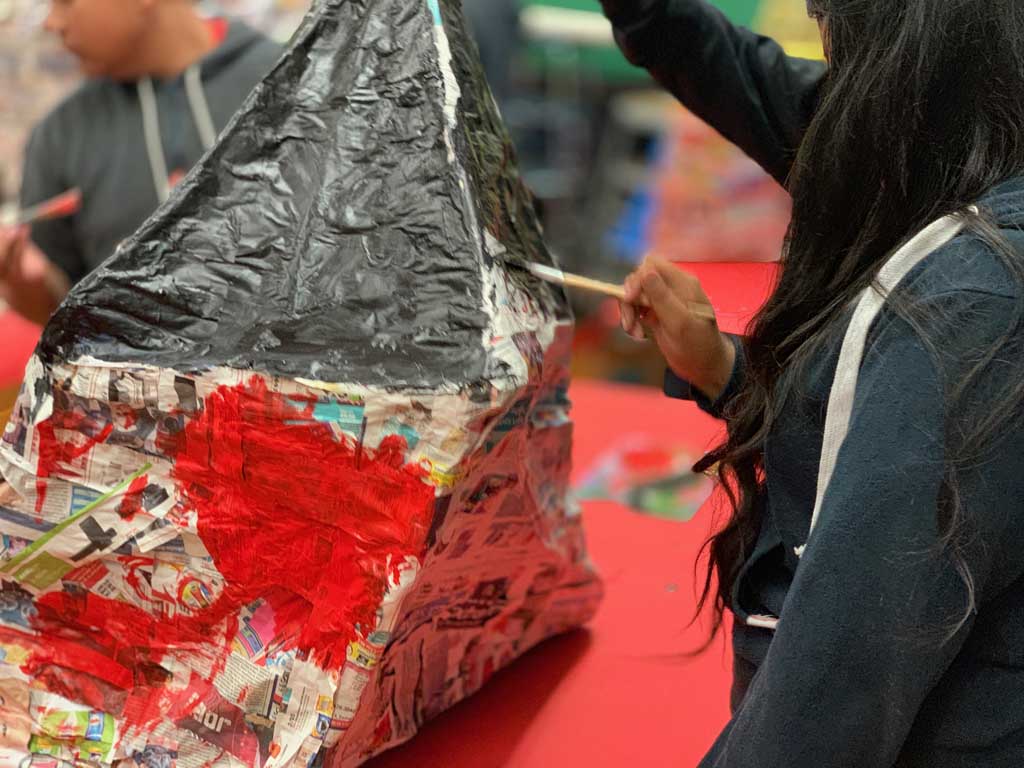
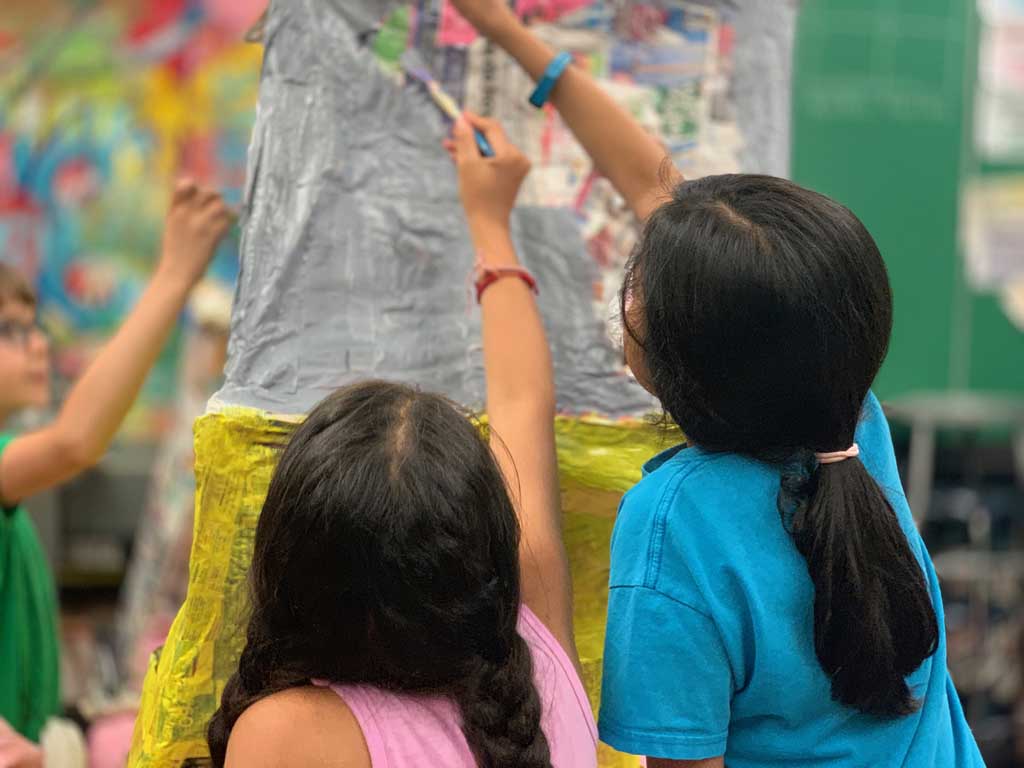
The Last Judgement is an immersive installation and pyrotechnic performance that uses large-scale sculptures and sound to narrate the struggles and resistance of the Mexican community of La Villita, in Chicago. The Last Judgement is a co-created, participatory project that subverts and contests the first conversion play performed in Mexico, written in the 16th century by Franciscan priest Fray Andrés de Olmos. The theater of conversion introduced pyrotechnics to frighten and indoctrinate the indigenous populations, and it is the first documented use of pyrotechnics in the continent. The new script revolves around issues of gentrification, environmental justice and deportation, and was developed through conversations, meetings and art workshops with community members (activists, teachers, students, community organizers, and local artists). The structures were built in collaboration with Artsumex collective, whose members traveled to Chicago from Tultepec, Mexico. The play became an effigy-burning event: pyrotechnic effects used by the Franciscans to frighten were transformed into tools of celebration and protest to perform an allegorical collective purging of social ills, to correct official narratives, to bridge between dislocated communities, and to envision new futures through collective destruction.

Juicio Final slide
Gallery shots, Gallery 400 at UIC & Sullivan Galleries, Chicago, 2019 / Documentation of structures and photographs of La Villita
Juicio Final slide
Gallery shots, Gallery 400 at UIC & Sullivan Galleries, Chicago, 2019 / Documentation of structures and photographs of La Villita
Juicio Final slide
Gallery shots, Gallery 400 at UIC & Sullivan Galleries, Chicago, 2019 / Documentation of structures and photographs of La Villita
Juicio Final slide
Gallery shots, Gallery 400 at UIC & Sullivan Galleries, Chicago, 2019 / Documentation of structures and photographs of La Villita
Juicio Final slide
Gallery shots, Gallery 400 at UIC & Sullivan Galleries, Chicago, 2019 / Documentation of structures and photographs of La Villita
Juicio Final slide
Gallery shots, Gallery 400 at UIC & Sullivan Galleries, Chicago, 2019 / Documentation of structures and photographs of La Villita
Juicio Final slide
Gallery shots, Gallery 400 at UIC & Sullivan Galleries, Chicago, 2019 / Documentation of structures and photographs of La Villita
Juicio Final slide
Gallery shots, Gallery 400 at UIC & Sullivan Galleries, Chicago, 2019 / Documentation of structures and photographs of La Villita
Juicio Final slide
Gallery shots, Gallery 400 at UIC & Sullivan Galleries, Chicago, 2019 / Documentation of structures and photographs of La Villita
Juicio Final slide
Gallery shots, Gallery 400 at UIC & Sullivan Galleries, Chicago, 2019 / Documentation of structures and photographs of La Villita
El Juicio Final / The Last Judgement Slide
Gallery shots, Gallery 400 at UIC & Sullivan Galleries, Chicago, 2019 / Documentation of structures and photographs of La Villita
El Juicio Final / The Last Judgement Slide
Gallery shots, Gallery 400 at UIC & Sullivan Galleries, Chicago, 2019 / Documentation of structures and photographs of La Villita
El Juicio Final / The Last Judgement Slide
Gallery shots, Gallery 400 at UIC & Sullivan Galleries, Chicago, 2019 / Documentation of structures and photographs of La Villita
El Juicio Final / The Last Judgement Slide
Gallery shots, Gallery 400 at UIC & Sullivan Galleries, Chicago, 2019 / Documentation of structures and photographs of La Villita
El Juicio Final / The Last Judgement Slide
Gallery shots, Gallery 400 at UIC & Sullivan Galleries, Chicago, 2019 / Documentation of structures and photographs of La Villita
El Juicio Final / The Last Judgement Slide
Gallery shots, Gallery 400 at UIC & Sullivan Galleries, Chicago, 2019 / Documentation of structures and photographs of La Villita
El Juicio Final / The Last Judgement Slide
Gallery shots, Gallery 400 at UIC & Sullivan Galleries, Chicago, 2019 / Documentation of structures and photographs of La Villita

Exhibition curated by: Lorelei Stewart
Teaching artists: Silvia Inés Gonzalez, William Estrada, Juan-Carlos Perez
Pyrotechnic play directed by: Adela Goldbard
Script: Adela Goldbard, Pedro Antonio García
Produced by: Adela Goldbard, Hadley Austin, Lorelei Stewart
Fabrication of structures: ARTSUMEX Collective (Jesús Sanabria, Amauri Sanabria, Eduardo Pérez, Víctor Rojas)
Sound Design: Rogelio Sosa
Production Assistant: Marcela Torres, Li-Ming Hu
Cinematography by: Yoni Goldstein
Special Effects: Cesar Benitez, 5Alarm
Fireworks Stage Manager: Sarah Skaggs
Lighting Designer: Mike Durst

Major support for The Last Judgment / El Juicio Final was provided by The Joyce Foundation as a 2019 Joyce Award and by Fondo Nacional para la Cultura y las Artes (Mexico).

Additional support was provided by the Andy Warhol Foundation for the Visual Arts; Illinois Humanities; the School of Art & Art History, the College of Architecture, Design, and the Arts, University of Illinois at Chicago; the Illinois Arts Council, a state agency; and the Chicago Park District.

Agradecemos al Sistema de apoyos a la creación y a proyectos culturales (Fonca) el estímulo proporcionado para la realización de este video.

Documentation of art workshops at Telpochcalli Elementary School and Boys and Girls Club by William Estrada and Silvia Inés González

Making of The Last Judgement
Brochure PDF

Privacy Settings
We use cookies to enhance your experience while using our website. If you are using our Services via a browser you can restrict, block or remove cookies through your web browser settings. We also use content and scripts from third parties that may use tracking technologies. You can selectively provide your consent below to allow such third party embeds. For complete information about the cookies we use, data we collect and how we process them, please check our Privacy Policy
Youtube
Consent to display content from - Youtube
Vimeo
Consent to display content from - Vimeo
Google Maps
Consent to display content from - Google