PARAALLEGORIES, 2013-2015
Cinematography: Alex Albert
Sound Design: Daniel Goldaracena
Set construction and pyrotechnics: Osvaldo Urtado and Sánchez Olvera family







Cinematography: Alex Albert
Sound Design: Daniel Goldaracena
Set construction and pyrotechnics: Osvaldo Urtado and Sánchez Olvera family
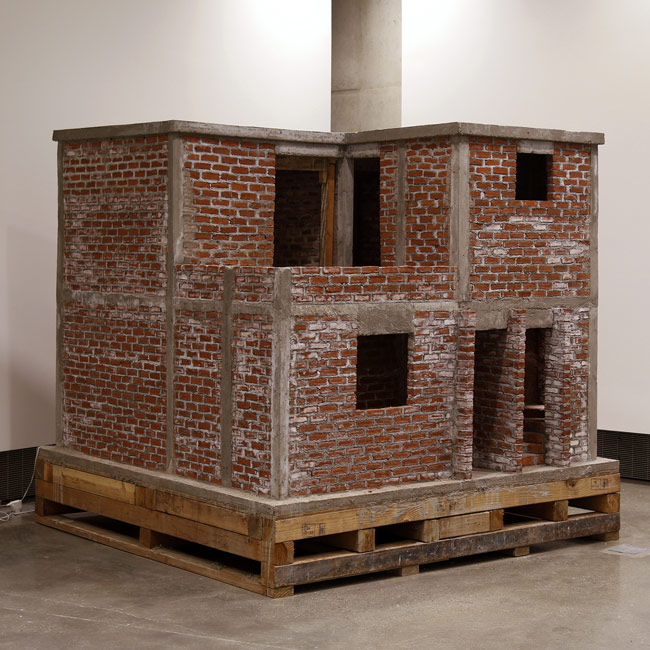
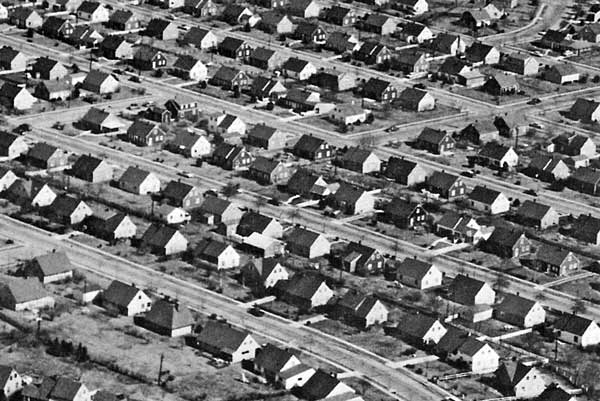
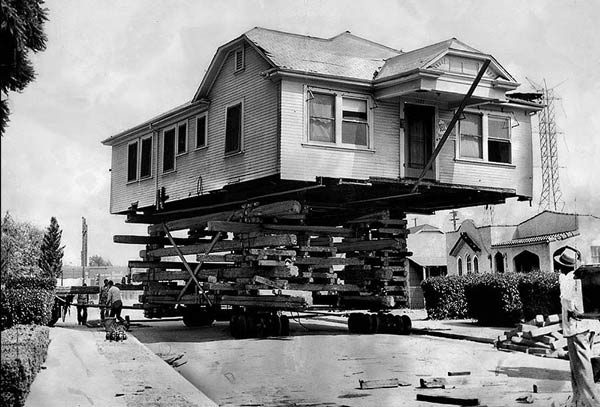
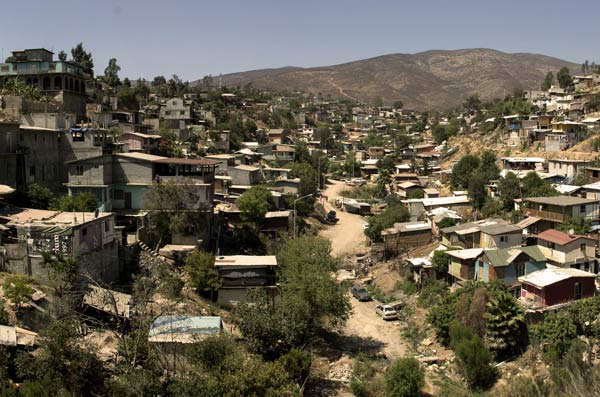
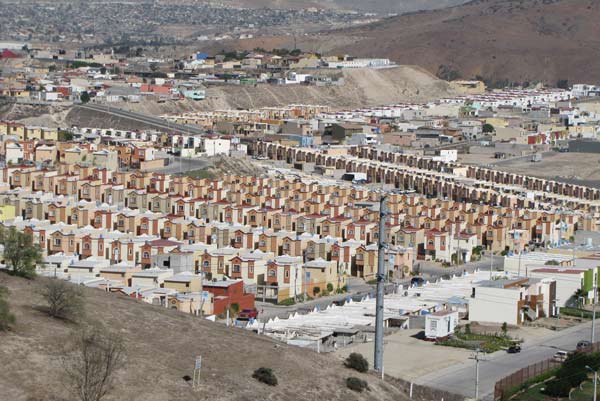
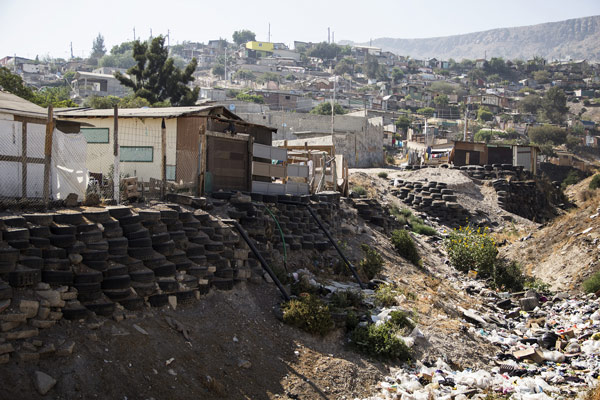
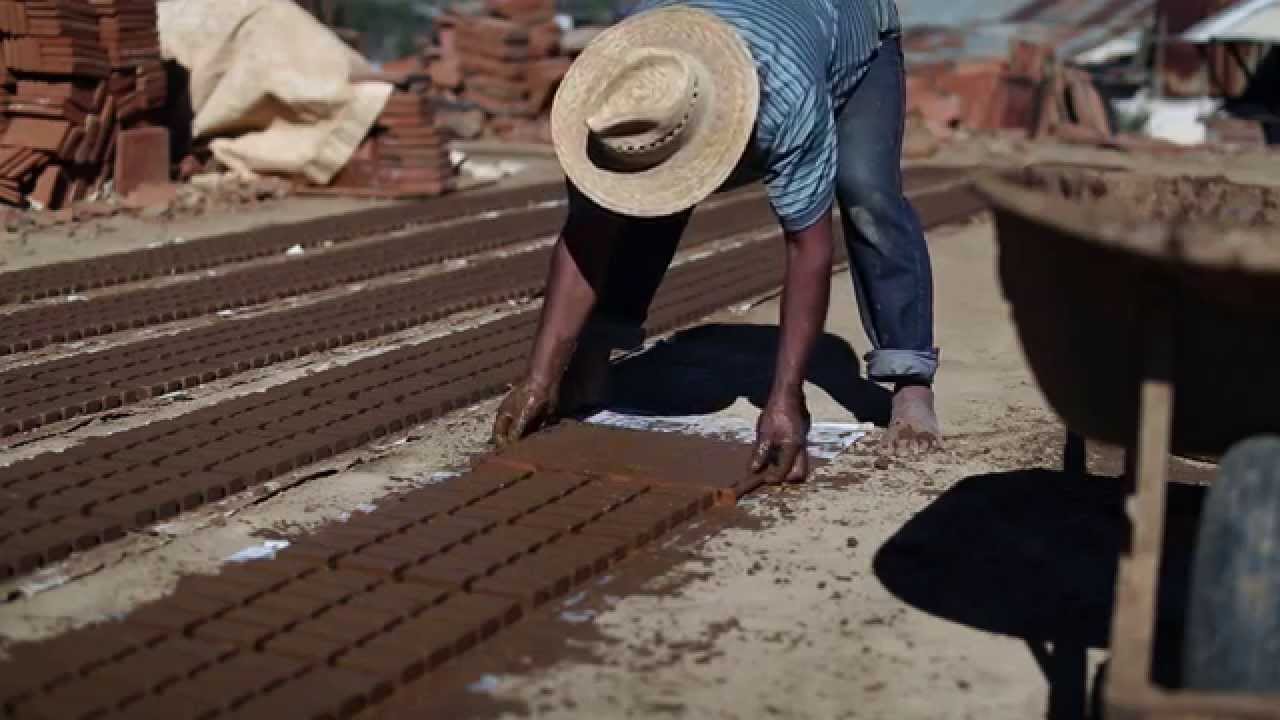
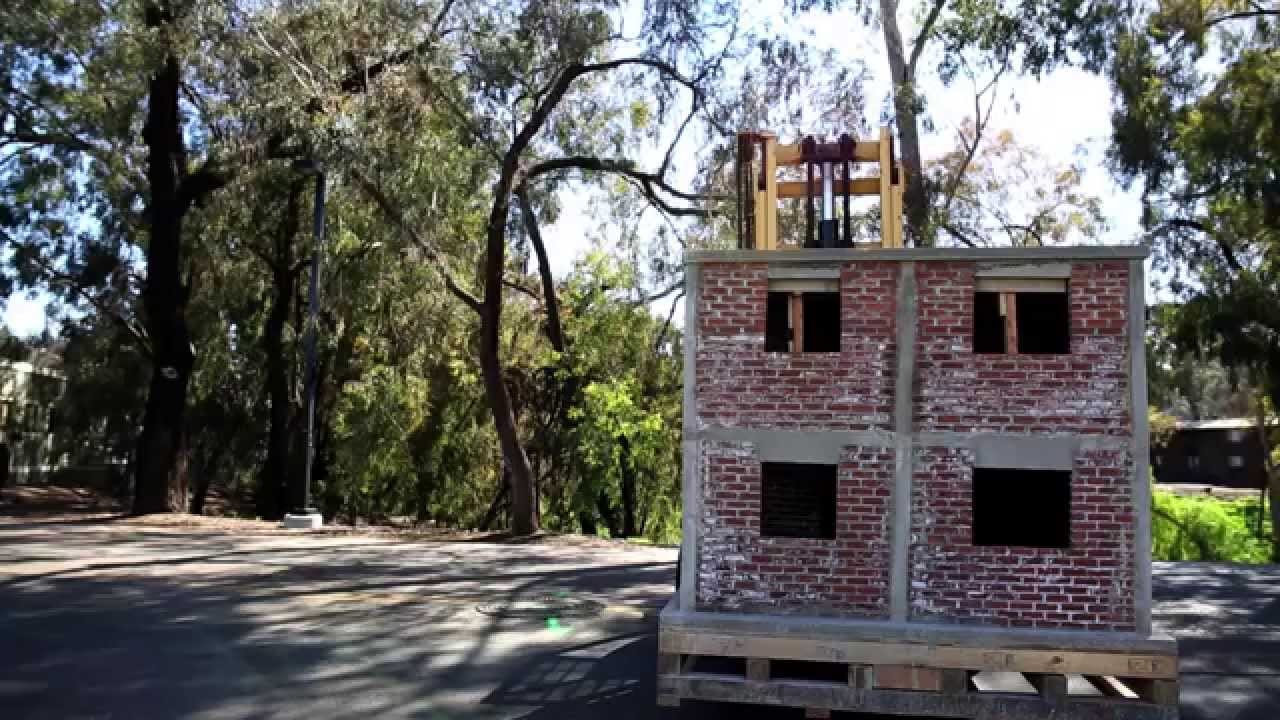
The sculpture is a scaled model of a two-story “average” house layout typically sited in outlying, low socioeconomic areas in Mexico. The artisanal bricks and the sculpture were made collaboratively in Cerro Azul a small community of brick makers in Baja California, Mexico. It was then moved across the border in a platform as if it was a timber frame house and was installed in San Diego, California. In an ironic “exercise” the house was scaled from metric to imperial system (1ft: 1m). This project is a critical exercise around housing policies, suburban architecture and household, labour, exploitation of the landscape and negotiation in the border.


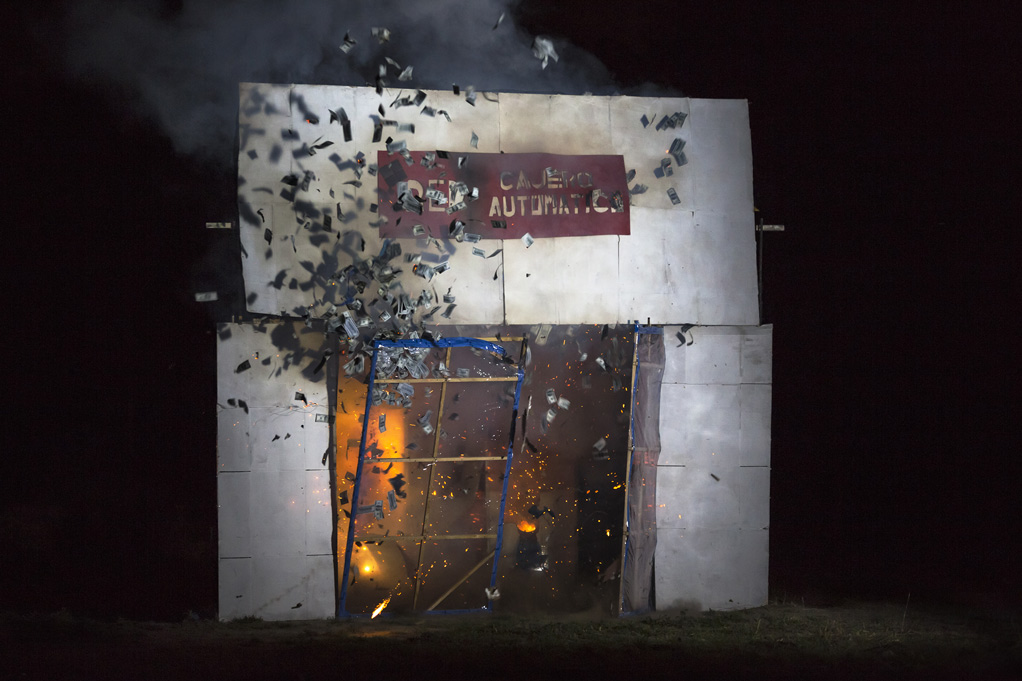
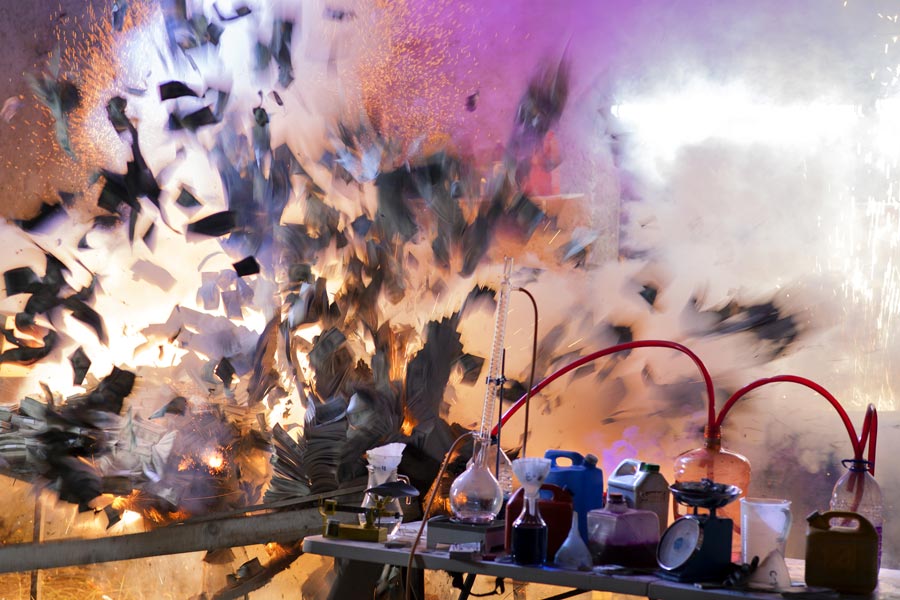
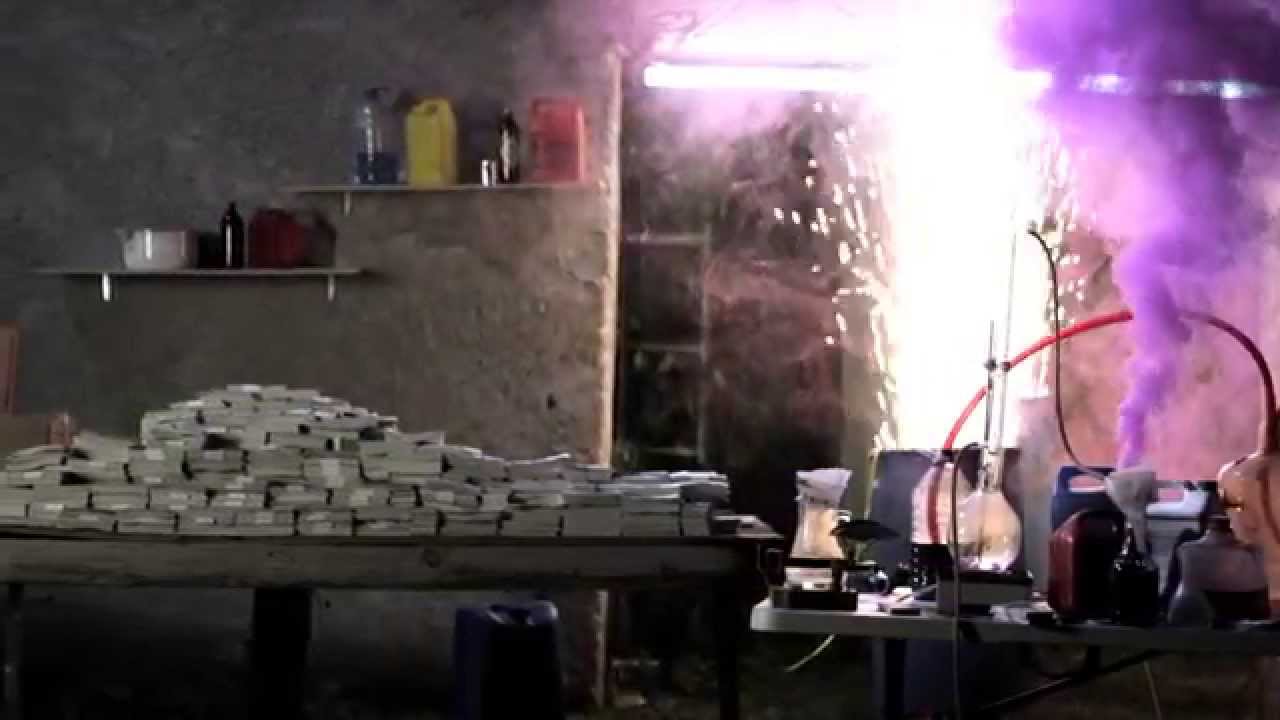
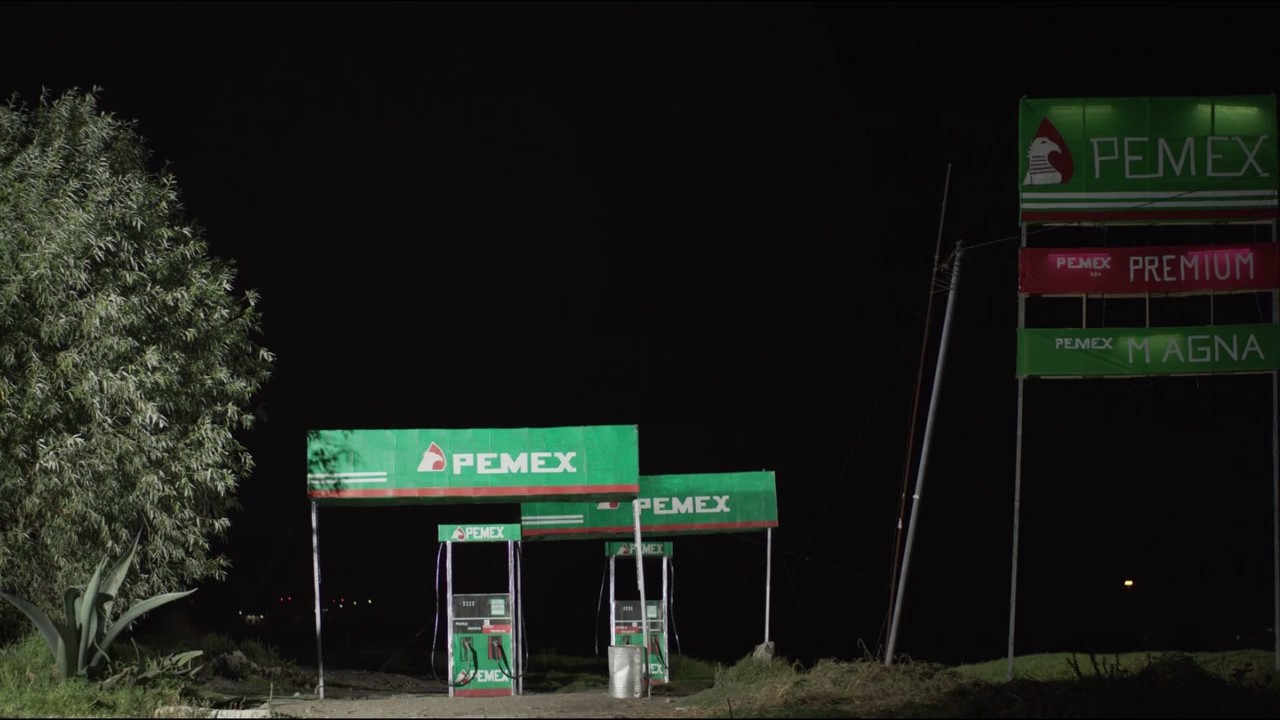
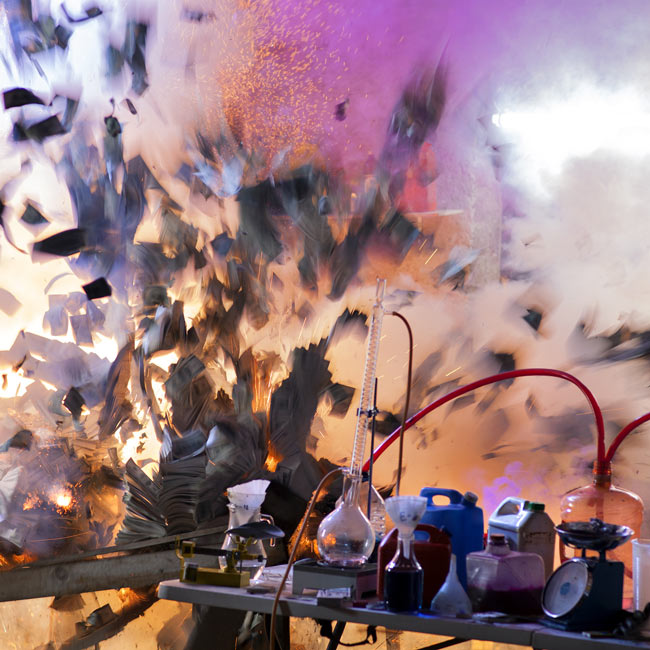
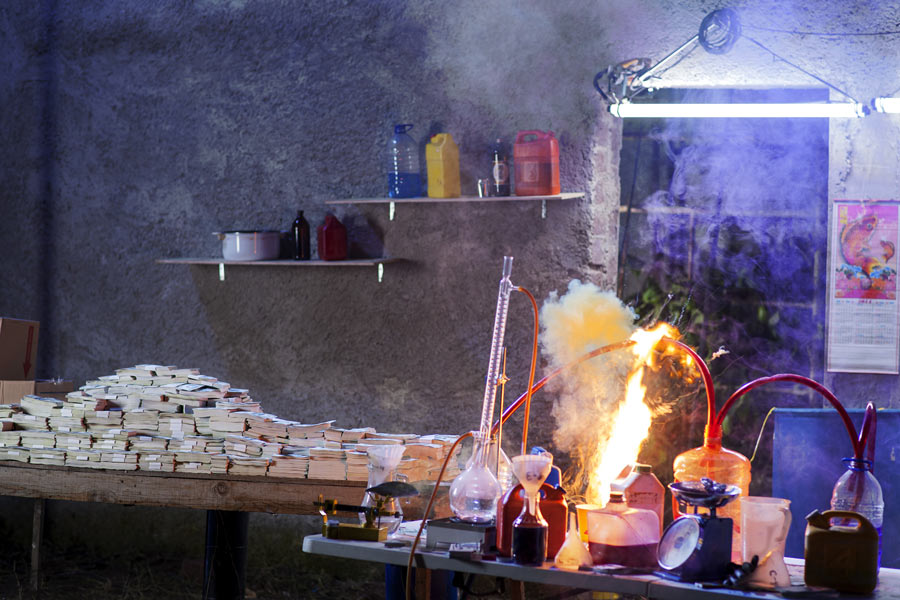
“Enter the Dragon” is a fictionalized parody of the events that took place in March 2007 when the Mexican police confiscated more than 200 million dollars and lab equipment, in the residence of the Chinese-Mexican businessman and methamphetamine lord, Zhenli Ye Gon. The police titled the raid “Operación Dragón” after Bruce Lee’s 1973 film “Enter the Dragon”. Ye Gon was apprehended a few months later by the DEA in Maryland and declared that the Mexican government was extorting him. He continuously repeated in his declarations the phrase “Coopelas o cuello” (“cooperate or die”), which became part of Mexican popular culture.


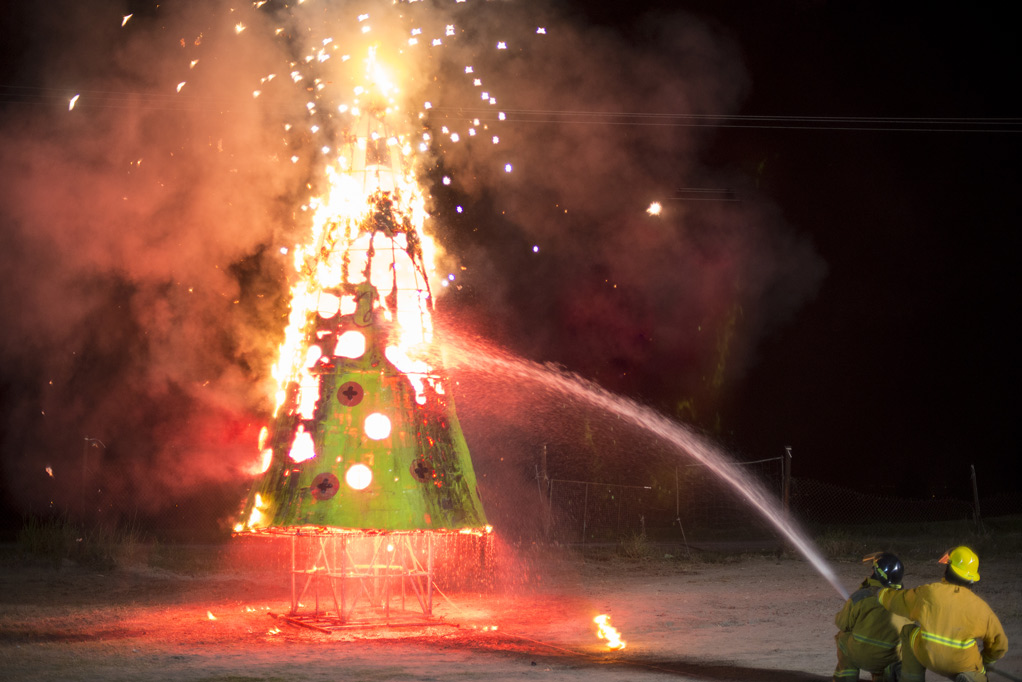
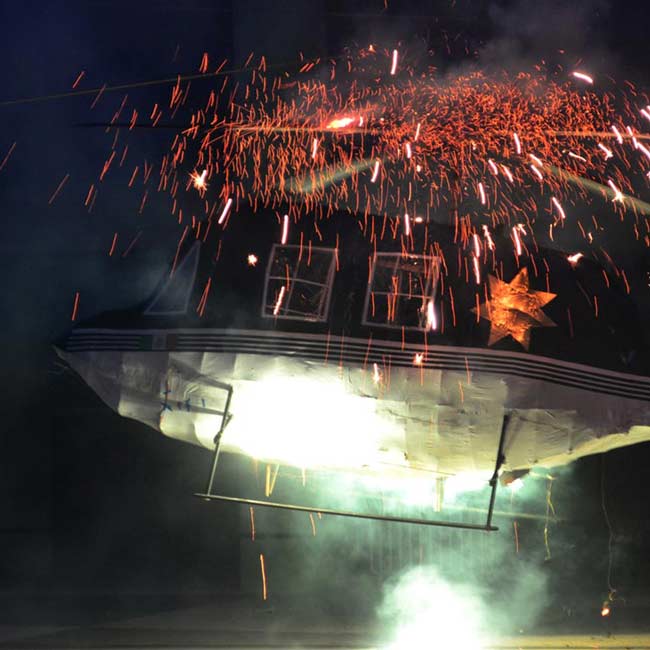
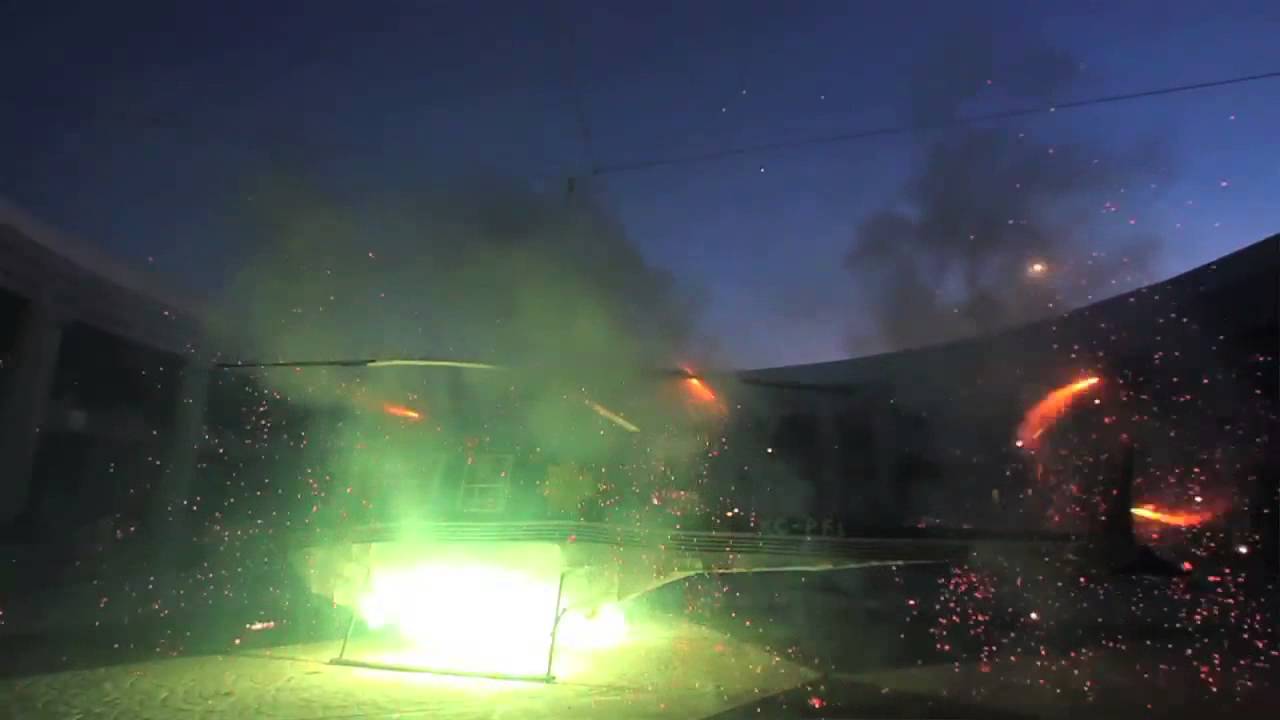
Ephemeral sculpture built and destroyed in a public square in Queretaro City. The sculpture was an actual scale mockup of a police helicopter that crashed in 2005, killing the chief of the Ministry of Public Security of Mexico under suspicious circumstances. It was fabricated with the help of artisans from Tultepec (Estado de Mexico), pulling from the materials, techniques and allegorical meaning of the Burning of Judas festivity performed in central Mexico during Eastern. This tradition comprises the destruction of figures that embody treason and evil with the use of fireworks. The 2005 accident was restaged in a collective purging event similar to the Burning of Judas. The subsequent installation at the Morín Cultural Center included the remains of the sculpture, a video documentation of its construction and destruction and archival material from the actual accident.


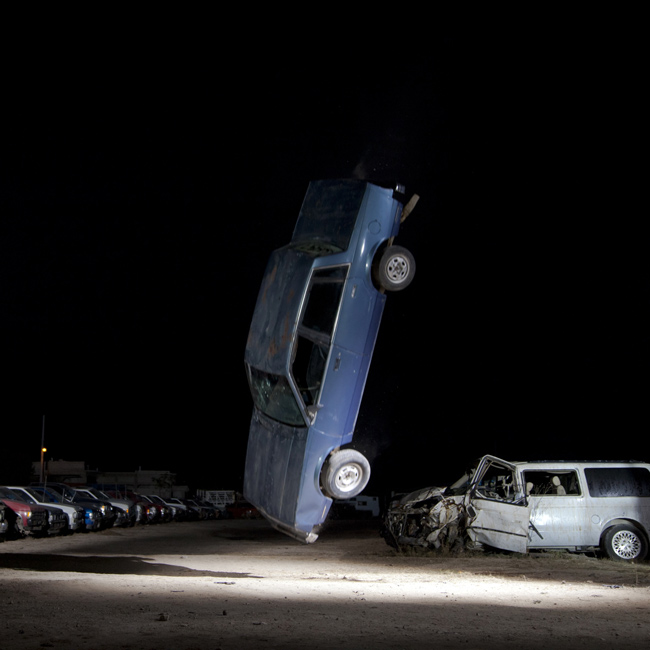
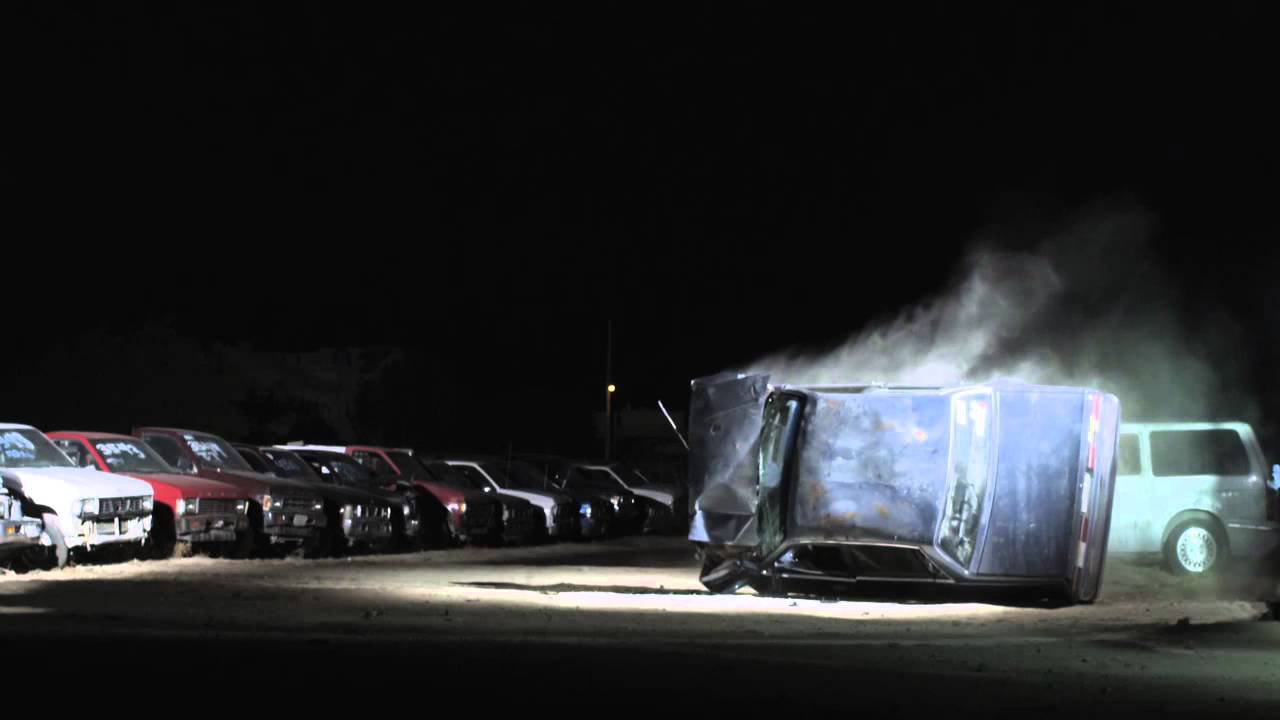
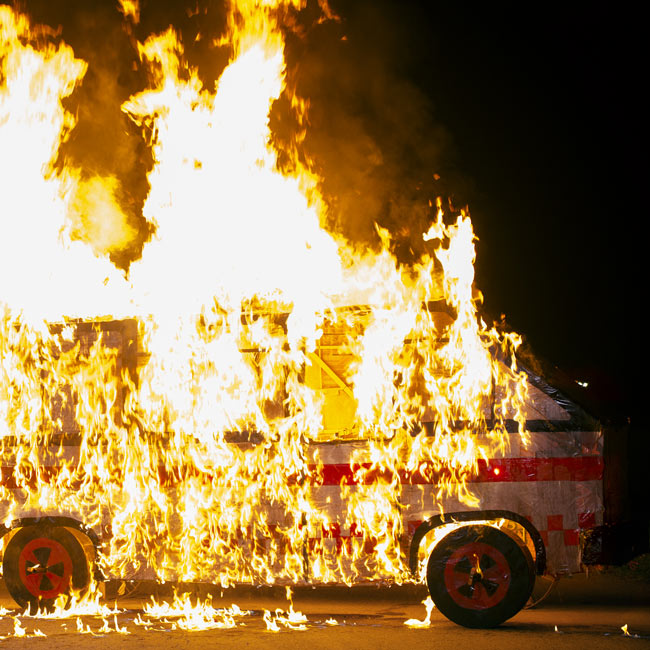
Staging of the strange accident of a Chevrolet Celebrity ‘87. Contrary to feature films where actions are usually performed more than once or shot with multiple cameras, this was an unrepeatable performance shot with only one camera; hence chance played a central part in this work aimed at deconstructing special effects’ syntax. Suspense and surprise are combined to comment on fragility, absurdity and danger in our everyday lives and to further explore the accident as repository of multiple narratives.
Cinematography: Alex Albert
Sound Design: Daniel Goldaracena

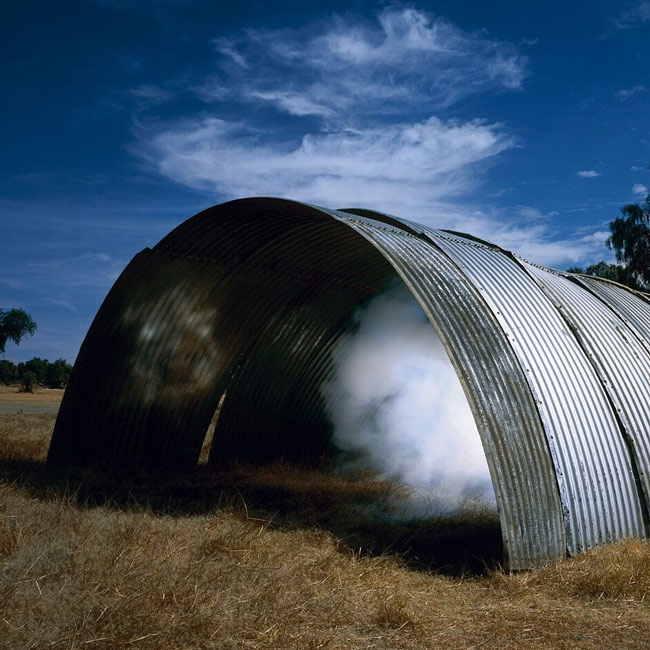
Industrial junk collected in dumps was used to build ephemeral structures meant for protection. These improvised bunkers were placed in an otherwise calmed landscape. Discarded objects are re-signified through the integration to a new setting and function. Cinema lightning was used to emphasize the made-up character of the structures and special effects were used to create odd ambiances.
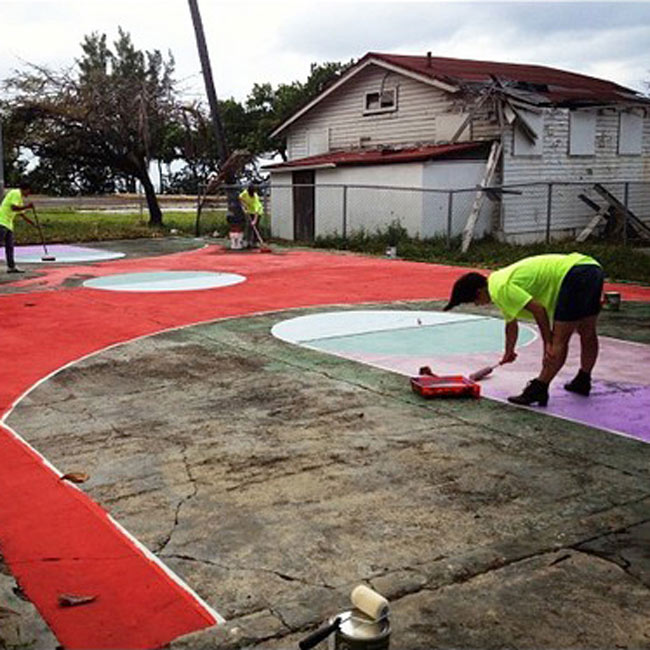
Collectively restoring an abandoned basketball court at the Old Officer’s Club in Escambron, San Juan, Puerto Rico. This neglected military facility is located within walking distance from Old San Juan. Its ruins constantly remind the passers-by of the militarized past and present of the island. The use of color for the restoration intends to contrast the ludic nature of the basketball court with the gravity of the military facility to generate a critical response to it. This gesture also aims at recovering lost public space.


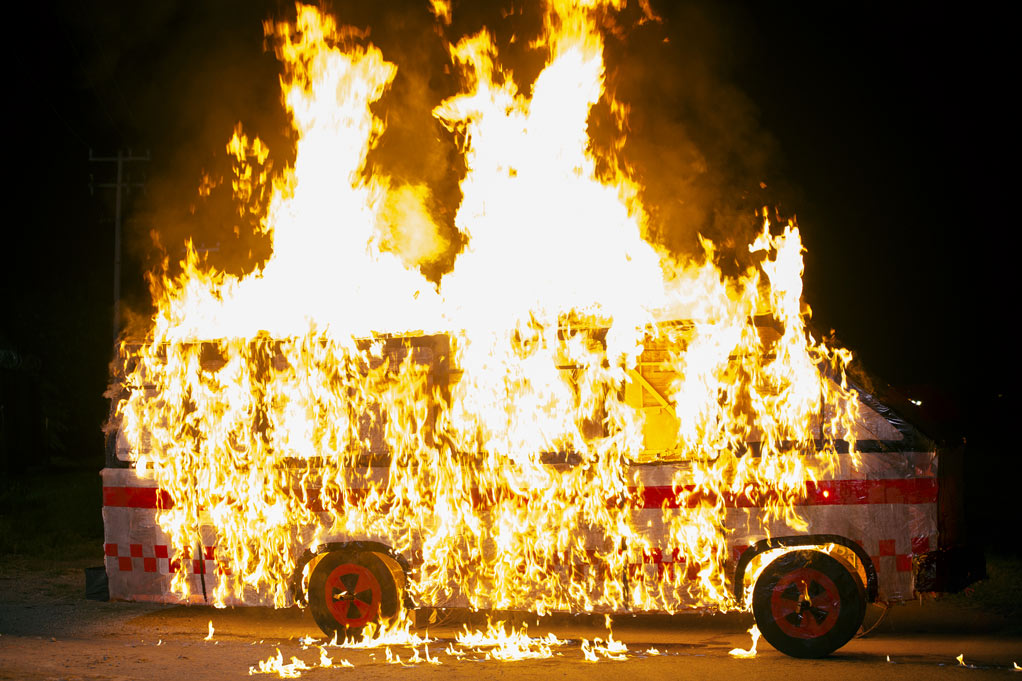
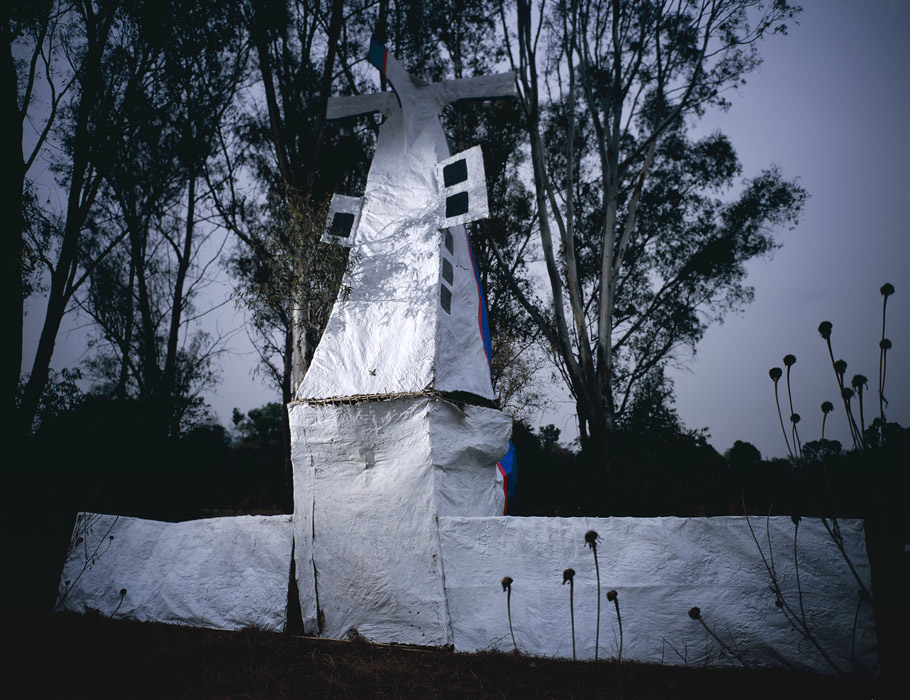
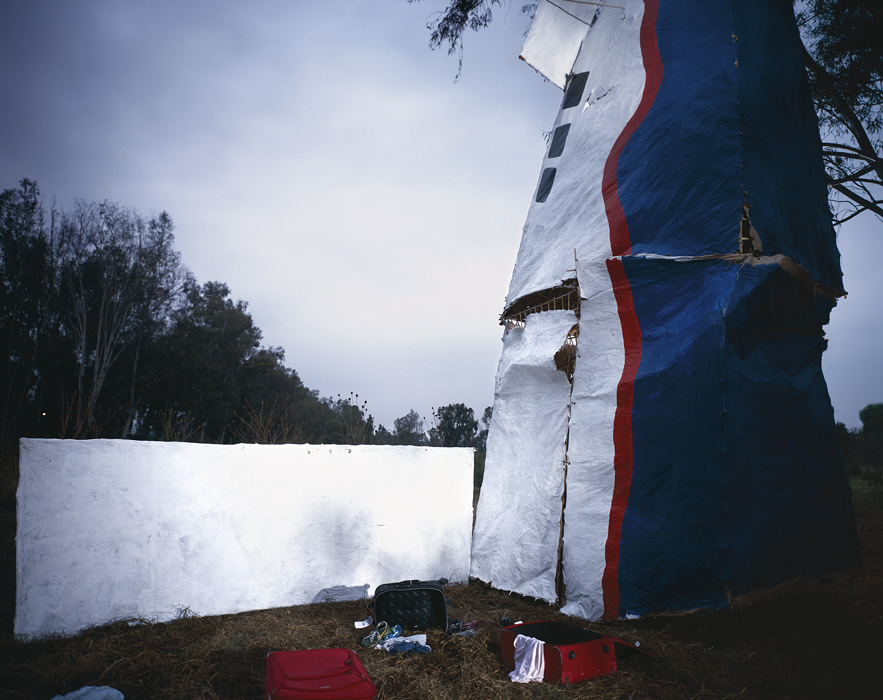
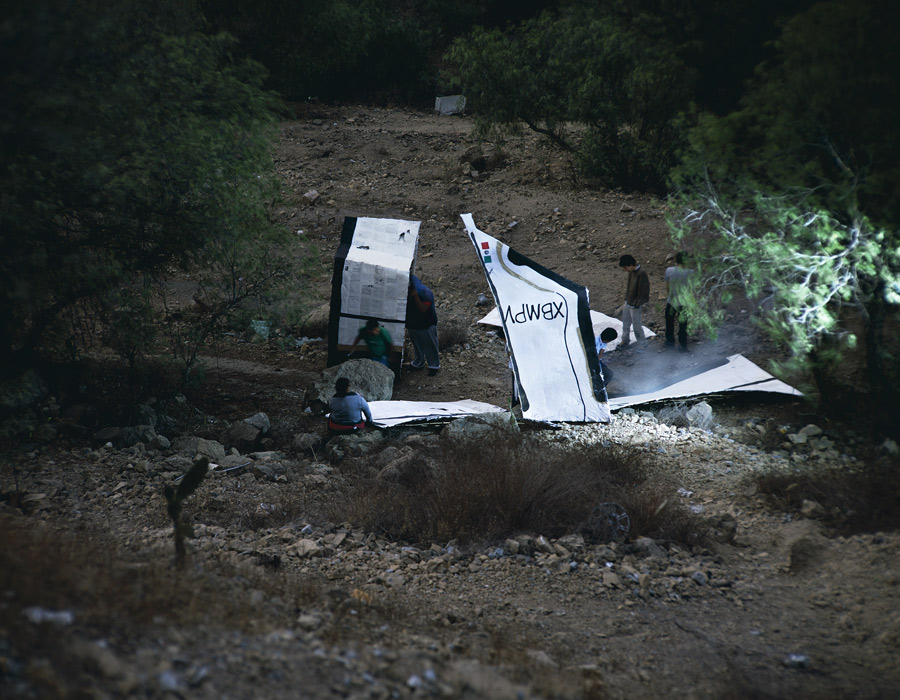
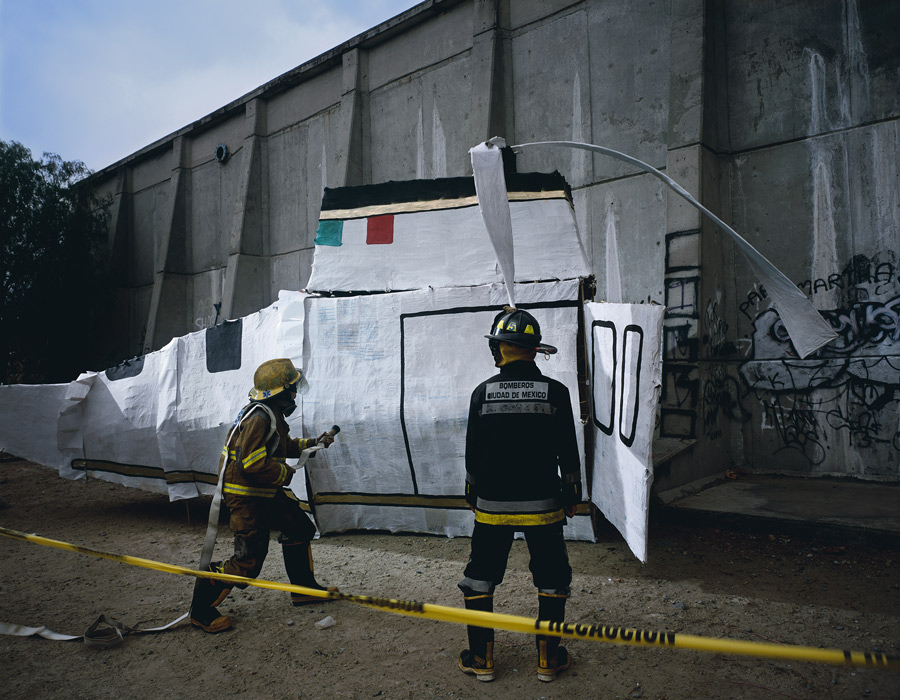
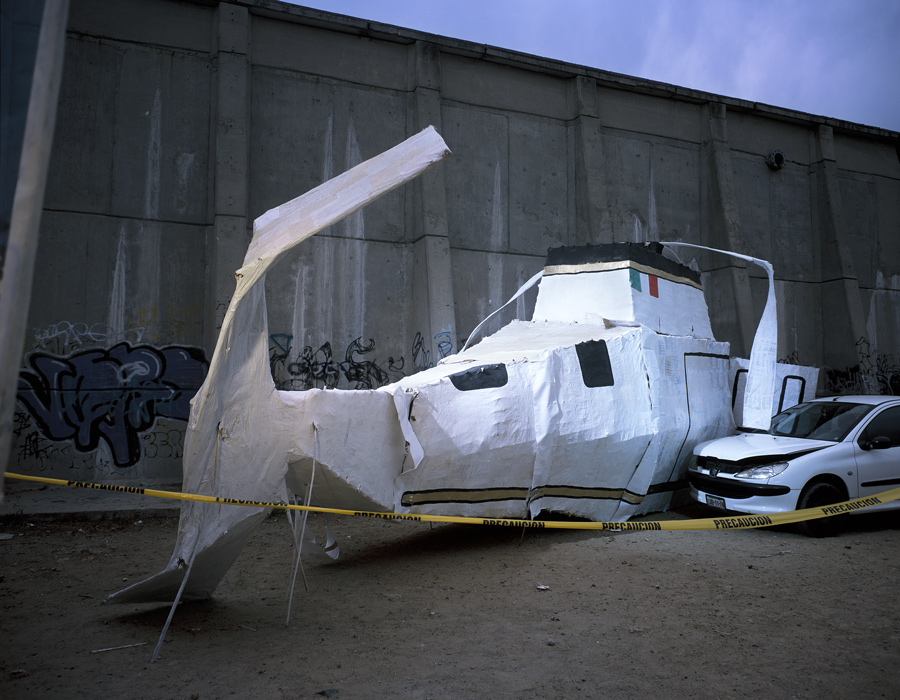
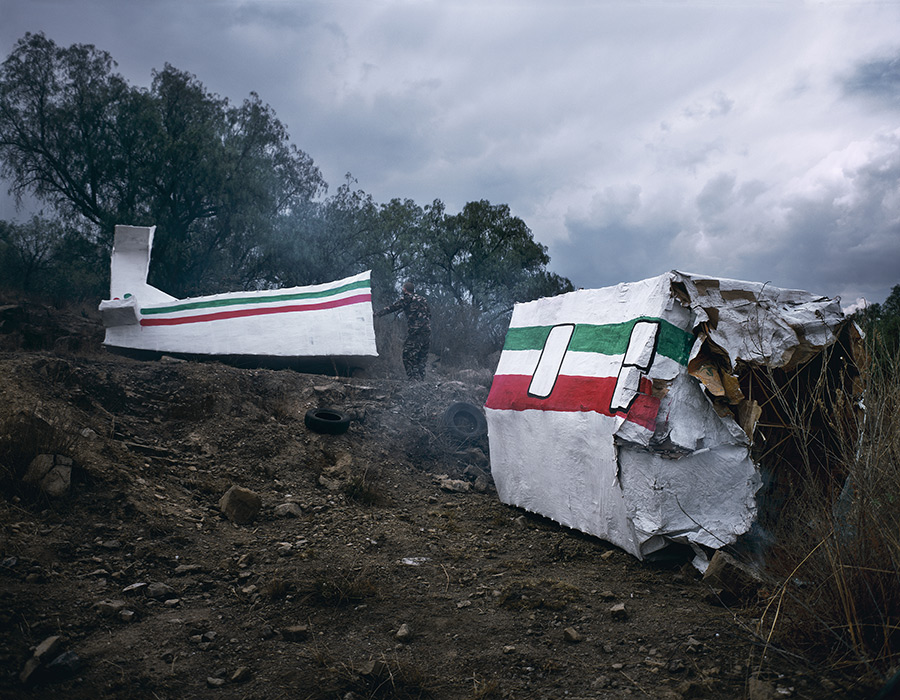
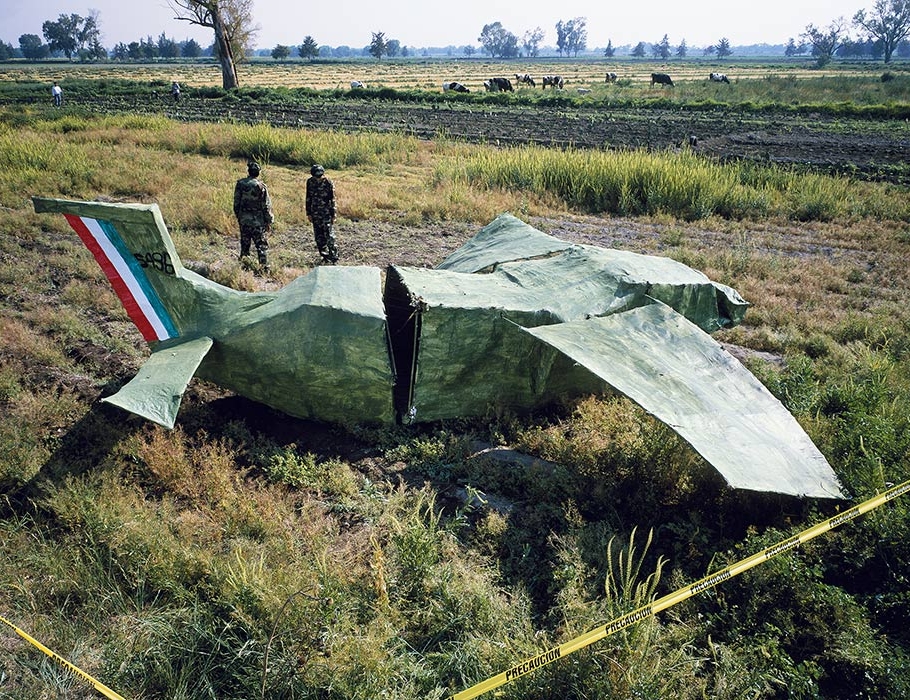
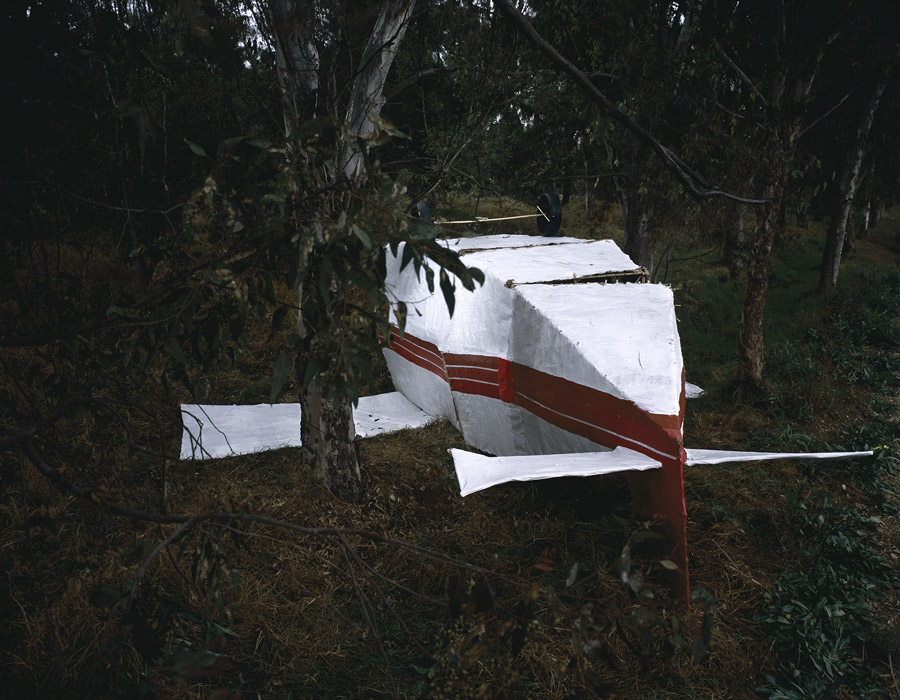
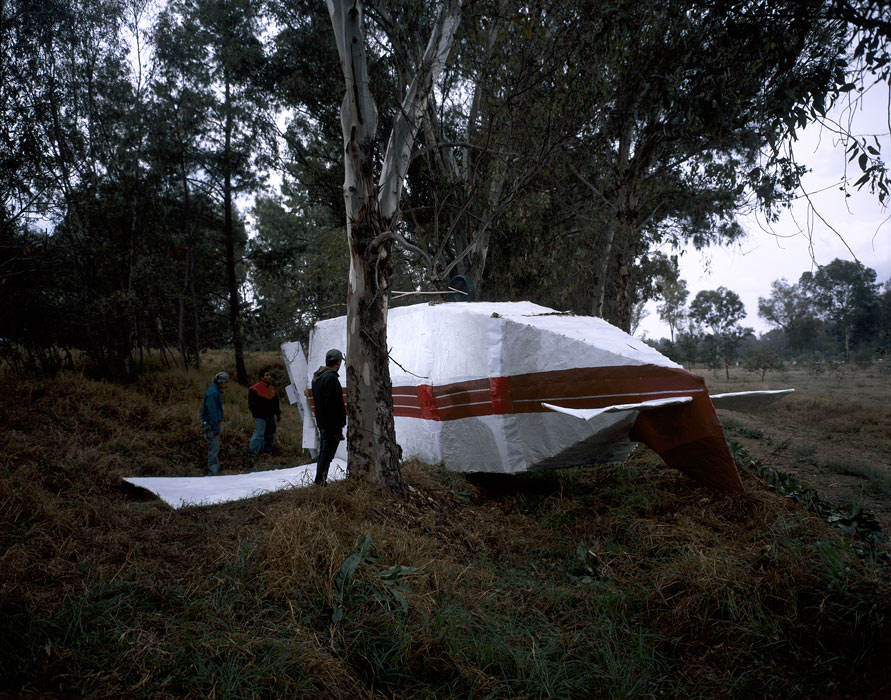
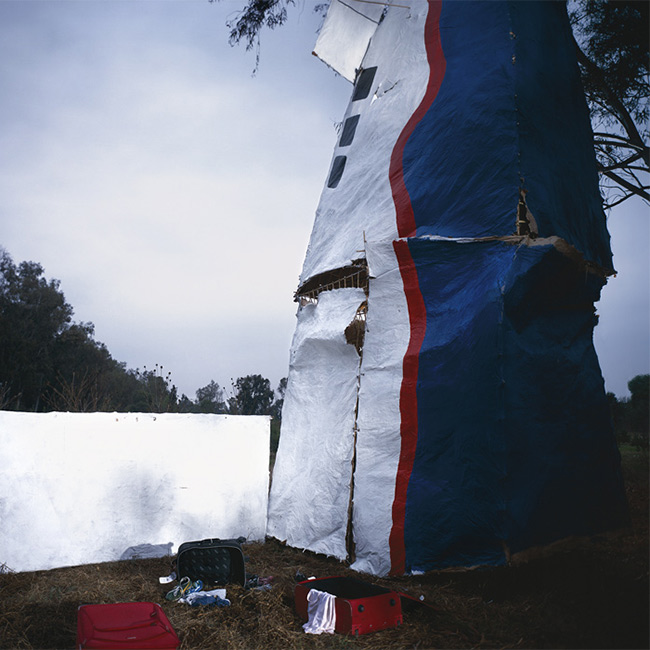
Reed, cardboard, newspaper and paste were used to create ephemeral sculptural replicas of recently crashed planes and helicopters from the Mexican government and military, using press photographs of the accidents as reference. The full-scale replicas were built according to the traditions of the Burning of Judas and the “Toritos”. The materials used emphasize not only the fragility of the represented structures, but also the fragility of the political system they stand for. The staging took place in sites that resemble the sites where each accident took place. These photographs question the metaphoric manipulation of reality by mass media.

1.80 x 1.40 m. (70 x 55 in) Analog photography / lightjet print
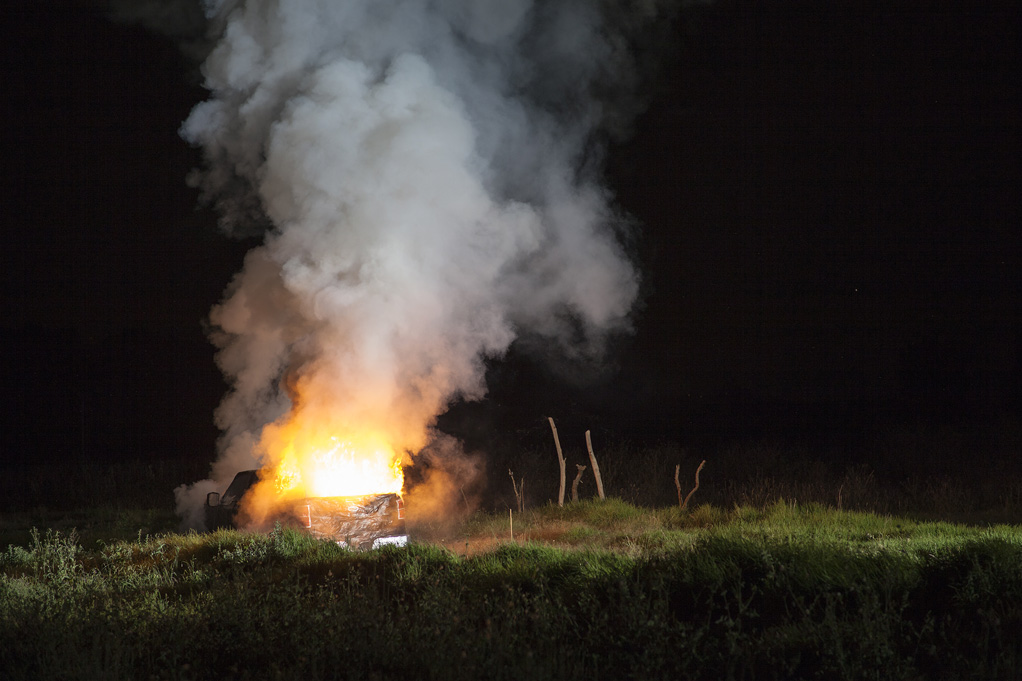
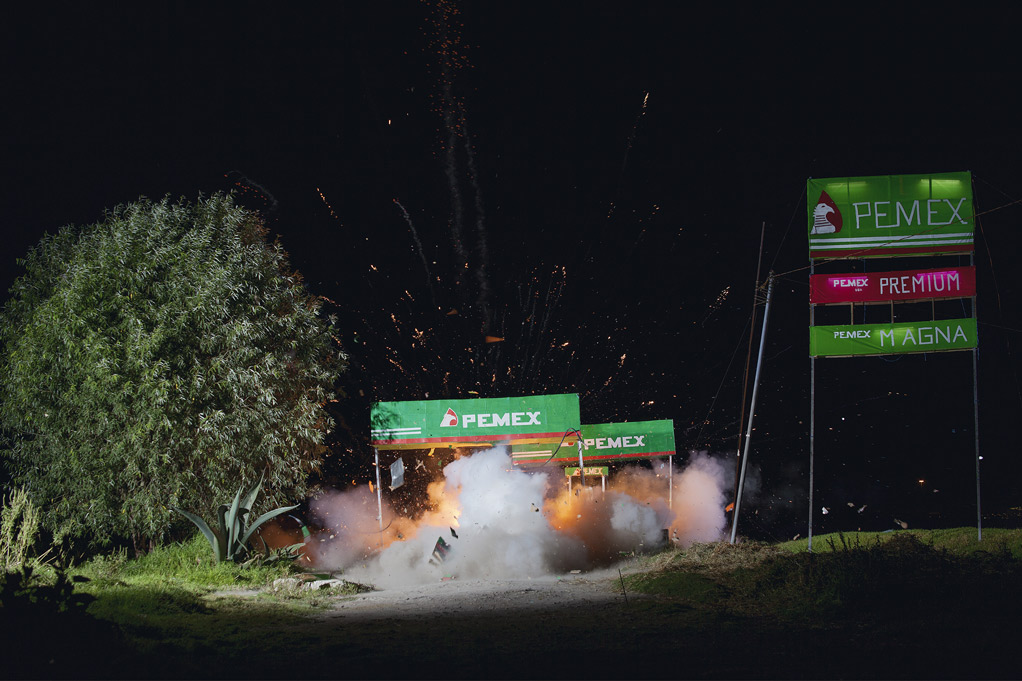
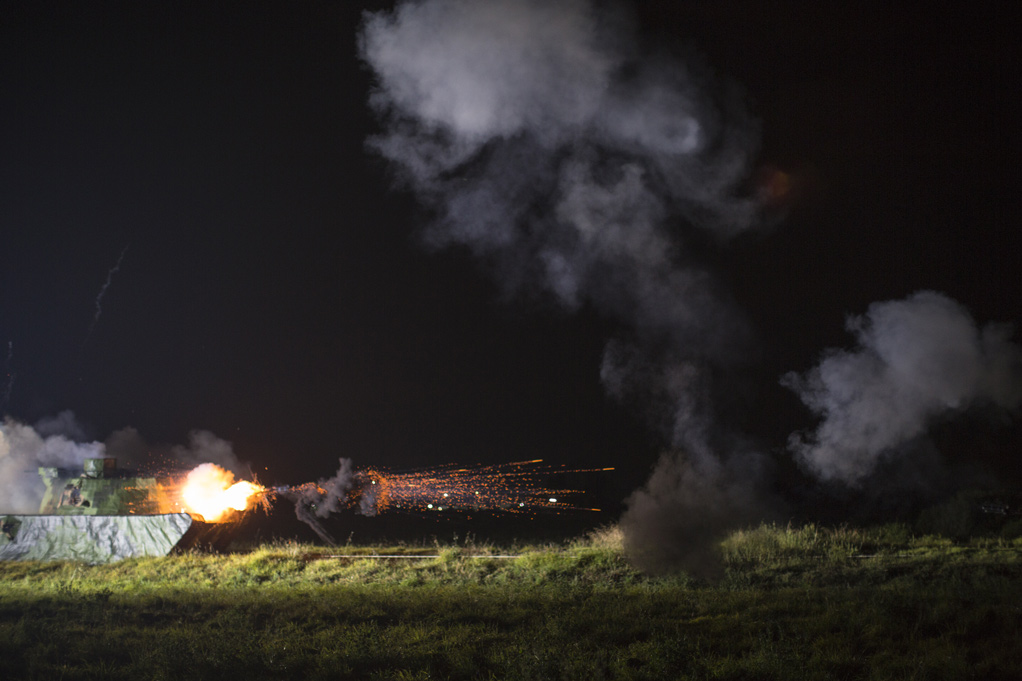
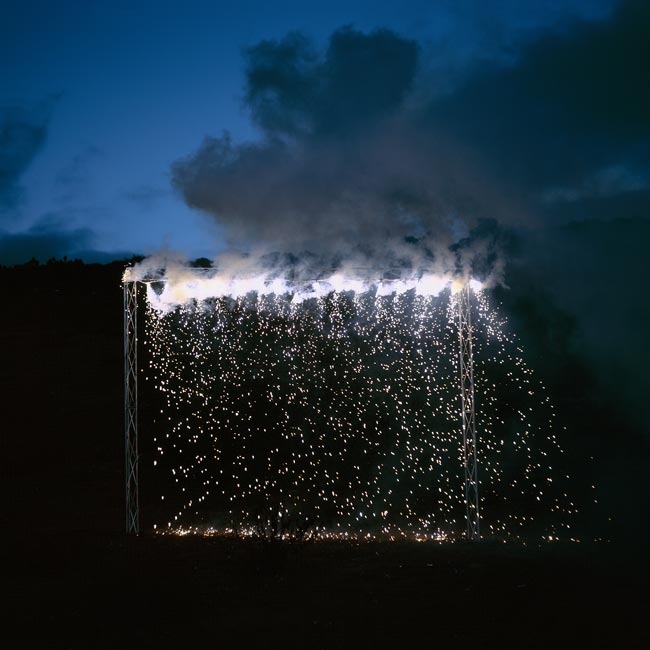
Landscape interventions with pyrotechnics. These large format photographs are the result of a series of tests made with fireworks during 2012 and 2013.


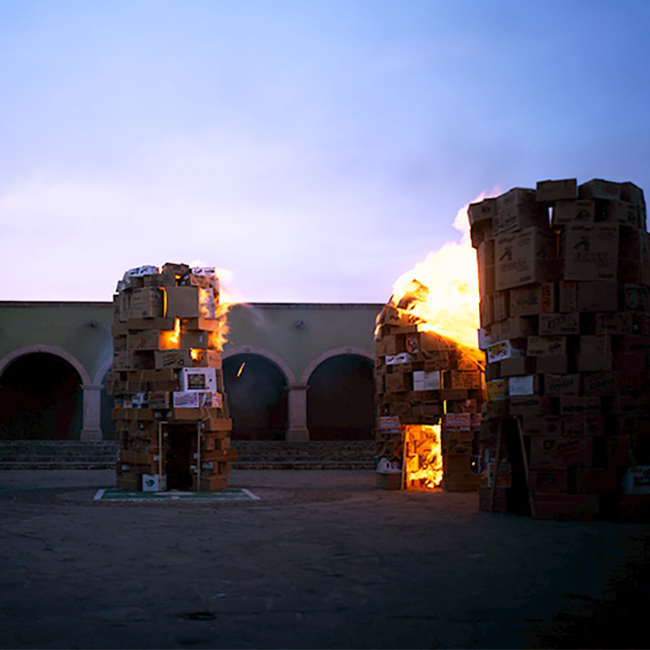
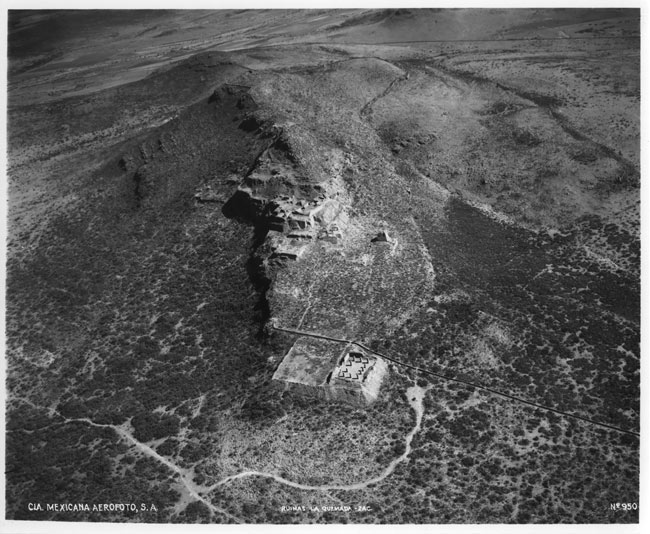
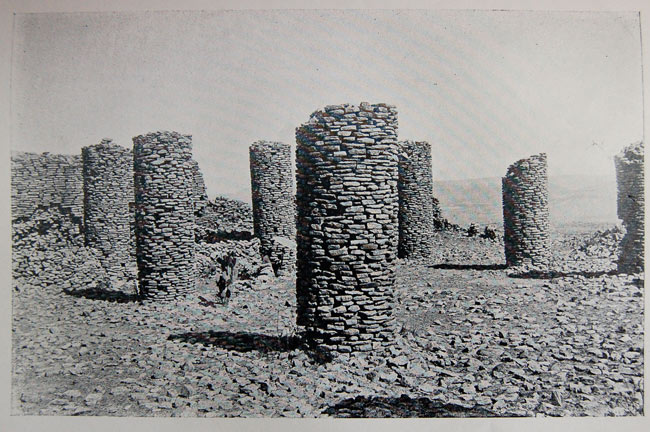
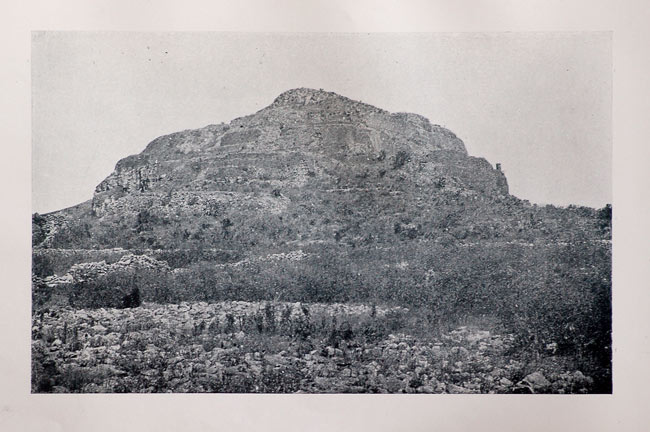
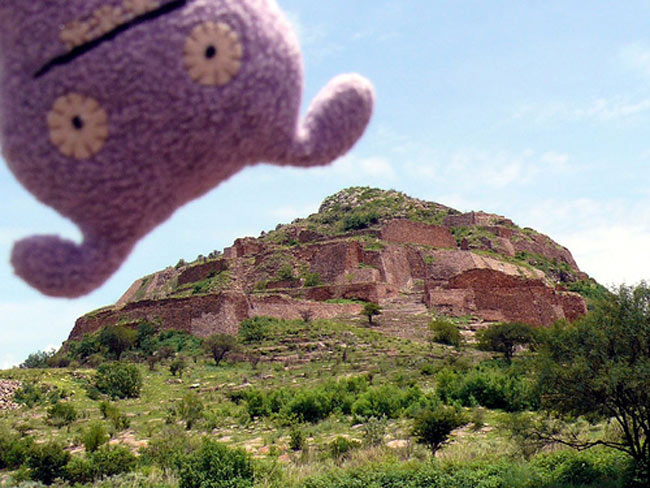
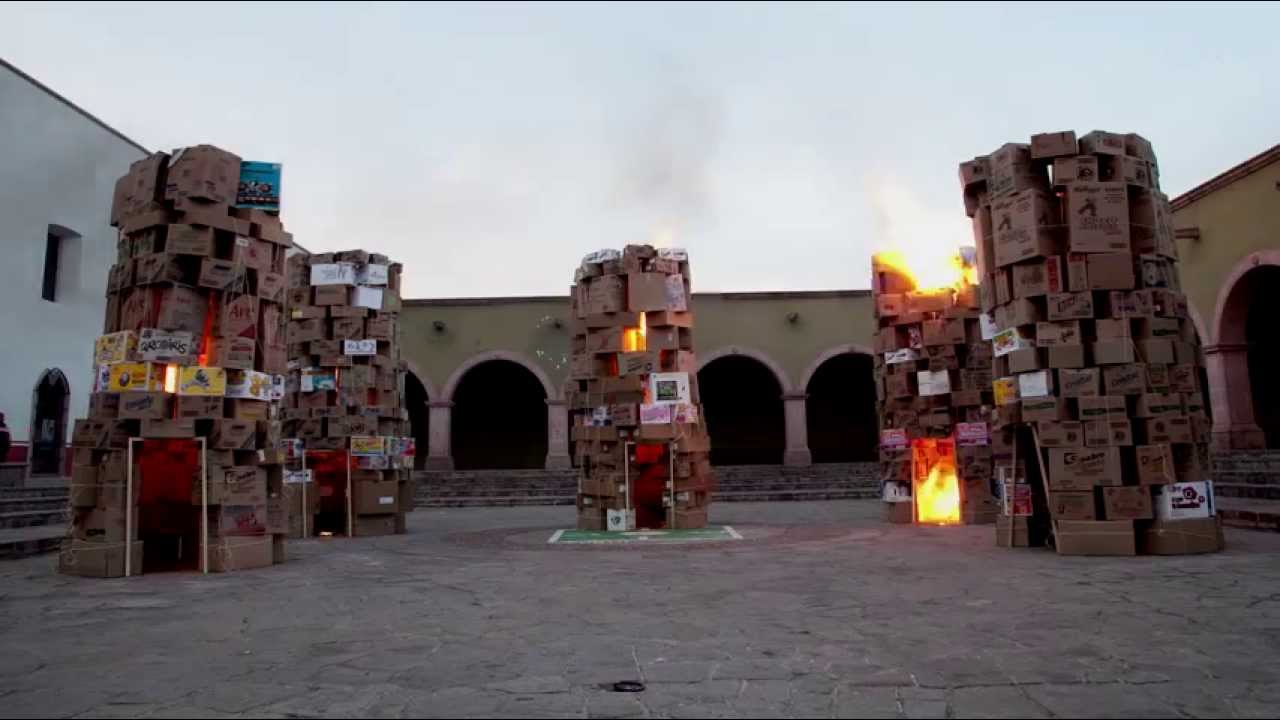
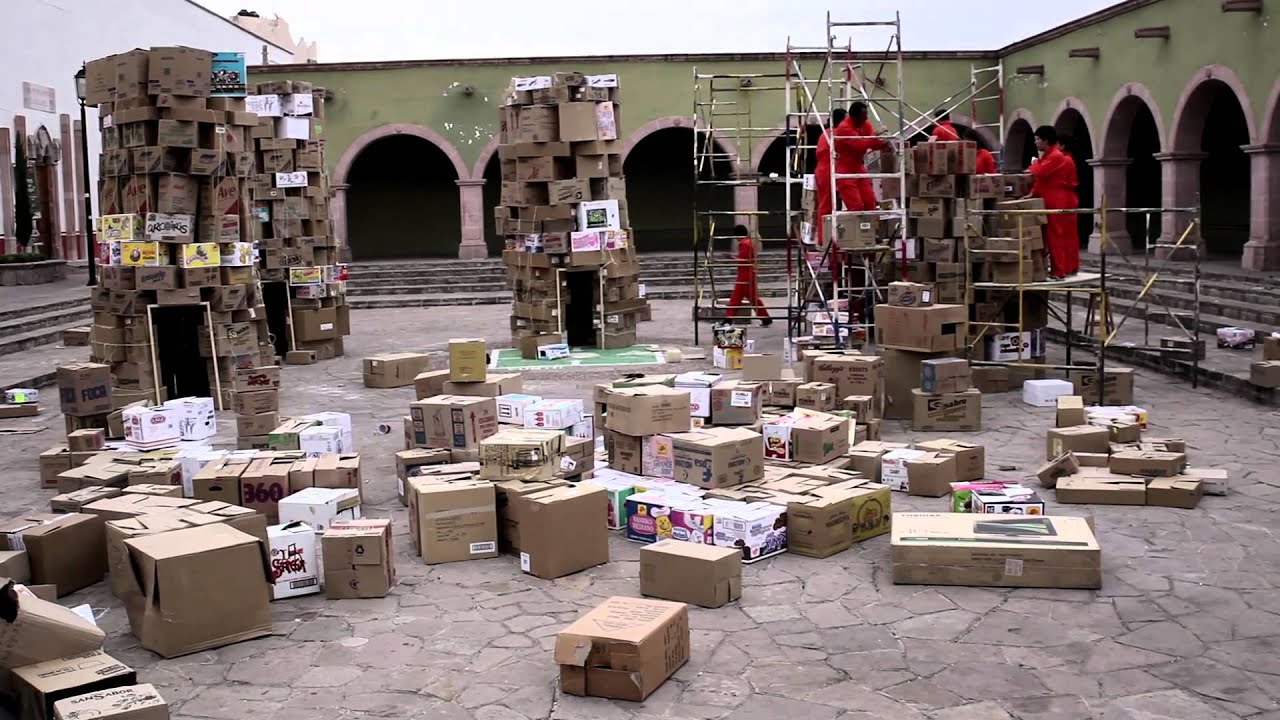
This public sculpture was conceived as an ephemeral replica of “The Column Hall” of the archeological site of “La Quemada” (literally “The Burnt”) in Zacatecas, Mexico. The 5 actual scale columns were built using reused cardboard boxes in one of the main squares of Zacatecas City and were burnt reenacting the actual destruction of “The Column Hall” more than 7 centuries ago. “La Quemada Publica” (“The Public Burning”) was constructed and destroyed by a group in a collective and cooperative action; any external agent or institution could not impose its use and conservation. The group transformed into a critical collective by engaging in decisions about their labor and production (duration of shifts, materials, techniques; use, permanence and destruction of the columns). This work addresses alienation through collective and critical labor and the politics of conservation especifically but not only related to historical edifices.